
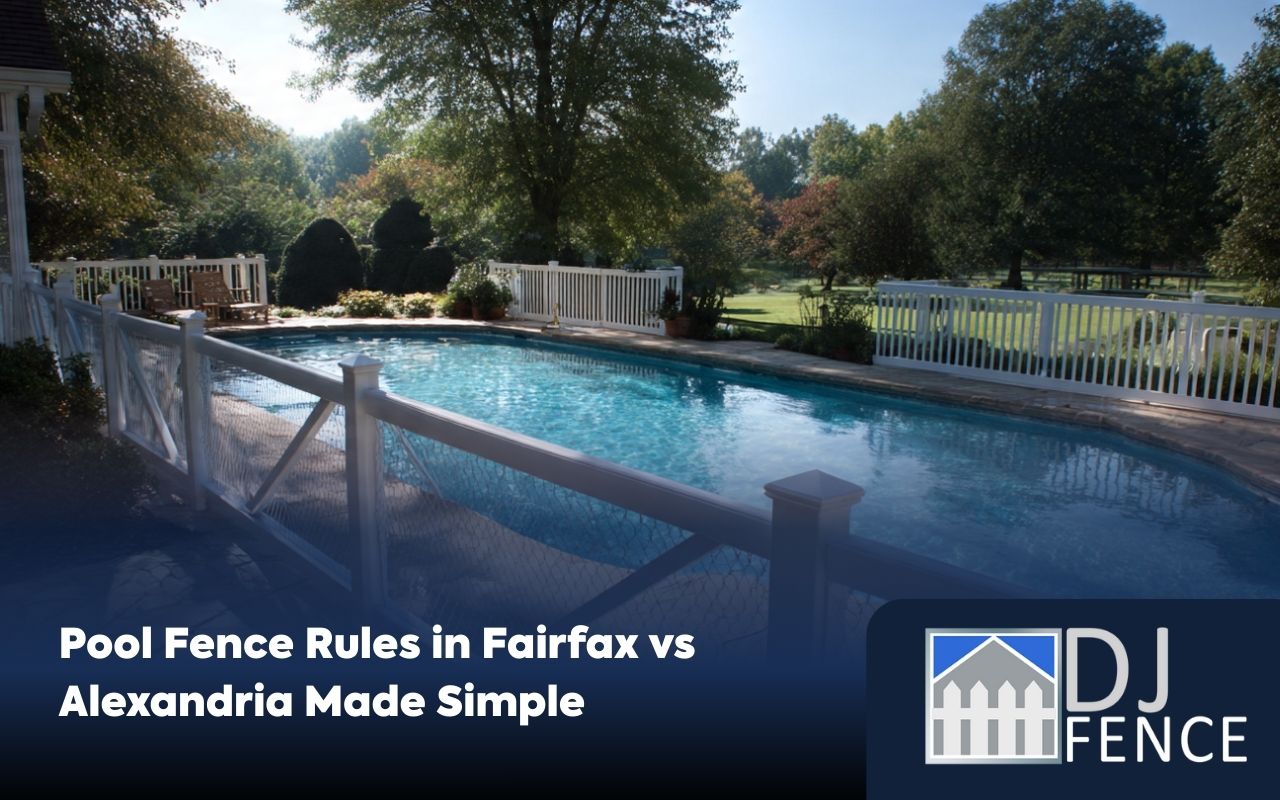
Pool Fence Code in Fairfax vs Alexandria can shape your backyard plans more than you expect. Two nearby areas can still set different rules. Because of that, knowing the differences helps you stay safe and compliant.
Whether you own a new pool or want an upgrade, the rules can feel confusing. However, the basics are easier when you break them down. Fairfax may differ on self-closing gates or heights. Meanwhile, setbacks can change your layout. Learn the local details, avoid surprises, and enjoy peace of mind.
Overview of Pool Fence Regulations in Fairfax
Pool Fence Code in Fairfax vs Alexandria often starts with Fairfax County’s strict approach. In Fairfax, outdoor pools need a barrier that follows county and state guidelines. Plans and inspections are handled through Fairfax County review. Therefore, you should show fence height, gate design, and spacing before building.
Fairfax commonly expects a uniform six-foot barrier with limited climb points. Gaps should stay under four inches. In addition, gates must be self-closing and self-latching. If you are planning a project, explore fence installation in Fairfax, VA to match your design to local expectations.
Overview of Pool Fence Regulations in Alexandria
Pool Fence Code in Fairfax vs Alexandria also matters in Alexandria, where the city code adds its own details. Residential pools must have a protective barrier that blocks unsupervised access. Alexandria’s Department of Code Administration reviews site plans, permits, and inspections. As a result, your drawings should show placement, dimensions, and gate locations.
Alexandria often sets a minimum fence height of five feet, although six feet is allowed. Openings must stay under four inches. Also, gates must be self-closing and self-latching. If you want local help, review fence installation in Alexandria, VA for practical code-friendly options.
Height Rules
Pool Fence Code in Fairfax vs Alexandria differs most on heights. Fairfax typically requires six feet. Alexandria commonly allows five to six feet. Consequently, the fence style you choose may change by location. Still, both areas aim to stop children from climbing over the barrier.
- Fairfax: commonly targets a 6-foot minimum height.
- Alexandria: often accepts 5–6 feet, depending on the setup.
- Both: focus on designs that are hard to climb.
Gate Rules and Self-Closing Gates
Pool Fence Code in Fairfax vs Alexandria places extra attention on gates, since gates are the weakest point. Both areas require self-closing gates and self-latching hardware. However, the fine print can change how you choose hinges, latches, and swing direction.
- Fairfax: gates typically swing outward and latch automatically.
- Alexandria: may add rules on latch height or lock type.
- Both: expect gates to close fully without help.
Setback Rules
Setbacks affect where the fence can sit and how the pool area flows. Fairfax often calls for about two feet of clearance from property lines or structures. Alexandria may request similar space, yet it can shift based on lot size or zoning. Therefore, checking setbacks early helps you avoid redesigns.
Materials Allowed for Pool Fencing
Material rules focus on strength, durability, and safe spacing. Fairfax often approves aluminum, steel, vinyl-coated chain link, and treated wood that meets spacing norms. Alexandria may allow similar materials, but it can ask for specific thicknesses or finishes. As a result, picking the right material protects both safety and curb appeal.
- Metal options: aluminum and steel for long-term durability.
- Chain link: typically needs vinyl coating and compliant openings.
- Wood: must meet treatment and spacing expectations.
Permits and Inspections in Fairfax and Alexandria
Permits and inspections are required steps in both locations. Fairfax generally expects detailed paperwork on design, dimensions, and setbacks, then a site inspection for final approval. Alexandria’s process is similar, and it may include an extra plan review stage. To reduce delays, align your drawings with local requirements before work begins.
If you want guidance that matches your address and lot layout, you can request a code-focused pool fence consult and share your site plan for a practical review.
Cost Implications of Compliance
Even without listing prices, compliance can change your budget. Fairfax’s common six-foot height and gate requirements may mean more material and stronger hardware. Alexandria might allow a five-foot fence, yet latch or lock details can add costs. In addition, permit steps and inspections can affect timelines and labor planning.
Importance of Compliance and Safety
Following local pool fence rules helps protect children, pets, and guests. Proper barriers reduce the risk of accidental entry and falls. Also, compliance can help you avoid fines, forced changes, and liability concerns. When you meet rules for heights, self-closing gates, and setbacks, you gain confidence that your pool stays secure.
Frequently Asked Questions
Do Fairfax and Alexandria require self-closing gates?
Yes. Both areas typically require self-closing and self-latching gates. However, latch placement details can vary.
Is a five-foot pool fence allowed in Alexandria?
Often, yes. Alexandria commonly allows five to six feet. Still, your plan and site conditions can affect approval.
Why do setbacks matter for pool fences?
Setbacks protect access for maintenance and emergencies. They also shape your pool layout and usable yard space.
What materials are commonly accepted for pool fences?
Metal options like aluminum and steel are common. Vinyl-coated chain link and treated wood may also work if spacing is safe.
Do I need a permit before installing a pool fence?
In most cases, yes. Plans are usually reviewed, and inspections confirm the fence matches the approved design.
Make Smart Choices for Your Pool
Pool Fence Code in Fairfax vs Alexandria shows how two nearby places can still set different expectations. Heights, self-closing gates, and setbacks can all shift by address. Therefore, check local rules early and plan with your lot in mind. With the right design, you can avoid rework and keep your pool safe for everyone.