
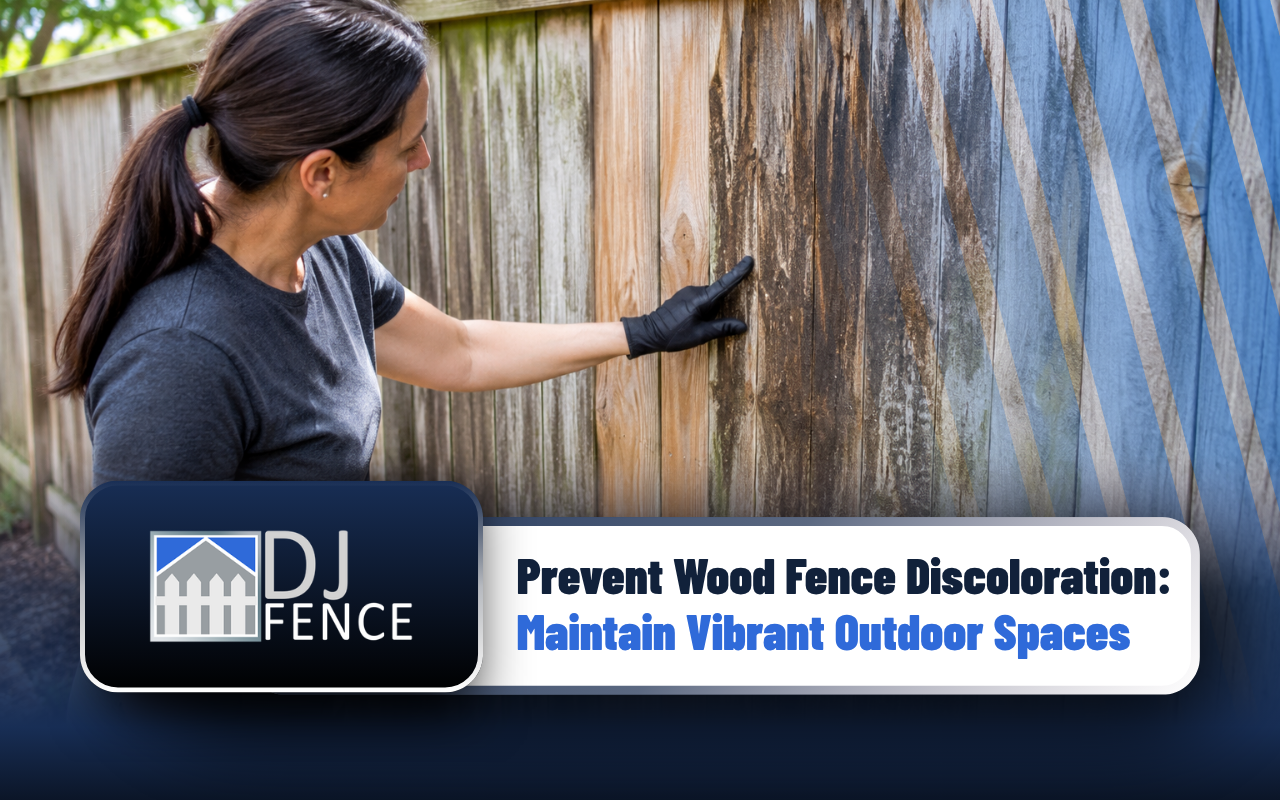
A well-kept wood fence adds warmth, privacy, and balance to an outdoor space. However, sunlight, moisture, dirt, and organic growth can slowly change its color. At DJ Fence, we understand that preventing wood fence discoloration requires regular care rather than a quick cosmetic fix.
Simple maintenance can protect the surface and support the fence beneath it. Our professional fence services can also address installation, maintenance, and damage that may affect the long-term appearance of your outdoor structure.
Why Does Wood Fence Discoloration Develop Over Time?
Discoloration often begins with small gray, green, or black areas. Damp wood can support mold and mildew, while pollen and dirt create a film that holds moisture. These conditions weaken surface fibers and leave the boards looking uneven, dull, or neglected.
Sunlight is another major cause. UV damage on fences breaks down lignin, which helps wood keep its natural color and strength. As the surface loses lignin, it can become pale or chalky. Seasonal expansion and contraction may also create cracks where water collects and accelerates wood fence discoloration.
Choosing Wood That Holds Its Color Longer
The type and quality of lumber can influence how quickly a fence changes color. Cedar and redwood contain natural oils that resist moisture and organic growth. Pressure-treated pine is prepared to reduce decay, but it still needs suitable surface protection.
- Choose boards with fewer knots and visible defects.
- Use properly dried lumber to limit movement and cracking.
- Select wood that suits the moisture and sunlight around your property.
- Apply an appropriate finish after the wood is ready.
Careful material selection is especially important during a new project. Our team can discuss suitable options through our fence installation services in Reston, VA.
Cleaning Habits That Reduce Fence Fading
Regular cleaning removes materials that trap moisture and encourage stains. A gentle wash also prepares the surface for stain or sealant. Cleaning should be careful because excessive pressure can roughen the wood fibers and make the boards more vulnerable.
- Remove leaves, vines, and loose debris around the fence.
- Mix water with a mild, wood-safe cleaning product.
- Scrub stained areas with a soft-bristle brush.
- Rinse the surface thoroughly using gentle water pressure.
- Allow the wood to dry before applying a protective finish.
Spring and fall are practical times to inspect and clean the fence. Regular care can reduce fence fading and reveal loose boards, cracks, or early decay before those problems spread.
Weatherproofing Against Moisture and Sun Exposure
Weatherproofing creates a barrier against rain, snow, and changing humidity. Small cracks, open nail holes, and damaged joints should be addressed before a coating is applied. Water-repellent preservatives can reduce moisture entry while allowing the wood to release trapped vapor.
Stains, paints, and sealants provide different levels of UV protection. Semi-transparent stain keeps much of the natural grain visible. Exterior paint creates a thicker layer, while clear sealers usually offer less protection from sunlight. The right option depends on the desired wood fence appearance and the condition of the boards.
With DJ Fence, you can receive practical guidance when damage or wear goes beyond routine maintenance. Our wood fence repair services can address weakened sections before moisture causes wider problems.
Repair Steps for Damaged or Darkened Areas
Small defects should be repaired early because loose or split boards allow more water to enter. Dark stains may also indicate mold, mildew, or decay below the surface. A careful inspection can help separate a cosmetic issue from a structural concern.
- Tighten loose fasteners and secure moving boards.
- Replace pickets that are split, soft, or badly warped.
- Sand light surface stains after the wood is fully dry.
- Clean away dust before adding stain or sealant.
- Match the new finish with the surrounding fence.
Our team at DJ Fence can evaluate areas that appear unstable or deeply damaged. Prompt repairs can improve the fence’s appearance while reducing the risk of moisture reaching nearby boards and posts.
Natural Treatments for a Better Wood Fence Appearance
Natural oils and plant-based products may suit homeowners who prefer simpler treatment options. Tung oil and linseed oil can enrich the grain and add moderate water resistance. Some low-VOC sealants also use plant-based ingredients to reduce exposure to stronger chemicals.
These treatments may need more frequent application than conventional coatings. The surface should be clean, dry, and free from damaged finishes before treatment. Testing a small hidden area first can help confirm the color and finish before the entire fence is covered.
Frequently Asked Questions
Can a faded wood fence regain its original color?
Light fence fading may improve with gentle cleaning, sanding, and a suitable stain. Deep discoloration or damaged fibers may require board replacement. A professional fence repair assessment can identify the most practical approach.
How often should a wood fence be cleaned?
Many fences benefit from cleaning once or twice each year. The schedule may vary with shade, rainfall, nearby plants, and dirt exposure. Reviewing available fence care options can help you plan maintenance around the fence’s condition.
Does clear sealant stop UV damage on fences?
Clear sealant can reduce moisture exposure, but it may provide limited protection from sunlight. A pigmented stain usually blocks more UV rays. When you choose DJ Fence, we can help you consider the condition, color, and protection needs of your fence.
Should dark spots on wood be treated immediately?
Dark spots should be inspected soon because they may come from dirt, mildew, trapped moisture, or decay. Early cleaning and repair can prevent a small area from spreading. Use the contact page to describe the affected section.
Can a new fence be protected from discoloration?
Yes. Quality lumber, correct installation, regular cleaning, and a suitable finish can slow color changes. Our Reston fence installation service can help establish a strong foundation for future maintenance.
Protect Your Fence Before Discoloration Spreads
Preventing wood fence discoloration starts with clean surfaces, controlled moisture, UV protection, and timely repairs. These steps protect both the visible finish and the boards beneath it. Regular inspections also make it easier to address small changes before they affect larger sections.
At DJ Fence, we can help you evaluate fading, stains, loose boards, or installation concerns. Use our contact page to discuss your wood fence and choose a practical next step for your outdoor space.