
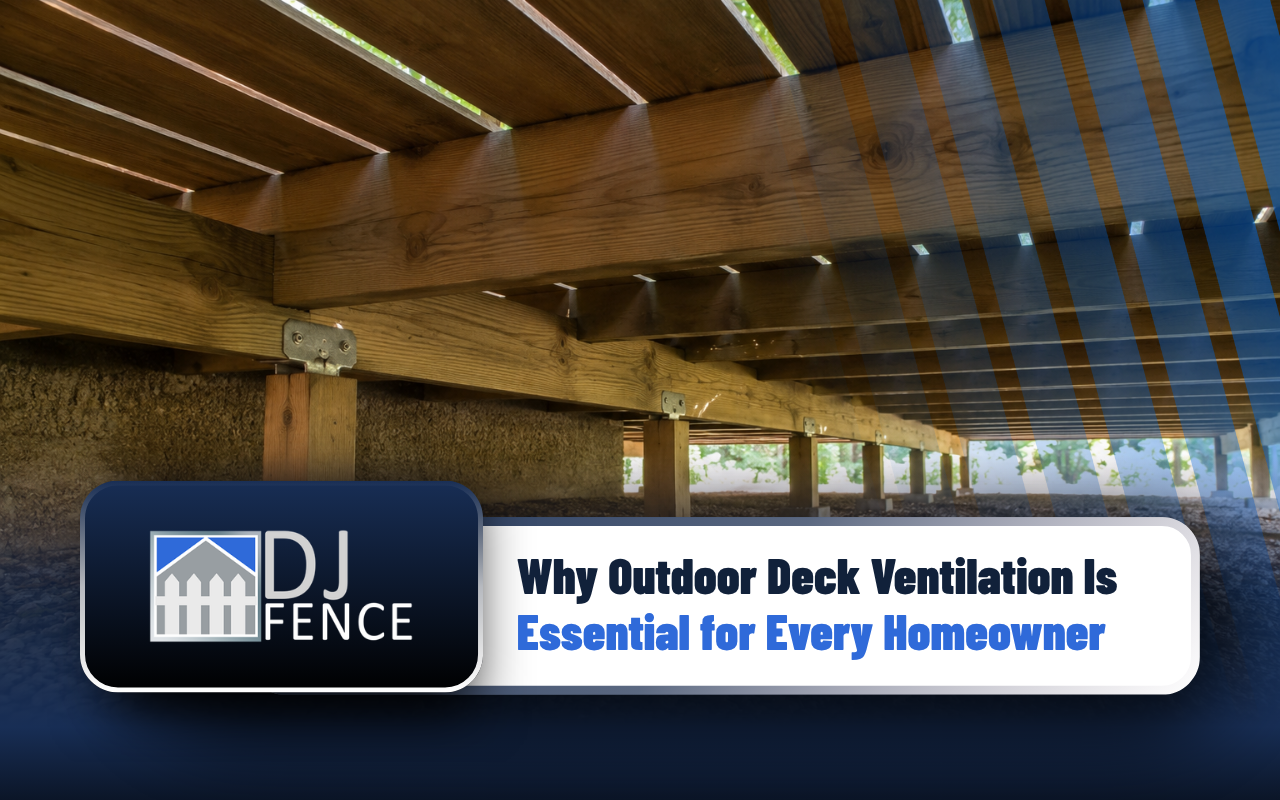
A deck should feel fresh, dry, and ready to enjoy. Proper deck planning and construction support outdoor deck ventilation by giving air room to move around boards, joists, and the area below.
At DJ Fence, we understand how trapped moisture can affect comfort, appearance, and long-term deck care. Good airflow can reduce damp conditions and help homeowners protect the structure they use for relaxing, dining, and spending time outside.
How Ventilation Protects Your Deck Structure
Outdoor deck ventilation allows humid air to escape instead of staying trapped beneath the surface. This matters because damp wood can swell, soften, or develop decay over time. Better movement of air also helps boards dry faster after rain, cleaning, or heavy humidity.
Our team at DJ Fence looks at the full deck area, including board spacing, nearby walls, ground clearance, and blocked openings. These details influence how well air moves and how quickly moisture leaves the structure.
Common Risks Caused by Trapped Moisture
Poor deck airflow can create problems that are easy to miss at first. Moisture often collects in shaded areas, around supports, or below sections where leaves and soil block open space.
- Mold or mildew on boards and framing
- Warped, soft, or stained wood
- Rust on fasteners and metal connectors
- Musty odors below or around the deck
Preventing deck moisture starts with spotting these warning signs early. A careful review can help you decide whether cleaning, repairs, or design changes are needed.
What Signs Show Your Deck Needs More Airflow?
Check for damp patches that remain long after nearby areas have dried. You may also notice dark marks, surface growth, or boards that feel softer than expected. These signs can point to limited under deck ventilation.
When you choose DJ Fence, we can review visible deck conditions and discuss practical next steps. You can also view our completed outdoor projects to see how thoughtful design supports useful, lasting spaces.
Practical Ways to Improve Deck Air Movement
Many airflow improvements begin with simple maintenance. Other decks may need changes to spacing, drainage, or the open area around the frame.
- Remove leaves, dirt, and stored items from below the deck.
- Keep gaps between boards and edges clear.
- Trim plants that block air around the structure.
- Check drainage so water moves away from posts and framing.
- Ask a deck professional to review enclosed or low-clearance areas.
These steps can support steady airflow without adding unnecessary features or changing how the deck is used.
Deck Design Choices That Support Better Ventilation
Deck design affects how air enters, moves, and exits. Board spacing, ground clearance, skirting, nearby landscaping, and drainage all play a role. Enclosed areas need special attention because decorative panels can reduce airflow when openings are too small.
Homeowners planning a new build can review our outdoor improvement services before choosing materials or layout details. Early planning makes it easier to support ventilation without changing the finished look.
Simple Maintenance for Long-Term Moisture Control
Regular care keeps airflow paths open and supports preventing deck moisture. A seasonal routine can also reveal small issues before they spread.
- Clear debris from board gaps and the space below.
- Inspect shaded areas for stains, mold, or damp wood.
- Keep soil, mulch, and plants away from framing.
- Check that water drains away from the deck.
At DJ Fence, we encourage homeowners to treat ventilation as part of normal deck care rather than as a one-time fix.
Frequently Asked Questions
Why is outdoor deck ventilation important?
It helps trapped heat and moisture escape from beneath the deck. This can support faster drying and reduce conditions linked to mold, stains, wood movement, and decay. For design guidance, explore our deck building options.
How can I improve deck airflow?
Start by removing debris, clearing board gaps, trimming nearby plants, and keeping stored items away from the underside. If airflow still seems limited, use our contact page to discuss the deck layout.
What causes poor under deck ventilation?
Common causes include low ground clearance, blocked openings, dense skirting, heavy vegetation, poor drainage, and stored materials. You can review our project portfolio for examples of open and practical outdoor layouts.
Can trapped moisture damage composite decking?
Composite boards may resist some moisture effects, but the framing, fasteners, and enclosed spaces below still need airflow. Damp conditions can also lead to odors, surface growth, or corrosion around metal parts.
How often should I inspect deck ventilation?
Check the deck during seasonal cleaning and after long periods of rain. Look below the surface, around posts, and near shaded edges where moisture may remain longer.
Create a Drier, More Comfortable Outdoor Space
Good outdoor deck ventilation supports a cleaner, safer, and more enjoyable deck. It also makes routine care easier by helping moisture leave the structure instead of staying trapped below.
When you are ready to improve airflow or plan a better deck layout, our team at DJ Fence can help you review practical options. Contact us about your deck and take the next step toward a drier outdoor space.