
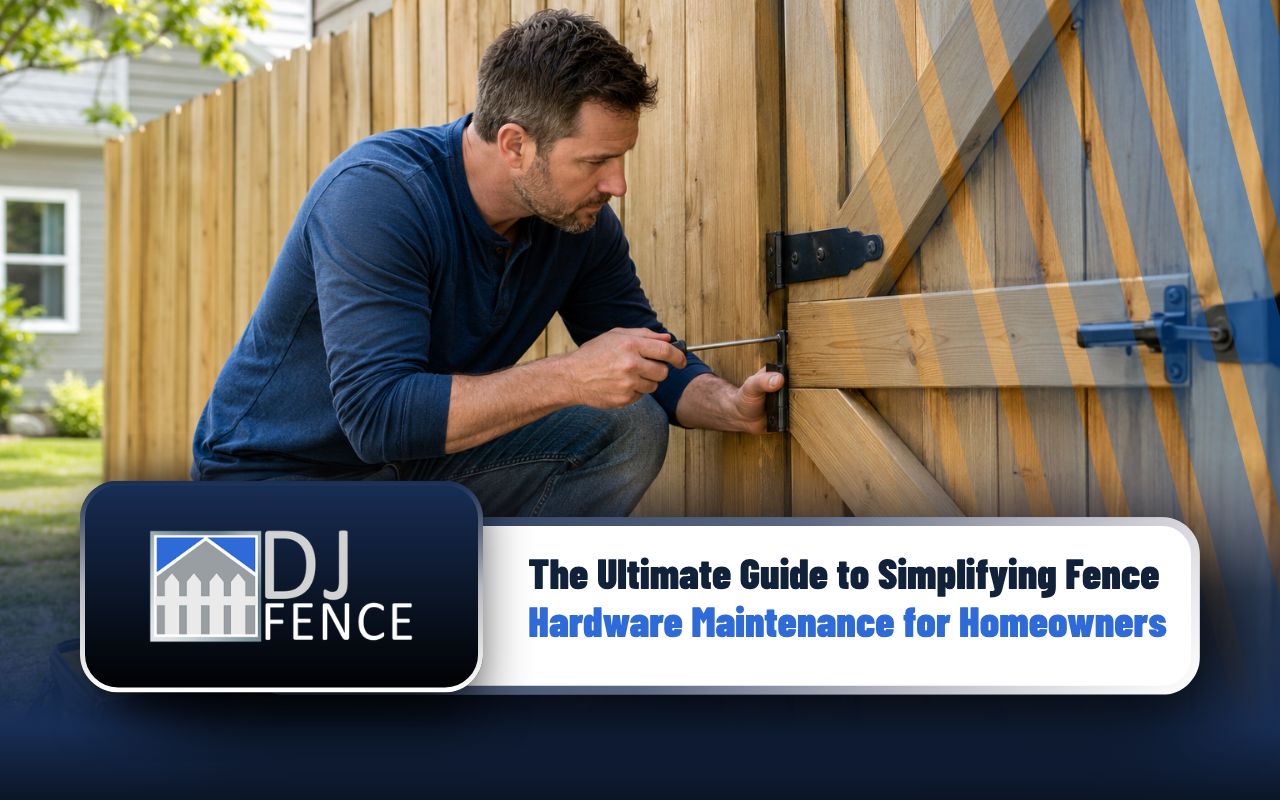
Fence hardware maintenance keeps gates, panels, and connecting parts working safely. A few regular checks can prevent loose hardware, noisy movement, rust, and sudden damage. Homeowners who notice an existing problem can explore our fence repair services for practical support.
At DJ Fence, we understand that small hardware problems can affect the whole fence. This guide explains how to inspect essential parts, care for moving components, control corrosion, and recognize when damaged hardware should be replaced.
Why Does Fence Hardware Need Regular Attention?
Gate hardware faces pressure every time someone opens or closes the gate. Rain, dirt, changing temperatures, and daily use can also weaken metal parts. Without regular care, a small loose screw may lead to poor gate alignment, damaged posts, or a latch that no longer closes correctly.
Routine fence hardware maintenance also helps protect the appearance of your outdoor space. Rust stains, tilted gates, and missing hardware can make an otherwise attractive fence look neglected. Our complete fence services can help when routine care reveals a larger issue.
Start With a Careful Hardware Inspection
A hardware inspection should cover every connection point, especially around gates and high-use areas. Walk along both sides of the fence when possible. Look closely instead of relying only on what you can see from a distance.
Our team at DJ Fence recommends checking for these common warning signs:
- Loose, missing, bent, or damaged screws and bolts
- Rust around brackets, latches, hinges, or fastener heads
- Gate movement that feels stiff, uneven, or unstable
- Metal parts pulling away from posts or fence panels
- Squeaking, scraping, or clicking during normal use
Test each gate gently after the visual check. Avoid forcing a gate that feels stuck. Extra pressure may bend the hardware or damage the post supporting it.
Keep Gate Hinges Moving Smoothly
Gate hinges support repeated movement and often show wear before other components. Dirt, moisture, and old lubricant can collect around the hinge pin. This buildup may cause squeaking, stiffness, or uneven gate movement.
Clean the hinge area with a dry cloth or soft brush before adding lubricant. Apply a suitable outdoor lubricant to the moving points, then open and close the gate several times. This movement helps spread the product inside the hinge.
Wipe away extra lubricant so it does not collect dust. During fence hardware maintenance, also check whether the gate hinges remain firmly attached. Lubrication may improve movement, but it will not correct stripped screws, bent metal, or a damaged mounting surface.
Protect Fence Fasteners From Corrosion and Wear
Fence fasteners hold panels, rails, brackets, and other parts together. Their small size makes them easy to overlook, but weakened fasteners can affect a much larger section of the fence.
Use the following steps when checking and caring for exposed fasteners:
- Remove surface dirt with a cloth or soft brush.
- Check each fastener for rust, movement, or a damaged head.
- Tighten loose pieces carefully without forcing them.
- Replace fasteners that are deeply rusted, bent, or stripped.
- Keep moisture and plant growth away from connection points.
Light surface rust may be cleaned before it spreads. However, a fastener that has lost its shape or strength should not remain in place. Replacing one weak component early may prevent movement in the surrounding fence section.
Know When Hardware Needs Professional Replacement
Some hardware problems require more than cleaning or tightening. A hinge may be bent, a latch may no longer align, or a fastener may spin without gripping the wood or post. These conditions can indicate damage to both the hardware and its mounting area.
With DJ Fence, you can receive help evaluating whether the issue involves one component or a wider fence problem. Replacement parts should match the fence material, gate weight, connection type, and outdoor conditions.
Hardware problems may also reveal that a gate or fence section was installed incorrectly. Homeowners planning a new project can review our fence installation services in Fairfax, Virginia to understand available installation support.
Build a Simple Seasonal Maintenance Routine
A consistent schedule makes fence hardware maintenance easier to manage. Complete a detailed check during spring and fall, then perform brief visual checks after strong winds, heavy rain, or other harsh conditions.
A practical maintenance routine may include:
- Opening and closing each gate to test its movement
- Checking latches and locks for proper alignment
- Tightening loose hardware with the correct hand tool
- Cleaning dirt and plant growth around metal components
- Lubricating moving parts after cleaning them
- Recording damaged pieces that may need replacement
Avoid overtightening screws and bolts. Too much pressure can strip the connection, crack the fence material, or make moving parts bind. Small adjustments are often safer than one forceful turn.
Frequently Asked Questions
How often should fence hardware be inspected?
Complete a detailed inspection at least twice a year and check high-use gates more often. You should also inspect the fence after severe weather or sudden movement. Visible damage may require timely help with damaged fence components.
What causes gate hinges to start squeaking?
Squeaking often develops when dirt, moisture, or friction affects the hinge pin. Cleaning and suitable lubrication may restore smooth movement. Persistent noise can indicate loose mounting hardware, corrosion, poor alignment, or a bent hinge.
Can rusty fence fasteners remain in place?
Minor surface rust may be manageable, but deep corrosion can weaken the connection. Replace fasteners that are brittle, bent, loose, or heavily rusted. Our fence service options can support more complex concerns.
Which tools are useful for basic hardware care?
Useful tools include screwdrivers, adjustable wrenches, pliers, a soft brush, clean cloths, and an outdoor lubricant. Wear gloves and eye protection when cleaning rust or handling sharp metal. Use each tool carefully to avoid damaging fastener heads.
When should I request a professional hardware inspection?
Request help when a gate sags, hardware repeatedly loosens, posts move, or replacement parts do not fit correctly. At DJ Fence, we can review the affected area. Use our contact page to describe your hardware concerns.
Keep Your Fence Secure and Working Well
Regular care can keep your gate moving smoothly and help fence connections remain stable. Focus on early warning signs, careful cleaning, proper lubrication, and timely replacement. Never depend on a badly damaged part to continue supporting the fence.
When you choose DJ Fence, we can help identify repair needs that extend beyond routine homeowner care. To discuss a loose gate, damaged connection, or another fence concern, contact our fence team about the affected area.