
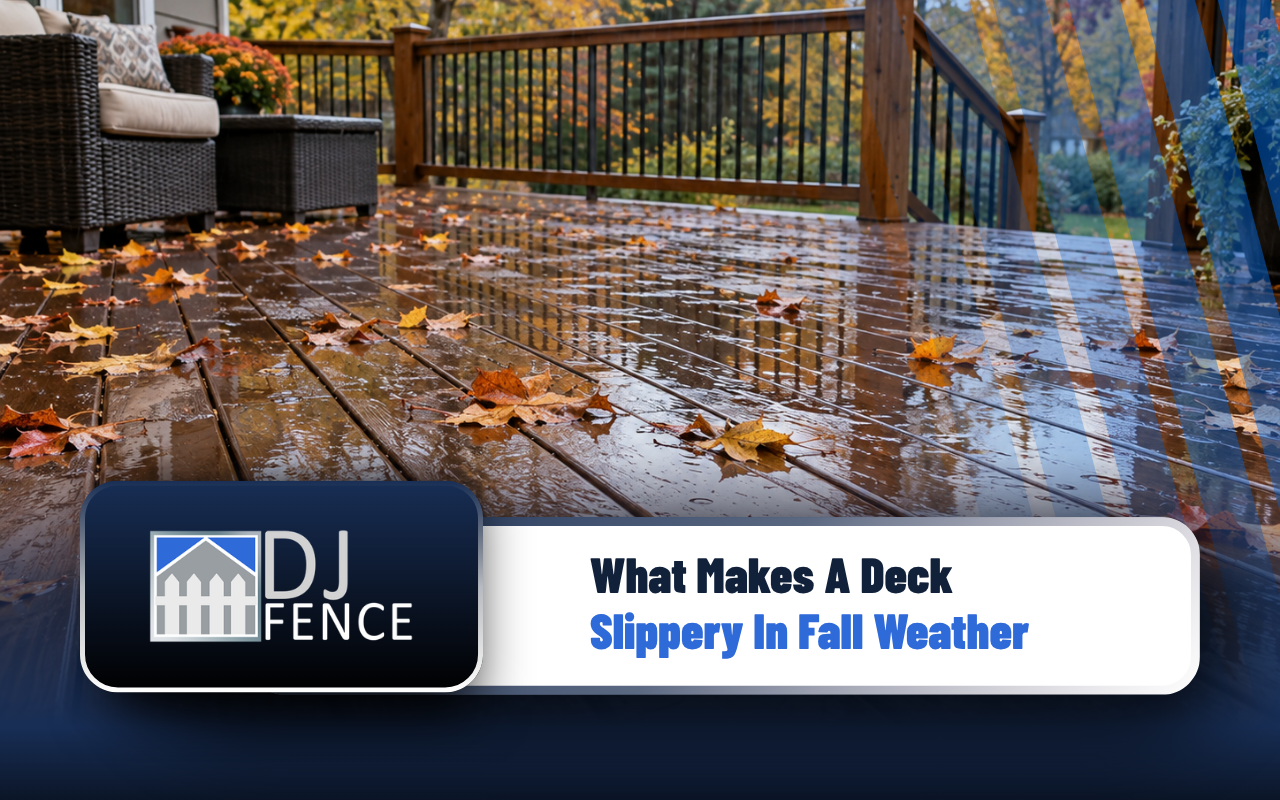
Fall decks can become slick when rain combines with leaves, algae, dirt, shade, and slower drying conditions. Understanding what makes a deck slippery in fall helps homeowners address the cause instead of relying on temporary traction fixes. request your free estimate when a wet deck remains slippery even after normal sweeping and cleaning.
Wet Deck Surfaces Lose Traction For Different Reasons
Moisture alone can reduce traction, but the problem becomes more noticeable when a thin organic film develops on the boards. Material texture, coatings, and wear also influence how the surface feels underfoot.
At DJ Fences, we use over 20 years of experience to evaluate deck surfaces where cleaning, drainage, and repair may all play a role.
Leaf Buildup On Decks Creates A Slick Layer
Wet leaves can break down into a smooth organic film that traps moisture and reduces friction. Clearing leaves frequently is one of the simplest fall safety steps.
For deck service information, visit our explore professional deck services page.
Fall Deck Safety Starts With Cleaning And Drainage
schedule your deck inspection when puddles, algae, or recurring slick spots appear in the same locations. The cause may be surface buildup, poor drainage, worn finish, or uneven boards.
Our licensed and insured service supports repair when slippery conditions appear with structural movement or damaged walking surfaces.
Use This Fall Deck Safety Check Each Week
- Remove leaves from walking paths
- Check shaded damp areas
- Clear gaps between boards
- Inspect steps and landings
- Watch for loose boards
Shade Can Keep One Deck Section Wet Longer
Areas under trees, roof overhangs, or dense landscaping may dry much more slowly than open sections. These damp zones can develop algae or mildew sooner.
Surface Coatings Can Change Traction As They Wear
Paint, stain, sealers, and composite finishes age differently. A worn or overly smooth coating may become more slippery when wet even if the boards remain structurally sound.
These Conditions Make Fall Decks More Slippery Quickly
- Wet leaf residue
- Algae or mildew film
- Standing water
- Worn smooth coatings
Residential Deck Care Should Focus On High-Traffic Zones
Steps, landings, and routes from exterior doors deserve extra attention because they combine frequent foot traffic with repeated moisture.
Our residential fence and deck services help us prioritize those areas during seasonal inspection.
Portfolio Examples Can Show Safer Deck Layout Options
Homeowners planning a future deck update can review our review recent deck projects page for examples.
Free Estimates Help Separate Cleaning From Needed Repairs
When slick conditions come with loose boards, soft areas, or stair movement, a free estimate can help determine whether the next step is maintenance or repair.
Local Specialists Can Evaluate Drainage And Surface Condition
Local fence and deck specialists can help identify why one area remains wet longer and whether the issue is caused by layout, buildup, or damaged materials.
For broader options, visit our explore all outdoor services page.
Homeowners Should Avoid Aggressive Cleaning That Damages Surfaces
High pressure or harsh chemicals can damage some deck materials and finishes. Cleaning methods should match the surface and manufacturer guidance.
For company information, visit our explore our deck services homepage.
Board Texture Can Change How Wet Surfaces Feel
Two decks exposed to the same rain can feel very different underfoot because surface texture varies. Smooth finishes, worn coatings, and some composite surfaces may offer less grip when wet than rougher materials. That makes material condition an important part of diagnosing recurring slickness.
Morning Dew Can Create Slippery Conditions Without Rain
Decks in shaded or low-airflow areas may stay damp from overnight condensation even when no rain falls. Early morning use can therefore feel slick until the surface dries. Homeowners should pay attention to timing when trying to identify why one section remains slippery.
Handrails And Steps Deserve Extra Attention During Fall
Stair treads and landings can become risky faster because they combine edge transitions with frequent foot traffic. Keep these areas clear of leaves and confirm handrails remain secure. Our team at DJ Fences can help evaluate whether fall safety concerns are limited to surface buildup or include structural repair needs.
Repeated Deck Slickness Can Signal A Maintenance Pattern
If the same area becomes slippery every fall, note its shade, drainage, surrounding vegetation, and finish condition. Repeated patterns are useful because they point toward a cause that seasonal cleaning alone may not fully address.
Deck Drying Patterns Can Change After Nearby Landscaping Grows
Trees and shrubs that mature over time can create more shade and reduce airflow around the deck. A surface that dried quickly several years ago may now remain damp much longer. Watching these environmental changes can help homeowners understand recurring fall slickness and decide whether cleaning, pruning, drainage improvements, or surface maintenance deserves priority.
Frequently Ask Questions
Why is my deck slippery after rain?
Moisture, organic film, algae, smooth finishes, and slow drying can all reduce traction.
Do wet leaves make decks more slippery?
Yes. Leaves can create a slick layer and trap moisture against the deck surface.
Can pressure washing fix slippery decking?
Sometimes cleaning helps, but excessive pressure can damage surfaces and may not address drainage or coating issues.
Which deck areas need the most attention?
Steps, landings, shaded sections, and high-traffic paths usually deserve the closest fall inspection.
When should I call a deck professional?
When slippery conditions appear with loose boards, soft areas, railing movement, or recurring drainage problems.
Fix The Cause Behind Slippery Fall Deck Surfaces
Knowing what makes a deck slippery in fall helps homeowners focus on cleaning, drainage, surface condition, and safety instead of temporary fixes alone. book your free estimate with DJ Fences when seasonal slickness points to a larger deck maintenance issue.