
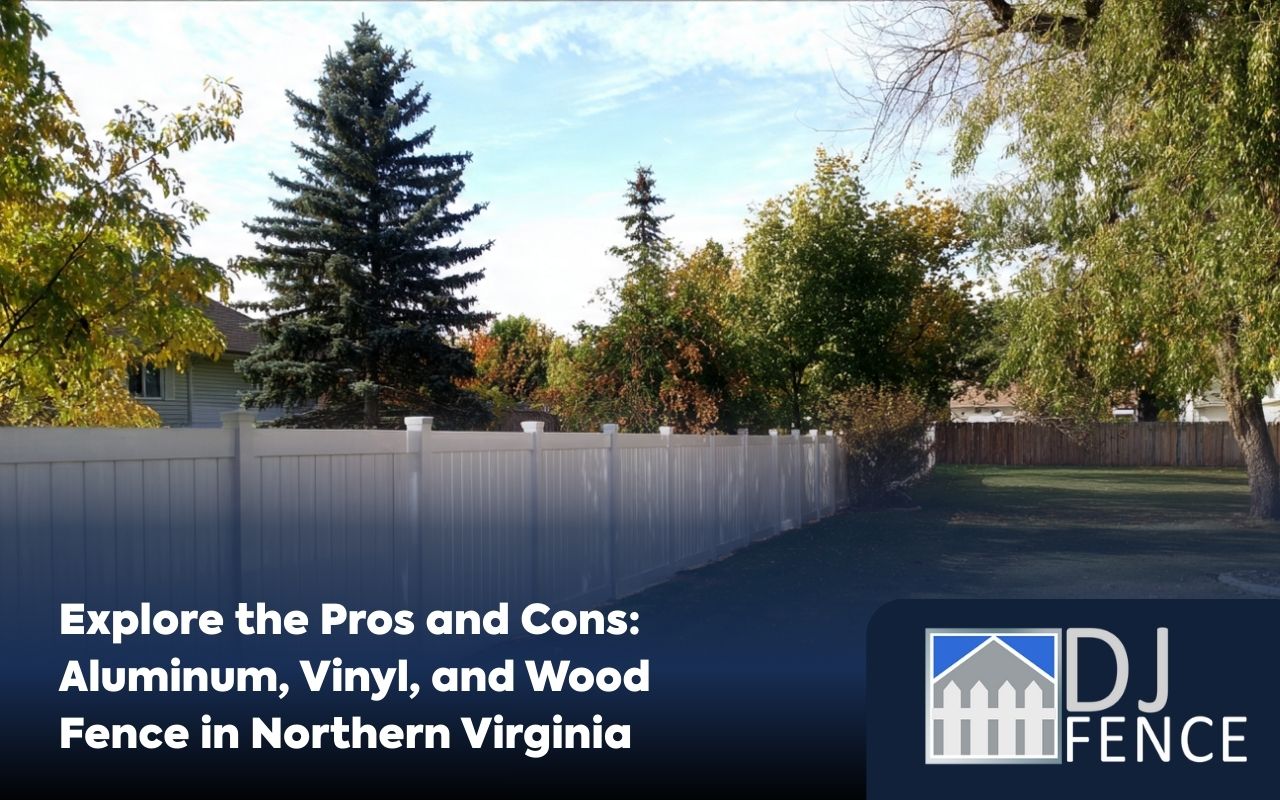
Choosing the right fence for your home can feel like a daunting task. If you live in Northern Virginia, you’ve likely seen many fencing options, each with its own pros and cons.
As you compare materials, focus on durability, upkeep, and cost of ownership. Also, Northern Virginia brings hot summers, chilly winters, and changing weather, so your fence choice should match both your style and daily needs.
How Northern Virginia Weather Affects Fence Materials
Northern Virginia sees humidity, rain, snow, and freeze-thaw cycles. Because of that, your fence material should handle moisture and temperature swings without constant repairs.
- Hot summers can fade finishes and dry out wood.
- Cold winters can stress panels and hardware.
- Moisture can lead to rot, mold, or corrosion over time.
Durability Comparison: Aluminum vs Vinyl vs Wood Fence in Northern Virginia
When comparing an Aluminum vs Vinyl vs Wood Fence in Northern Virginia, durability matters because weather changes are common. Aluminum resists rust and corrosion, so it stays steady through humid summers and icy winters, although it can bend with strong impact.
Vinyl resists moisture, rot, and pests, so it usually keeps its shape well. Still, in extreme cold, some vinyl panels can become brittle and crack. Wood is strong, yet it can rot, warp, or split unless it is sealed and treated on schedule.
- Aluminum: Rust-resistant and long-lasting, but may bend from heavy force.
- Vinyl: Moisture- and pest-resistant, but can crack in freezing weather.
- Wood: Naturally sturdy, but needs protection to avoid rot and warping.
Overall, an Aluminum vs Vinyl vs Wood Fence in Northern Virginia often comes down to how much weather-related wear you want to manage.
Upkeep Needs for Aluminum, Vinyl, and Wood Fences
Upkeep can shape your long-term experience with an Aluminum vs Vinyl vs Wood Fence in Northern Virginia. Aluminum usually needs a simple wash once a year, and quick touch-ups if the coating gets scratched. Vinyl also stays easy, since most stains come off with water and mild soap.
However, wood needs the most attention. To keep it looking good, many homeowners inspect it yearly, clean off mildew, and re-stain or seal every two to three years to block moisture and sun damage.
- Wash aluminum yearly to remove pollen and dirt.
- Rinse vinyl or scrub lightly for algae or stains.
- Seal or stain wood on a routine schedule to slow rot and cracking.
Cost of Ownership: What You Pay Now and Later
Cost of ownership is more than the install price. When planning an Aluminum vs Vinyl vs Wood Fence in Northern Virginia, compare what you pay upfront and what you spend later on repairs, cleaning, and protection.
Wood often starts cheaper, especially pressure-treated pine. Even so, repeated staining, sealing, and board replacement can add up. Aluminum and vinyl usually cost more at first, yet they often stay more predictable because upkeep is lighter.
- Wood: Lower upfront cost, higher ongoing care costs.
- Aluminum: Mid-range upfront cost, low ongoing costs.
- Vinyl: Varies from mid to higher upfront cost, low ongoing costs.
Aesthetics and Curb Appeal
Style matters, so think about how each option supports your home’s look. Aluminum creates a clean, open feel that works well around front yards and gardens. Vinyl offers tidy, uniform panels in picket and privacy styles, although color choices tend to be limited.
Meanwhile, wood brings a warm, natural look and can be painted or stained in many shades. However, to keep that curb appeal, wood often needs more frequent touch-ups.
Environmental Impact to Consider
If sustainability matters, compare how each material is made, how long it lasts, and how it is handled at end of life. Aluminum takes a lot of energy to produce, yet it is recyclable. Vinyl lasts a long time, but recycling options are limited in many areas.
Wood can be renewable when responsibly sourced. Still, stains, sealants, and preservatives can add chemicals, and faster decay can mean earlier replacement.
Customization Options for Northern Virginia Homes
Homeowners often want a fence that fits their property, not a one-size option. Aluminum can be customized with picket styles, finials, and gate features. Vinyl offers privacy, picket, and semi-privacy looks with different heights and accents.
Wood is the most flexible for custom design since you can change board spacing, direction, and finish. For example, you can build a horizontal style or create a unique top line for added character.
Installation Basics and Planning Tips
Installation affects results, so planning is key. Aluminum and vinyl often use modular panels that fit into posts, which helps speed up installation. Yet posts still need solid footings to handle freeze-thaw movement in Northern Virginia.
Wood takes more hands-on work because boards must be measured and attached one by one. Also, before digging, remember to handle permits and utility marking to avoid delays.
Longevity Expectations in Northern Virginia
Longevity is a deciding factor in an Aluminum vs Vinyl vs Wood Fence in Northern Virginia. Aluminum often lasts 20 to 30 years or more with minimal work. Vinyl commonly reaches 20 to 25 years when panels stay intact and are cleaned as needed.
Wood often lasts 10 to 15 years before major repairs become more likely. Even so, with consistent sealing and inspections, many homeowners extend that lifespan.
Security and Privacy Features
Security and privacy needs vary by household. Aluminum fences mark boundaries and keep sightlines open, which helps visibility. However, picket gaps limit privacy unless you choose special designs.
Vinyl privacy fences are strong for seclusion because solid panels block views and reduce noise. Wood can balance both, especially in full privacy styles, although it needs reinforced posts and regular care to stay strong.
Frequently Asked Questions
Which fence material handles Northern Virginia humidity best?
Vinyl and aluminum tend to handle humidity well because they resist moisture damage. Wood can work too, but it needs sealing to reduce rot risk.
What fence is easiest to maintain?
Vinyl is often the easiest since it does not need painting or sealing. Aluminum is also simple, although scratches should be repaired to protect the finish.
Is wood still a good option if I want a classic look?
Yes, wood is popular for its natural style and flexibility. However, you’ll need regular staining or sealing to keep it looking fresh.
Does a privacy fence work better in vinyl or wood?
Vinyl privacy panels give consistent coverage with low upkeep. Wood privacy fences can look more natural, yet they need more maintenance over time.
How do I pick the best fence for my property in Ashburn?
Start by matching your goals—privacy, style, or low upkeep—to the material. Also, consider local terrain and layout, and review options like fence installation in Ashburn, VA.
Choosing the Best Fence for Your Northern Virginia Home
As you weigh durability, upkeep, and cost of ownership, think about how each fence material matches your lifestyle. Aluminum offers long-lasting performance with low upkeep, but privacy can be limited. Vinyl supports privacy with minimal maintenance, although it may cost more upfront. Wood delivers timeless charm and customization, yet it needs regular care.
If you want local help, explore fence installation in Ashburn, VA. Also, you can review all services to compare options for your property. When you’re ready to plan next steps, reach out through the contact page.