
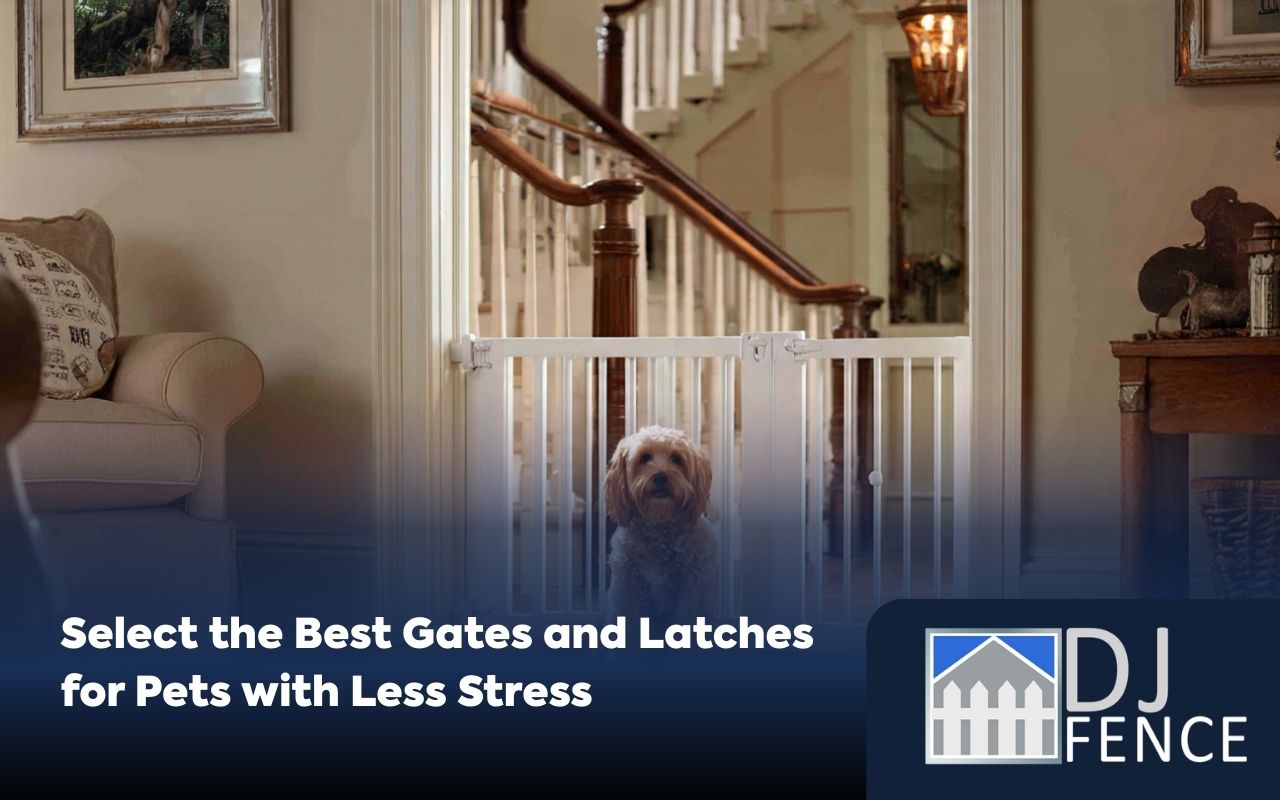
Choosing the right gates and latches for your pets can feel simple. Still, life with furry friends can be busy and messy. Best gates and latches for pets help you keep them safe. At the same time, they let them move with freedom.
Because there are many choices, you may feel unsure. However, this guide breaks it down step by step. You will learn about double-gate setups, self-closing options, and the right clearance for your space. As a result, you can choose with confidence, and you can enjoy more calm at home.
Understanding Your Pet’s Needs
First, watch how your pet moves around the home. Some pets stay close, while others rush through open doors. Therefore, note the spots that need control, like stairs or the kitchen. Best gates and latches for pets work best when they match real habits.
Next, consider size and energy. Small pets can slip through wide gaps. Meanwhile, bigger dogs may push and test height. So, pick a gate that fits your pet’s strength and style. DJ Fence can also help you think through safe zones and traffic flow.
- Identify risky areas, such as stairs and hot kitchens.
- Match gate height to jumping ability and energy.
- Choose tougher frames for scratching or chewing.
Types of Gates for Pets
There are several gate styles, and each fits a different home. Pressure-mounted gates are quick to set up. In contrast, hardware-mounted gates feel more solid for daily use. Best gates and latches for pets often start with picking the right style for your routine.
Also, some homes need wider coverage. In that case, a double-gate setup can span large openings. Additionally, retractable gates save space and reduce clutter. DJ Fence can guide you toward styles that feel easy to use every day.
- Pressure-mounted gates for simple, temporary use.
- Hardware-mounted gates for a stronger, long-term hold.
- Retractable and freestanding options for flexible layouts.
Key Buying Checks Before You Decide
Measure your opening before you buy. Then, check how doors and drawers move near the gate. This helps you plan proper clearance, so nothing jams. Best gates and latches for pets should fit without forcing parts into place.
After that, look at latch design. A latch should feel secure, yet open with one hand. Moreover, if you carry bags or a child, easy use matters. If you want extra help, DJ Fence can suggest setups that feel practical and safe.
- Measure width and height, and plan room for adjustment.
- Confirm clearance for nearby doors, drawers, and trim.
- Pick a latch that locks well and opens smoothly.
Indoor vs. Outdoor Gates
Indoor gates often focus on comfort and style. They may use wood, plastic, or light metal. Outdoor gates, however, must handle sun and rain. So, choose finishes that resist rust and wear.
Also, placement matters. Indoors, you might block stairs or rooms. Outdoors, you might protect a patio entry. If you want gates that work with a fence line, explore fence installation in Fairfax, VA to support a safer yard plan.
Installation Tips That Prevent Problems
Measure twice, then install once. If you use a pressure gate, avoid over-tightening. Otherwise, it can mark walls or slip later. For hardware setups, line up brackets carefully so the latch closes cleanly.
Next, test stability with gentle pushes. Then, check the gap under the gate for small paws. If something feels loose, fix it right away. DJ Fence can also point you to safer layouts when gates meet fence areas.
Maintenance and Long-Term Strength
Clean the gate often, especially near hinges and latches. Dirt can slow parts and cause sticking. Also, check screws and joints each month. As a result, you catch wear before it becomes risky.
If parts wear out, replacement can be simple. Many brands sell spare latches and brackets. If a gate is damaged, consider fence repair services to keep outdoor areas safe and secure.
Budget-Friendly Options Without Cutting Corners
Saving money is possible, but safety still comes first. Pressure-mounted gates can cost less. Still, they work best for calmer pets and lighter use. Also, secondhand gates can help, but only if all parts are intact.
DIY options can work too, although they need careful planning. For example, you can reuse a baby gate if the gaps are small. However, always confirm clearance and latch strength before daily use.
Customization and Home Style
You can choose gates that look good and work well. Wood blends with trim, while metal fits modern rooms. Also, some gates offer panels and add-ons for daily convenience.
If your home needs wider control, a double-gate setup can manage busy openings. Likewise, a self-closing design can reduce “left open” mistakes. DJ Fence can help you think through style, flow, and safety together.
Frequently Asked Questions
How do I choose the right height for a pet gate?
First, watch how high your pet can jump. Then, choose a taller option for jumpers. This keeps the barrier more reliable.
Are pressure-mounted gates safe for stairs?
Often, they are not the best choice for stair tops. Instead, use hardware-mounted gates there. That way, the hold is stronger.
What does clearance mean when buying a gate?
Clearance means the space around and under the gate. Therefore, you want gaps small enough to block paws and bodies.
When should I consider a double-gate setup?
Use a double-gate option for wide openings or landings. Also, it can help when you manage two directions of movement.
Do self-closing gates really help?
Yes, they can reduce human error. Because the gate swings shut on its own, it helps keep zones secure after each pass.
Conclusion
Best gates and latches for pets come down to habits, fit, and daily ease. Measure carefully, plan clearance, and choose a latch you will use with comfort. Also, consider double-gate and self-closing features when they match your routine. DJ Fence can help you build a safer home flow, and then you can enjoy more peace every day.