
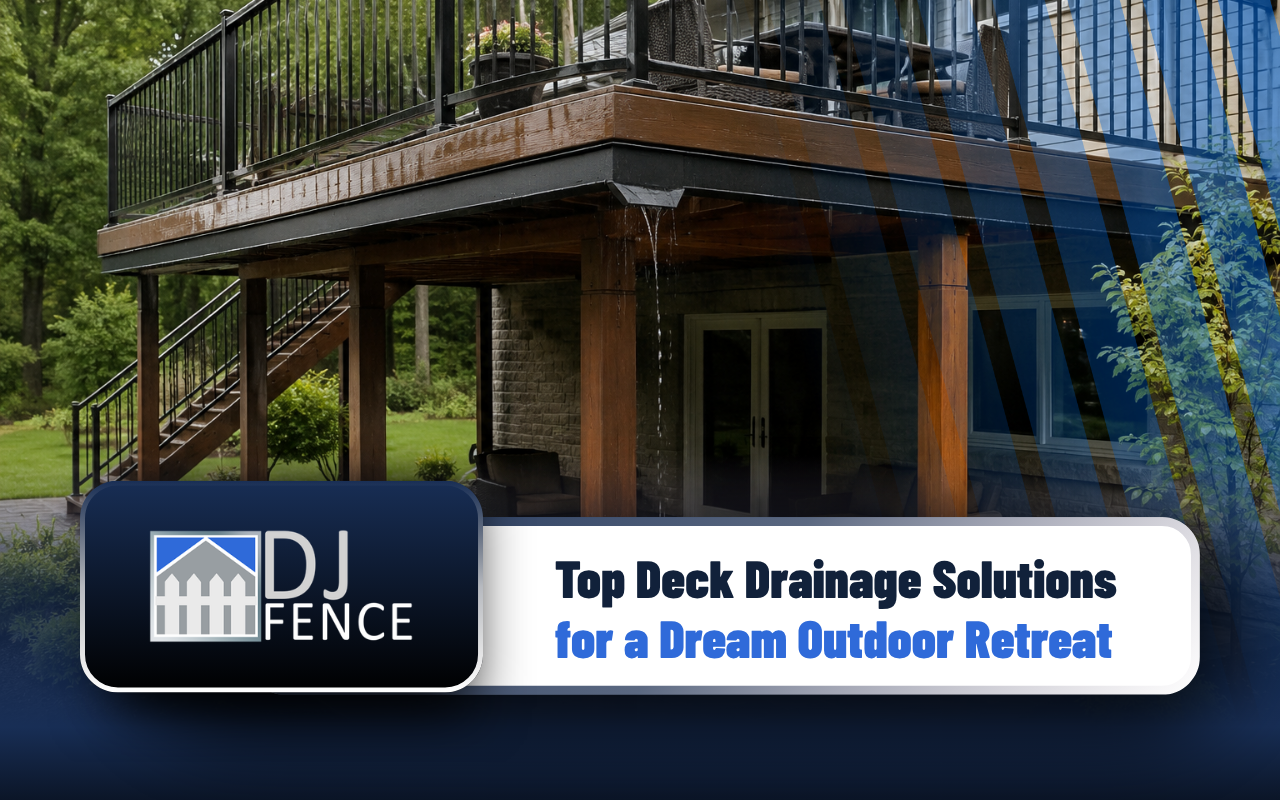
A well-planned deck should stay comfortable and useful even after rain. The right deck drainage solutions guide water away, protect key parts, and reduce wet areas around your outdoor space. At DJ Fence, we look at the full deck layout before recommending a practical approach.
Good drainage starts with smart design. Our deck building services consider slope, materials, water direction, and the space below the deck so each part can work together.
Why Does Deck Water Runoff Need Planning?
Rainwater naturally follows the easiest path. Without a clear route, it may collect between boards, near support posts, beside the home, or under the deck. This standing water can make surfaces slippery and may increase the risk of swelling, staining, mold, or early material wear.
Effective moisture management begins by studying where water enters and where it should exit. A complete plan may include slope, barriers, channels, gutters, ground grading, and regular care. The best setup depends on the deck height, framing, surface material, surrounding soil, and how the lower area is used.
Sloped Decking Directs Water Away Safely
A slight deck slope encourages rainwater to move away from the home instead of settling near the ledger or in low spots. This pitch is usually planned during framing, when joist height and board direction can be adjusted more easily.
Sloped decking also supports other drainage systems for decks. When water travels in one clear direction, troughs, membranes, and gutters can collect it more efficiently. Our team at DJ Fence considers the deck shape and nearby structures so the water path feels natural and does not create a new problem elsewhere.
Under-Deck Systems Protect Useful Lower Space
Under-deck systems capture water that passes through the deck boards and direct it toward a gutter or downspout. They are especially useful for elevated decks where the area below may become a seating zone, walkway, or storage space.
- Panels or troughs collect water between or below the joists.
- Channels move the water toward a controlled outlet.
- Gutters and downspouts carry runoff away from the lower area.
- A finished ceiling can create a cleaner look beneath the deck.
These deck drainage solutions can also reduce repeated moisture exposure around framing. The system must be fitted carefully around posts, beams, and seams. Small gaps or poor outlet placement may allow leaks, so the full route should be planned before decorative finishes are added.
Waterproof Membranes and Troughs Add Protection
A waterproof membrane creates a barrier over or around deck framing. It can help keep water from reaching joists, beams, and connection points. Membranes are often used with a slope so captured water continues moving toward the edge instead of sitting inside the system.
Drainage troughs provide another controlled path. They sit below the deck surface and guide water toward an outlet. With DJ Fence, you receive guidance based on the deck design, access needs, and the condition of existing materials rather than a one-size-fits-all recommendation.
Both options require sealed joints and clear discharge points. They should also remain accessible enough for inspection. A hidden drainage feature still needs occasional checks to make sure leaves, dirt, or movement have not affected water flow.
Grading, French Drains, and Gutters Control Flow
Deck water runoff does not stop at the deck edge. The surrounding ground must carry water away from support posts, stairs, landscaping, and the home. Surface grading, French drains, and gutters can work together when a site has low areas or heavy water movement.
- Grade the soil so water moves away from the structure.
- Use gutters to collect water from deck or roof edges.
- Direct downspouts toward a safe discharge area.
- Consider a French drain where soil holds excess water.
- Check that outlets do not send water toward a neighbor or walkway.
Each property has different soil, elevation, and space limits. Before choosing a drainage route, review examples in our project portfolio and consider how similar layouts manage water around the deck.
Sealants Support Long-Term Moisture Management
Sealants can reduce how quickly wood absorbs water, but they do not replace proper drainage. They work best as one layer within a broader moisture management plan. The deck should still have good airflow, clear gaps, a sound slope, and a reliable path for runoff.
The right coating depends on the deck material and its current condition. Before application, the surface should be clean and dry. Peeling finishes, trapped dirt, or damp wood can lead to uneven results. Regular inspection also helps identify worn areas before moisture reaches deeper into the boards.
When you choose DJ Fence, we focus on how the deck surface and drainage plan support each other. This practical approach helps homeowners make informed choices without adding features that do not fit the structure or the way the outdoor space is used.
Frequently Asked Questions
What are the main signs of poor deck drainage?
Common signs include standing water, dark stains, soft wood, damp areas below the deck, soil erosion, and water collecting near support posts. You can review our outdoor construction services to understand which type of support may fit the issue.
Can drainage be added to an existing deck?
In many cases, yes. The best option depends on access to the framing, deck height, board condition, and existing slope. Some systems can be installed below the boards, while others may require partial removal. Use our contact page to share details about the current setup.
Which drainage systems for decks work best?
There is no single best system for every property. Elevated decks may benefit from under-deck panels, while other layouts may need membranes, troughs, gutters, grading, or a combined plan. Our deck builder page explains how design choices connect with long-term performance.
How often should a deck drainage system be checked?
Check the system after major storms and during routine deck care. Look for blocked outlets, loose seams, debris, stains, and unexpected dripping. Seasonal inspection is also useful where leaves, snow, or soil movement may affect the water path.
Do sealants solve deck water runoff problems?
Sealants help limit surface absorption, but they cannot correct poor slope, blocked channels, or water collecting near the foundation. They are most effective when combined with proper drainage, airflow, and regular maintenance.
Create a Drier, More Comfortable Outdoor Retreat
A strong drainage plan protects more than the deck surface. It supports the framing, lower space, nearby soil, and the comfort of everyone using the area. The right combination depends on how water moves across the property and how you want the deck to function.
- Identify where water collects after rain.
- Choose a clear route for water to leave the deck.
- Match the system to the deck height and framing.
- Keep outlets open through routine inspection.
At DJ Fence, we can help you explore deck drainage solutions that fit your outdoor space and project goals. Contact our team about your deck and take the next step toward a cleaner, drier retreat.