
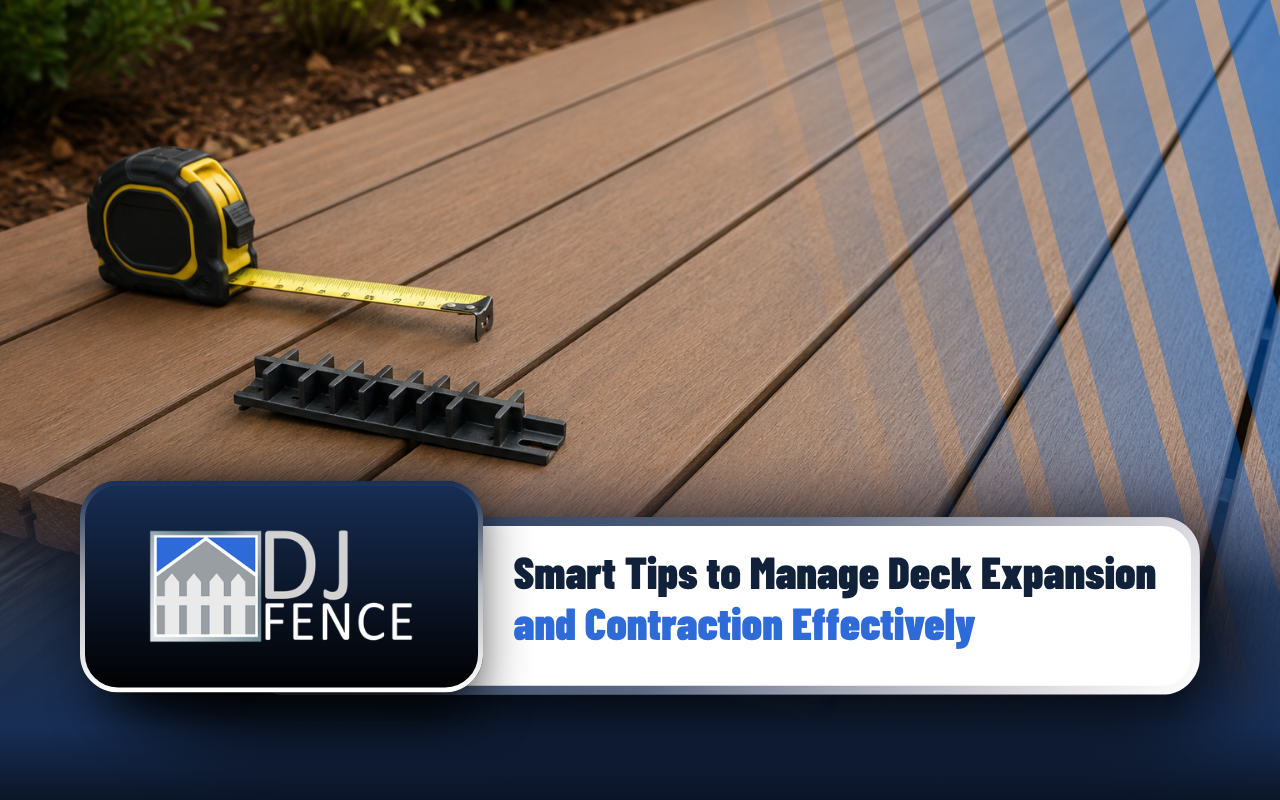
Seasonal changes can affect how deck boards fit, feel, and perform. Understanding deck expansion and contraction helps homeowners avoid large gaps, raised boards, trapped water, and other problems that may shorten the life of an outdoor space.
At DJ Fences, we consider material behavior when planning each deck building project. Correct spacing, suitable materials, and regular care can support a safer and more stable surface throughout the year.
Why Do Deck Materials Change Through Seasons?
Wood naturally absorbs and releases moisture from the surrounding air. It may swell during wet or humid conditions and shrink when the weather becomes dry. This wood movement happens across the width and thickness of each board.
Heat can also affect decking materials. Wood, composite boards, fasteners, and supporting parts may react differently as temperatures rise or fall. These repeated changes create pressure when the boards do not have enough room to move.
Managing deck expansion and contraction begins with understanding the local climate, the selected material, and its condition during installation. Boards that look properly spaced on one day may fit differently after several weeks of changing weather.
How Wood Movement Affects Deck Performance
Natural movement is expected, but poor planning can turn small changes into visible damage. When boards press against each other or move around fasteners, the entire surface may become less comfortable and reliable.
- Boards can cup, twist, or rise along their edges.
- Fasteners may loosen as the material moves repeatedly.
- Narrow gaps can collect water, dirt, and leaves.
- Large gaps can affect comfort and appearance.
- Board ends may split when movement creates pressure.
Our team at DJ Fences looks at these details as part of the full deck design. Homeowners can view examples in our project portfolio to see how thoughtful planning supports clean, practical outdoor spaces.
Planning Deck Board Spacing Before Installation
Deck board spacing gives each board room to respond to moisture and temperature changes. The correct gap depends on the decking material, current moisture level, manufacturer guidance, and expected weather conditions.
Fresh or damp wood may shrink after installation. Dry boards may expand when exposed to rain or humidity. Composite products can also change with heat, although their movement often follows a different pattern from natural wood.
Consistent spacing also supports drainage and airflow. Water should be able to move away instead of remaining between boards. When you choose DJ Fences, we plan the layout around the material and the needs of the outdoor area.
Temperature Effects on Decking Materials
Temperature effects on decking can be more noticeable in areas with strong sunlight or wide seasonal changes. Dark surfaces may become especially warm during the day, while cooler nighttime temperatures can cause the material to contract.
Fasteners, framing, and deck boards do not always expand at the same rate. Proper installation allows these parts to work together without placing unnecessary stress on joints. The board layout must also account for walls, railings, stairs, and other fixed features.
Homeowners planning related exterior improvements can review our complete service options. Coordinating connected features early can reduce layout problems and support a more balanced final result.
Warning Signs That Need Prompt Attention
Early inspection can prevent a small movement issue from becoming a larger repair. Check the deck after major weather changes and look for differences in spacing, surface height, and board condition.
- Boards are touching with no visible drainage gap.
- Edges rise and create an uneven walking surface.
- Screws or other fasteners appear loose.
- Cracks form near board ends or fastener points.
- Water remains trapped after rain.
- Boards press against posts, walls, or trim.
Deck expansion and contraction may not affect every board equally. Areas with more shade, moisture, or direct sun can behave differently. Addressing these signs early may help protect the surrounding boards and framing.
Practical Maintenance for Better Year-Round Stability
Routine maintenance helps control moisture and keeps gaps clear. A simple seasonal check can reveal developing problems before they affect a larger part of the deck.
- Remove leaves and dirt from spaces between boards.
- Check fasteners and replace damaged hardware when needed.
- Look for cracks, raised edges, or soft areas.
- Keep nearby drainage paths open and working.
- Follow the material maker’s cleaning and care guidance.
At DJ Fences, we encourage homeowners to focus on consistent care instead of waiting for visible damage. Cleaning, inspection, and timely repairs can reduce moisture buildup and support more predictable wood movement.
Frequently Asked Questions
How much space should be left between deck boards?
The correct space depends on the material, moisture level, and installation guidance. A professional deck builder can evaluate these factors before choosing a suitable gap.
Can boards be installed tightly together?
Tight installation can create problems when boards absorb moisture or react to heat. Without enough room, they may press together, limit drainage, or rise along the edges.
Do composite boards expand and contract?
Yes. Composite materials can move as temperatures change. The amount and direction depend on the product, so installation should follow its specific spacing and fastening instructions. Our completed project gallery shows several outdoor construction styles.
Can existing spacing problems be corrected?
Some problems can be corrected by resetting, trimming, or replacing affected boards. The right solution depends on the deck condition and the cause of the movement. You can request a deck evaluation for guidance.
How often should a deck be inspected?
A deck should be checked regularly and after severe weather or major seasonal changes. Pay close attention to drainage, fasteners, surface movement, and areas near stairs or railings.
Build a More Stable Deck With Confidence
Good material selection, careful deck board spacing, and regular maintenance can reduce the risks connected to deck expansion and contraction. These steps support drainage, improve comfort, and help the surface respond more evenly to seasonal conditions.
With DJ Fences, you can plan an outdoor space around your property, materials, and long-term needs. Contact our team about your deck project and take the next step toward a stable, practical outdoor area.