
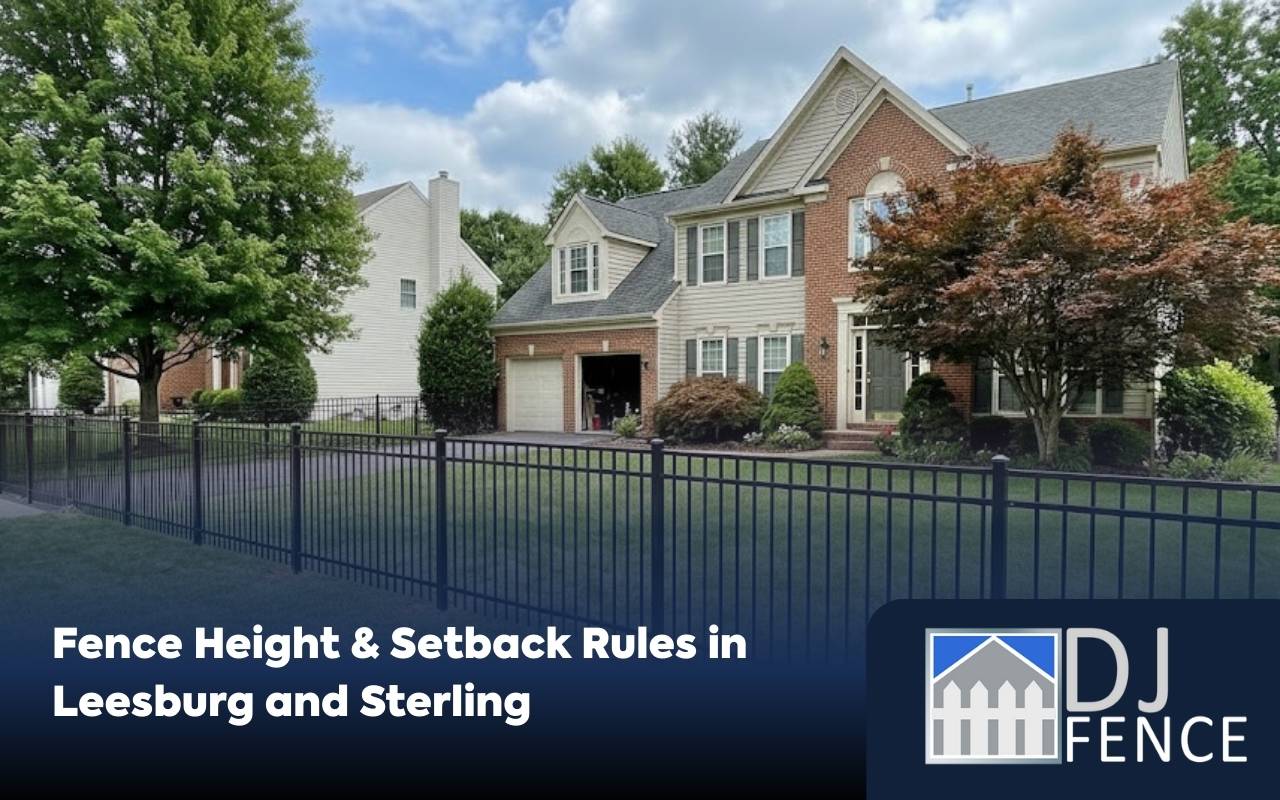
Fence Height Rules in Leesburg Sterling can seem like the fine print of a long contract for many homeowners. These local rules may look simple, yet they change a lot depending on whether your fence sits in the front yard, backyard, or on a corner property.
Each area has its own clear limits, which can easily confuse people planning new fences. However, when you understand these rules early, you save time and avoid fines or disagreements. Careful planning also helps you keep good relationships with neighbors while protecting the look and safety of your street.
Even a small mistake in setback distance can create tension and force you to move sections of fence later. Therefore, learning how these regulations work will help you stay compliant and keep your project affordable. With the right information, you can improve your home’s exterior and still respect every legal boundary.
Overview of Fence Height Regulations in Leesburg and Sterling
When you start checking Fence Height Rules in Leesburg Sterling, you see that the county and towns use similar ideas. They set limits based on where the fence stands on the lot and how it affects views, safety, and neighborhood style.
Most areas use different rules for front vs backyard, corner lots, and a few special zones such as historic or commercial districts. In addition, rules can apply to both single-family homes and townhouses to keep a consistent look along each block and protect open views near streets.
- Front yard fences usually have lower height limits.
- Backyard fences often allow more height for privacy and security.
- Corner properties can have extra visibility rules for drivers.
- Special districts may add unique style or material rules.
Before planning any project, it helps to review local rules and your future design together. For example, you might match your design to a planned fence installation in Leesburg or coordinate with a trusted company for fence installation in Sterling. This way, your plan already fits the most common height limits and style ideas.
Front Yard Fence Height Restrictions
Because front yards sit close to sidewalks and roads, local rules usually keep front fences lower. In many residential areas, front yard fences must stay around three feet tall so drivers, cyclists, and people walking can see clearly at corners and driveways.
Homeowners can still enjoy curb appeal with short picket, rail, or decorative metal fences that stay under this limit. However, the design should avoid looking like a solid wall. Regular gaps between boards or rails help keep the street view open and friendly while still framing the yard.
- Keep fence height near three feet in front yards.
- Choose open designs instead of solid panels.
- Check sightlines near driveways before installing posts.
- Match colors and styles with nearby homes for balance.
Backyard Fence Height Regulations
Backyards usually allow taller fences because they sit further from the street and provide space for family life. Under Fence Height Rules in Leesburg Sterling, many residential zones permit fences up to about six feet behind the front building line, which offers good privacy and security.
Even with this helpful limit, your fence must stay inside your property lines and avoid blocking utility easements or paths. Additionally, sloped yards can change how height is measured, so it is wise to check how local staff measure from grade before you dig. This step prevents surprises during inspections.
Materials like wood panels, vinyl sections, or chain link with privacy slats are common choices for backyards. If you live in a neighborhood with a homeowners association, always check any extra rules on colors, styles, or decorative tops before signing a contract with a fence installer.
Corner Lot Fence Height Guidelines
Corner properties bring more complexity because they face two streets. To protect visibility at intersections, local rules often require lower fence heights near the corner where drivers turn. A small “visibility triangle” from each curb usually limits fence height to about three feet inside that area.
Outside the visibility triangle, many corner properties may follow normal backyard rules up to around six feet. However, the size of the triangle can change with street width and speed limits. Therefore, checking a map or talking with zoning staff before building is very important for corner lots.
Understanding Setback Requirements
Setback rules explain how far a fence should sit from property lines, sidewalks, or public paths. In many neighborhoods, fences must sit a short distance, often one to two feet, inside the property line. This space helps with yard care, shared maintenance, and safe access to utility lines.
Additionally, different setbacks may apply if your property touches a stream, pond, wetland, or public trail. Extra buffer space can protect natural areas and keep paths comfortable for walkers. Before installing posts, it helps to review a survey or online map so you know exactly where the true boundaries lie.
Permits and Approval Process for Fence Installation
Once you know your planned height and setbacks, the next step is getting any needed permits. Many small residential fences qualify for a simple or fast review, especially when they match typical local standards in height and location.
During the permit process, you may need to share a basic site sketch that shows property lines, buildings, and where the fence will sit. Staff check this plan against local rules and may ask questions about materials or gate locations. After approval, an inspector might visit to confirm that the built fence matches your plan.
Exceptions to the Standard Fence Height Rules
Some properties may qualify for exceptions when standard rules do not fully meet safety or use needs. For example, homes next to parks, schools, or busy roads might receive permission for slightly taller fences to improve security or reduce noise.
Similarly, farms, large estate lots, or properties with pools and equipment can sometimes request variances. A variance request usually involves a short form and a public hearing. Clear, practical reasons and benefits for neighbors often help when you explain why a taller or different fence is necessary.
Common Mistakes to Avoid When Installing a Fence
Many fence problems start with poor measurements. A frequent error is placing posts directly on or even past the property line, which can lead to serious neighbor conflicts. Using a recent survey or hiring a surveyor can prevent this issue from the start.
Other common mistakes involve ignoring soil and water conditions. When water collects near posts, wood can rot and metal can rust much faster. Additionally, choosing very cheap hardware may cause gates to sag. Thoughtful planning and better materials save you money over the life of the fence.
- Confirm property lines with a survey before digging.
- Plan drainage away from posts and footings.
- Use quality fasteners and hinges for gates.
- Check rules again before changing fence height or layout.
Neighborly Etiquette and Communication Regarding Fencing
Good communication with neighbors often matters as much as the fence itself. Sharing your plans early, including drawings and heights, shows respect and can reduce misunderstandings. Sometimes neighbors may even offer to share costs along a shared boundary line.
If concerns arise, listening carefully and explaining your needs calmly usually helps. When a disagreement feels hard to solve, local mediation services can support a fair compromise without court action. A polite approach keeps long-term relationships friendly and makes the street more pleasant for everyone.
Frequently Asked Questions
Do I always need a permit before building a fence?
In many cases, yes, especially when the fence reaches typical maximum heights or sits near a street. However, very low or decorative fences might not need a full permit. It is always safest to check with your local zoning or building office before you start any fence project.
Can I build a taller fence for extra backyard privacy?
Sometimes you can request a variance if you need more privacy or security than standard limits allow. You will likely need to explain why extra height is important and how it will not harm neighbors’ views or safety. Local staff or a fence company can guide you through this process.
How close can I place my fence to my neighbor’s yard?
Most rules require a small setback inside your property line, often one to two feet. This gap helps with lawn care and repairs. A survey and open discussion with neighbors make it much easier to choose a final line and avoid future disputes about the fence location.
What should I discuss with my neighbors before installing a fence?
You should share the fence height, style, color, and exact location before building. Additionally, ask about any concerns they may have about shade, views, or pets. Clear, friendly conversations help both sides feel heard and often lead to designs that work better for everyone on the block.
Who can I contact for help with planning my fence project?
You can talk with local zoning staff for rule details and reach out to a trusted installer for design advice. If you want expert support from start to finish, you may also contact DJ Fences to discuss options that fit both your property and local requirements.
Enhancing Your Property With Compliance
Understanding and following the Fence Height Rules in Leesburg Sterling ensures your project runs smoothly from the first sketch to the final inspection. From front yard visibility standards to special corner lots rules, these guidelines protect safety and keep neighborhoods attractive.
By taking time to review setbacks, permits, and neighbor concerns, you make the building process easier for everyone involved. When you pair clear legal knowledge with thoughtful design, your new fence can boost privacy, style, and value while fully respecting local expectations and community comfort.