
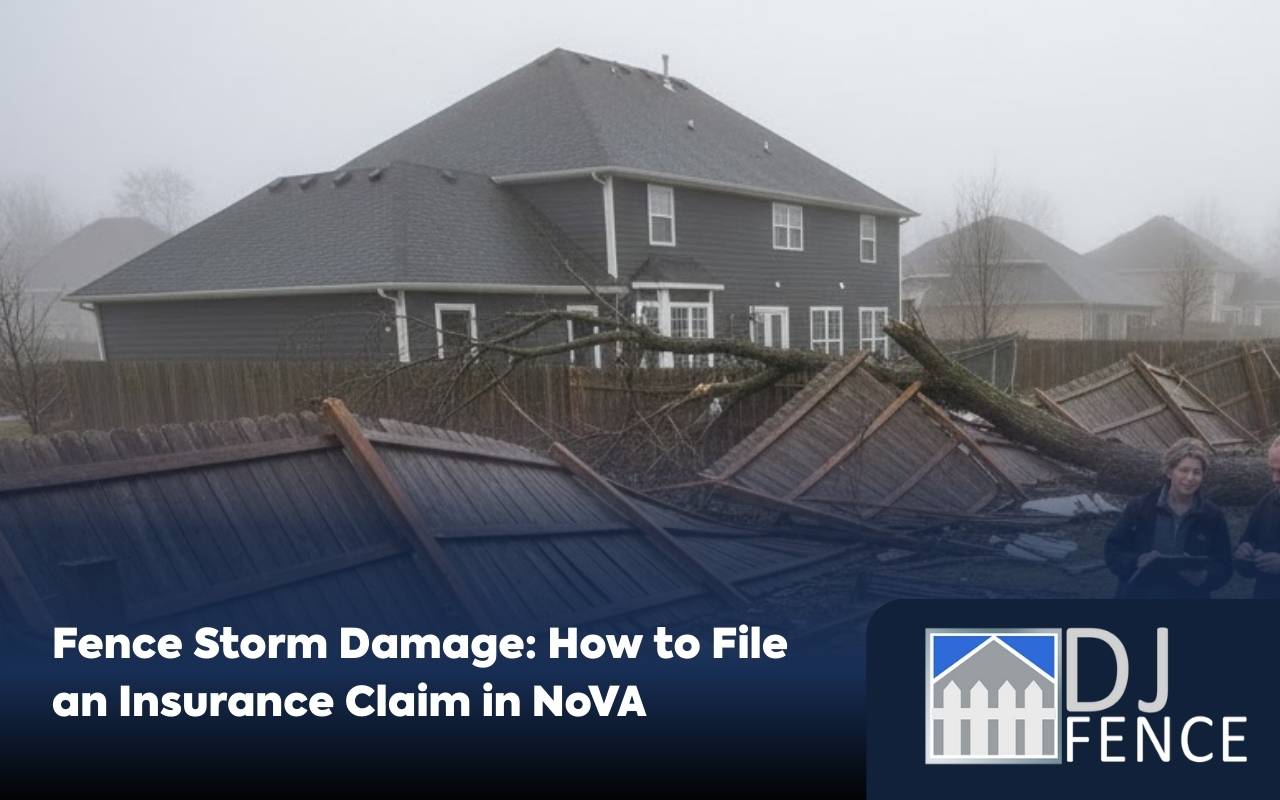
Fence Insurance Claim Storm Damage can feel overwhelming after a strong storm in NoVA. You face broken panels, leaning posts, and confusing insurance rules. However, with a clear plan, you can move from stress to action and protect your budget.
In this guide, you will learn how to assess damage, organize documentation, request estimates, and talk with adjusters. Step by step, you will see how to build a solid claim, avoid common mistakes, and restore your fence with confidence.
Assessing Fence Damage After a Storm
First, walk along the fence once it is safe to go outside. Look for missing boards, leaning posts, cracked panels, and gaps. Take clear photos from different angles and distances. These images will support your Fence Insurance Claim Storm Damage file with your insurer later on.
Next, gently push posts and panels to check their strength. Note loose posts, rotting wood at the base, or bent metal sections. Even a few wind-torn pickets count as damage. Write short notes, add a simple sketch of problem areas, and keep everything together to make the next steps easier.
- Walk the full length of the fence slowly.
- Photograph every damaged section from several angles.
- Test posts and panels by pressing them gently.
- Mark trouble spots on a simple drawing.
Importance of Proper Documentation for Insurance Claims
Good documentation is your best friend during the claim. Gather receipts, installation contracts, and any photos taken before the storm. These items show the fence’s past condition and value. A strong paper trail leaves less room for disagreements about wear, age, or cost.
Then, place all storm damage documentation in one folder. Include notes, photos, dates, and local weather records from the day of the storm. If possible, add online weather reports or news about the event. Organized documentation shows you are prepared and helps the insurer review your claim faster.
- Store purchase receipts and installation contracts.
- Save “before” and “after” photos of the fence.
- Keep weather and news records from the storm date.
- Create digital backups in email or cloud storage.
Gathering Necessary Information for the Claim
Before you call the insurer, write down your policy number, start date, and coverage limits. Check if your policy pays full replacement cost or actual cash value. This detail changes how much money you receive after storm damage. Knowing this early avoids surprises.
Next, collect names of local suppliers and contractors to request estimates. You can search online, ask neighbors, or look for trusted fence repair services in NoVA. Also, note any county permit rules for fence work. Clear, ready information helps keep conversations with adjusters quick and simple.
Understanding Your Insurance Policy Coverage
Start by reading the declarations page of your homeowner’s policy. It lists coverage limits and deductibles for property damage. Check if fence storm damage is clearly named or covered as part of other structures. Some policies limit certain fence materials, so pay attention to these details.
After you understand what is covered, compare your deductible to likely repair costs. If small repairs are below or near the deductible, you may choose to pay them yourself. For larger damage, your Fence Insurance Claim Storm Damage process becomes more important, and filing a claim can protect your savings.
Obtaining Estimates for Repair or Replacement
Contact at least three trustworthy fencing contractors in NoVA and share your photos and notes. Ask each company for a written, itemized estimate that separates labor, materials, and any permit fees. Accurate quotes are key to a fair Fence Insurance Claim Storm Damage payout.
Once you receive estimates, compare prices, timelines, and materials. Look for quality work at a fair cost. You can also request quotes from local experts like fence repair services in NoVA to better understand market rates. Attach every estimate to your documentation folder to support your claim.
Meeting with Insurance Adjusters and Providing Documentation
Schedule a time for the adjuster to visit your property. Before the meeting, review your documentation, including photos, notes, estimates, and policy pages. During the walk-through, calmly guide the adjuster along the fence and point out each damaged spot you recorded earlier.
Kindly ask what details the adjuster needs to decide on payment. Listen closely and make sure they note all issues, including hidden structural problems. Sharing clear records with adjusters strengthens your Fence Insurance Claim Storm Damage case. After the visit, send a short thank-you email and attach your main documentation again.
Negotiating Fair Compensation for Fence Damage
When you receive the first offer, compare it carefully with your estimates. Look for any missing line items or low amounts. If you see gaps, explain them with simple facts, local price examples, or contractor notes. Calm, clear communication matters more than emotion during this stage.
During talks, ask the insurer to explain any denied items in writing. You can then request a new estimate from another contractor or ask for a review. Throughout the process, keep written records of calls, emails, and letters. Well-documented negotiations make it easier to reach a fair agreement.
Handling Rejected or Inadequate Claims
If your claim is denied or the offer seems too low, read the letter carefully. Note the policy language the insurer uses. Then, gather extra photos, weather records, and parts of the policy that support your position. Use them to write a short, polite appeal.
If the insurer does not change the decision, you may seek help. A public adjuster or your state insurance office can guide you. Some public adjusters work on a percentage of the recovered amount. Keep track of all extra costs and steps while you continue to protect your rights.
Restoring Your Fence and Property After Approval
After you receive approval and payment, choose your preferred contractor and schedule the work. Confirm who will handle permits in NoVA and how long the project will take. Clear timelines help you plan around pets, children, and daily routines while the fence is repaired or replaced.
As the work moves forward, take photos of each stage. These images support future documentation, warranties, or new claims if another storm hits. Once the job is done, walk the fence line with the contractor and confirm that it meets your expectations. For further questions or planning, you can contact DJ Fences and discuss any next steps.
Frequently Asked Questions
How soon should I file a fence storm damage claim?
You should file the claim as soon as it is safe and you have basic photos. Many policies have strict time limits, so early action is wise.
Do I need multiple estimates for my fence damage?
While not always required, having at least two or three estimates helps show fair market pricing. This makes it easier to discuss payment with the insurer.
What if the adjuster’s report misses some damage?
If you notice missed items, send photos and a written note to the adjuster. Ask for an updated report that includes the extra damage you found.
Premium changes depend on your insurer and claim history. Storms are often seen as events you cannot control, but only your insurer can confirm future impact.
Can I choose my own contractor for fence repairs?
Yes, in most cases you can choose your contractor. However, the insurer may have preferred vendors, so compare their options with your own research before deciding.
Tips for Future Storm Preparedness
Preparing before the next storm can limit damage and stress. Inspect your fence at least once or twice a year. Tighten loose hardware, replace weak boards, and fix small issues. Also, trim nearby trees and branches that could fall on your fence during heavy wind.
In addition, store digital copies of receipts, photos, and policy papers in a safe cloud folder. Keep a list of trusted local contractors handy, including those who understand estimates and documentation well. Being ready today means a smoother, faster recovery when storms return to NoVA.
- Inspect and maintain the fence regularly.
- Trim trees and remove hanging branches.
- Save digital records of fence paperwork.
- Keep contact details for reliable contractors.