
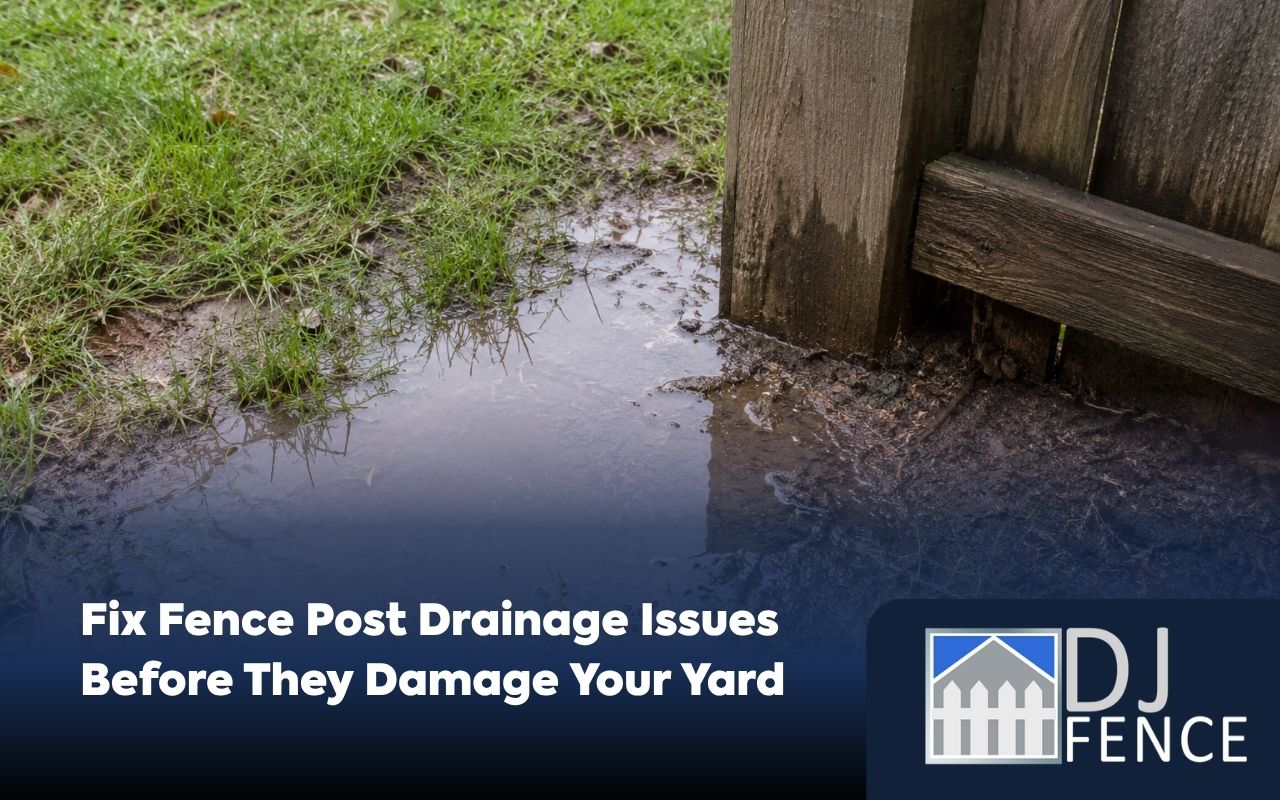
Protecting a fence starts below the ground, where water can collect around each post. At DJ Fence, we look at how soil, slope, and runoff affect your fence line before small moisture problems become larger repair needs. You can explore our fencing services for more ways to care for your property.
Fence post drainage issues often start slowly. A small puddle, soft soil, or damp post base may not seem serious at first. Over time, trapped moisture can weaken wood, loosen concrete, and make the fence less stable.
What Causes Drainage Problems Around Fence Posts?
Most drainage problems begin when rainwater cannot move away from the base of each post. Flat yards, compacted soil, clay-heavy ground, and blocked runoff paths can all hold moisture in place. Sprinklers, roof runoff, and low areas near the fence can also keep the soil wet for too long.
Concrete can make the issue worse when it is shaped like a bowl around the post. Instead of shedding water, it holds it near the base. When this happens often, fence post drainage issues can lead to leaning posts, soft wood, or damaged soil along the fence line.
Early Signs of Water Around Fence Posts
Water pooling near fence posts is easier to fix when you notice it early. Walk the fence line after rain and look for changes in the soil, wood, and nearby landscaping. Small signs can show that water is not draining the right way.
- Standing water that stays near posts for more than a day
- Soft, muddy, or washed-out soil along the fence line
- Dark wood, damp smells, moss, or heavy weed growth
- Posts that feel loose, lean, or move when touched
- Mulch, leaves, or edging that blocks water flow
When you see these warning signs, our team at DJ Fence can inspect the affected area and explain whether repair work may be needed. For posts that already feel loose or damaged, our fence repair services can help restore safer support.
How Poor Drainage Weakens Fence Posts
Wood posts face the most risk where the post meets the ground. This area gets both air and moisture, which can speed up decay. Even treated wood can weaken when it stays damp and does not have time to dry after storms or daily sprinkler use.
Poor yard drainage near fences can also affect concrete and soil strength. Wet soil may stop holding the post firmly, while trapped water can slowly open gaps around the base. These conditions make the fence more likely to shift, lean, or need repair sooner.
Simple Ways to Improve Soil Slope
A proper soil slope helps water move away from fence posts instead of settling around them. The goal is to guide rainwater toward a safe drainage path while keeping the base of each post clear enough to dry.
- Add clean topsoil where soil has sunk around posts
- Shape the ground so it slopes gently away from the fence
- Avoid piling soil high against wood post bases
- Remove mulch or debris that holds moisture near posts
- Check the slope again after heavy rain or yard work
This simple step can reduce water pooling near fence posts after light or moderate rain. It also supports better fence post rot prevention because the post base spends less time in wet soil.
Better Yard Drainage Near Fences
Good yard drainage near fences means looking beyond the post hole. Water may come from patios, garden beds, downspouts, or low lawn areas. If runoff moves toward the fence line, posts can stay wet even when they were installed correctly.
Watch how water moves during or after rain. Redirect downspouts away from the fence, clear blocked runoff paths, and remove edging that traps water. In some yards, a shallow swale or gravel drainage path may help move water away more safely.
When you choose DJ Fence, our team looks at the fence and the nearby yard conditions together. This helps us understand whether the problem is only around one post or part of a larger drainage pattern.
Fence Post Rot Prevention Steps That Work
Fence post rot prevention starts with keeping moisture from staying at the base for too long. Some steps are best done during installation, while others can be part of normal fence care throughout the year.
- Use outdoor-rated wood suited for ground contact
- Add gravel at the bottom of post holes when appropriate
- Shape concrete so it sheds water away from the post
- Seal or protect cut ends when the material allows it
- Keep leaves, mulch, and soil away from post bases
With DJ Fence, you get guidance that fits your fence material, yard layout, and visible damage. We avoid one-size-fits-all advice because drainage needs can change from one property to another.
Frequently Asked Questions
How do I know if drainage is damaging my fence posts?
Look for standing water, soft soil, dark wood near the ground, or posts that feel loose. These signs often mean water is staying near the base too long. A professional fence repair inspection can confirm the level of damage.
Can gravel fix water pooling near fence posts?
Gravel can help water move away from the post base, especially when used with proper soil slope. It may not solve every drainage issue by itself. The surrounding yard still needs a clear path for water to drain.
Should I replace a post with early rot?
It depends on how much strength the post has lost. If the wood is soft, hollow, or unstable, replacement may be safer. At DJ Fence, we can review the damaged area and recommend the right next step through our contact page.
How often should I check drainage near my fence?
Check the fence line after heavy rain, seasonal storms, and major yard work. Spring and fall are also good times to remove debris and review soil levels. Our fence services can help when you notice repeated drainage problems.
Can poor drainage affect metal fence posts too?
Yes. Metal posts do not rot like wood, but constant moisture can still affect soil support, concrete stability, and some metal surfaces. Keeping water away from the base helps protect the full fence structure.
Keep Fence Posts Strong With Better Drainage
Fixing fence post drainage issues helps protect your fence, soil, and yard from long-term damage. Simple changes like improving slope, clearing debris, redirecting runoff, and adding gravel where useful can make a clear difference in how well posts stay supported.
Better drainage also supports fence post rot prevention and keeps the fence line cleaner after rain. For help with leaning posts, soft soil, or drainage-related damage, contact our team and get practical guidance for your yard.