
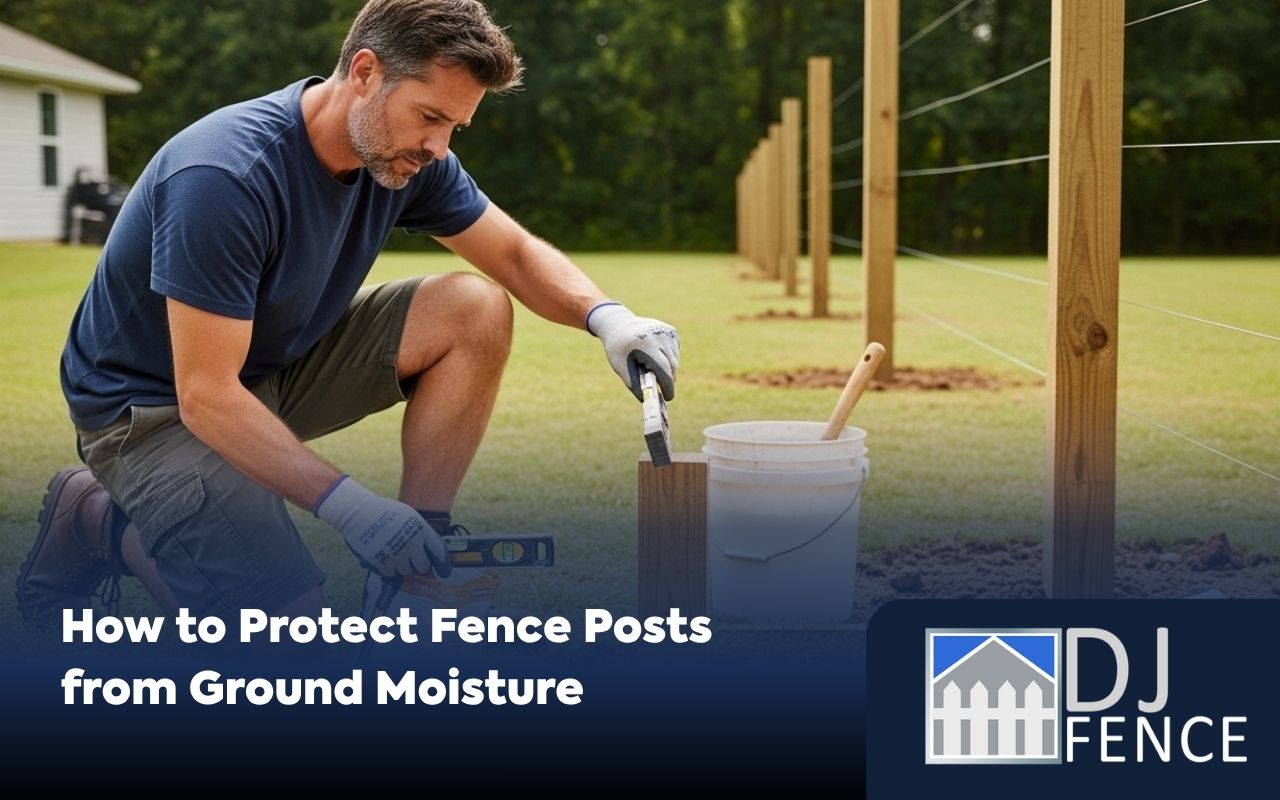
Ground moisture can slowly weaken any fence, and therefore it often causes hidden damage below the surface. At DJ Fence, we know that early care makes a big difference for strength, safety, and curb appeal.
Moreover, learning how to protect fence posts from ground moisture helps you avoid decay, loose panels, and costly work later. With the right steps, your fence can stay strong, clean, and dependable for many years.
Best Fence Post Materials for Wet Soil
First, the material you choose affects how well your fence handles damp ground. Wood, metal, and concrete all work differently, so the best option depends on your yard, soil, and weather.
For example, treated wood is common because it resists decay better than standard lumber. Meanwhile, metal posts can last longer in very wet areas, while concrete gives solid support but takes more effort to install.
- Pressure-treated wood works well for many homes.
- Cedar and redwood have natural oils that resist decay.
- Galvanized metal helps reduce water-related wear.
Smart Installation Steps That Reduce Moisture Risks
Next, proper setup is one of the best ways to lower water problems around each post. In fact, good installation supports fence post rot prevention and keeps your fence more stable over time.
Start with a deep, balanced hole and add gravel at the bottom for drainage. Then slope the concrete top away from the post, because that simple detail helps move water away faster.
Also, avoid packing wet soil tightly around wood. When posts are cut on site, seal the fresh end before placing it in the ground.
Protective Treatments That Help Posts Last Much Longer
In addition, protective coatings create a barrier against water, sun, and insects. This step matters because how to protect fence posts from ground moisture often depends on keeping water from soaking into the surface.
Before installation, treat any cut areas with an exterior wood preservative. Afterward, use a water-repellent stain or sealer, and then reapply it every few years as the finish begins to fade.
For metal posts, use a coating made to slow rust and peeling. As a result, the surface stays stronger and easier to maintain.
Wraps and Barriers That Block Damp Ground
Likewise, wraps and waterproof barriers can protect the lower part of a post where damage often begins. These products separate the post from wet soil and help reduce moisture damage in fence posts.
Slide the wrap over the post before installation and extend it slightly above the soil line. Then secure it well, so the barrier stays in place as the ground shifts through the seasons.
At DJ Fence, we often recommend combining wraps with sealers and drainage. Together, these steps build a stronger defense against long-term ground moisture.
Drainage Solutions for Stronger Fence Support Over Time
However, even the best post can fail if water sits around its base for too long. That is why proper drainage is essential when planning how to protect fence posts from ground moisture.
Grade the soil so water flows away from the fence line after rain. In wetter yards, gravel beds or simple drain systems can guide runoff away and help posts dry sooner.
- Slope soil gently away from each post.
- Add gravel to improve water movement.
- Clear debris after storms to keep flow open.
Seasonal Fence Checks That Prevent Bigger Problems
Meanwhile, regular inspections help you catch small issues before they turn into expensive repairs. A quick check in spring and fall can reveal early wear around the soil line.
Look for soft wood, cracked coatings, rust, leaning sections, or pooled water. If you notice trouble, our team suggests reviewing common fence post repair solutions to address weak areas early.
These routine visits support longer-lasting fence posts and help your fence stay secure through changing weather.
Frequently Asked Questions
How often should fence posts be inspected?
Generally, twice a year is a smart schedule. Also, check after heavy storms or long wet periods, because moisture problems can appear quickly.
Is gravel really helpful around fence posts?
Yes, gravel supports drainage and reduces standing water near the base. Therefore, it is a simple step that can improve post life.
Do sealers need to be reapplied?
Yes, most sealers wear down with sun and rain over time. In many cases, reapplying every two to three years keeps protection stronger.
Can damaged posts be repaired instead of replaced?
Sometimes, small issues can be repaired if the damage is limited. However, badly weakened or leaning posts often need full replacement for safety.
What if my fence already shows water damage?
First, inspect the affected section and stop further water buildup. Then review practical fence repair guidance to decide whether repair or replacement makes more sense.
Simple Upgrades That Add Extra Fence Protection
Finally, a few small upgrades can add even more protection to your fence system. Post caps help keep rain out from the top, while base covers reduce direct soil contact.
Careful landscaping also helps, because plants should not trap moisture against the fence line. At DJ Fence, we use practical methods that make how to protect fence posts from ground moisture easier to manage year after year.
- Install post caps to block top-down rain.
- Use base guards in wetter garden areas.
- Keep airflow open near the fence line.
In the end, smart materials, good drainage, and steady care all work together. DJ Fence believes how to protect fence posts from ground moisture should be simple, clear, and effective for every property.
Therefore, when you combine installation, coatings, drainage, and checks, you create a fence that stays dependable longer. DJ Fence is here to help homeowners follow how to protect fence posts from ground moisture with confidence.
If you would like to have further assistance, reach out here contact page.