
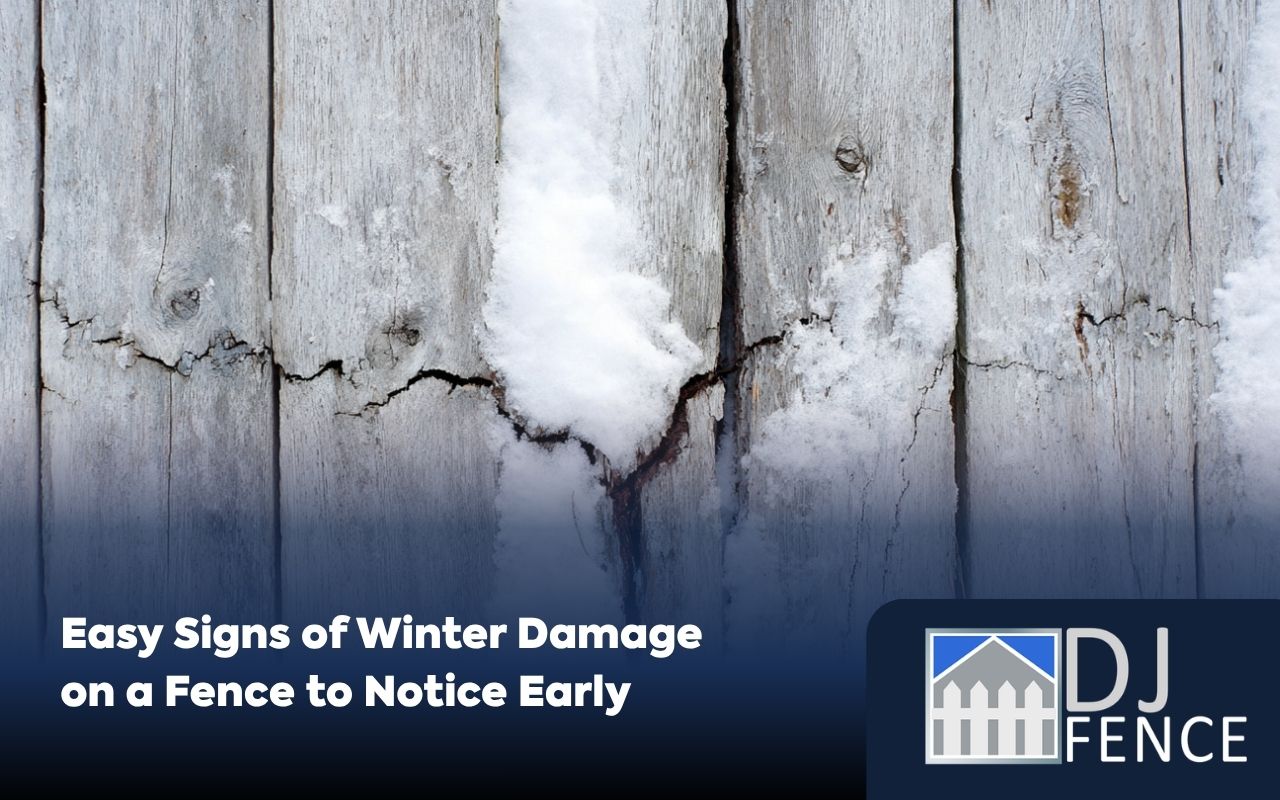
Signs of winter damage on a fence can show up before the problem looks serious. Snow, ice, wind, and cold air can slowly weaken boards, posts, and hardware around your yard.
DJ Fence wants homeowners to spot these small changes early. That way, you can protect safety, privacy, and fence strength before spring weather makes the damage worse.
Clear Board Cracks That Show Winter Stress on Your Fence
One common problem is cracked or split boards. In winter, water gets into small openings, freezes, and expands. As a result, a tiny mark can turn into a bigger break. DJ Fence recommends checking for thin lines, rough edges, or wide splits near board ends.
If you find these weak spots early, you can stop more water from getting inside. This helps lower the risk of rot, bending, and board failure during the next storm.
- Look for thin cracks across the wood grain.
- Check board ends for wider openings.
- Notice rough edges that were not there before winter.
Loose Fence Panels and Gaps After Harsh Winter Storms
Fence storm damage signs often include sections that feel weak or move too much. A panel may look fine from far away, yet up close you may see gaps, shaking, or poor alignment. DJ Fence often sees this after strong wind, freezing rain, and heavy snow.
Loose fence panels matter because one weak section can stress nearby rails and posts. Gently press each section and watch for wobbling. If movement is easy to see, repair is best before another storm hits.
- Press panels lightly to test for movement.
- Check for rattling sounds in windy areas.
- Look for uneven spaces between sections.
Fence Posts Can Lean When Frozen Ground Starts to Shift
Fence damage after snow often begins around the posts. When soil freezes, expands, and then softens, posts can move out of place. Even a small lean can pull panels off line and add pressure to fasteners.
DJ Fence suggests stepping back and looking along the full fence line. If one post tilts, sinks, or rises higher than others, winter soil movement may be the cause. Early action can stop a harder repair later.
Warped Rails and Supports Can Weaken the Full Fence Frame
Winter moisture can change the shape of rails and support pieces. Wood may absorb water, dry unevenly, and then twist or bow. Because of this, sections can lose strength and start to show new gaps.
DJ Fence advises checking the fence from different angles. Look for rails that curve, pull away, or no longer sit level. These changes can mean the frame is under stress and should be fixed soon.
Rusty Hardware and Weak Metal Parts Can Cause Hidden Damage
Small metal parts also suffer in winter. Hinges, brackets, nails, screws, and latches can rust after long exposure to snow and moisture. Even when the wood still looks good, weak hardware can make the fence unstable.
DJ Fence recommends a close look at every connection point. Orange stains, flaking metal, or loose parts often show hidden wear. Gates may also drag or stop closing well when hardware starts to fail.
- Check hinges for rust and stiff movement.
- Inspect screws and nails for loosening.
- Test gate latches for smooth closing.
Frequently Asked Questions
What are the first signs of winter damage on a fence?
The first signs are often small cracks, slight leaning, loose panels, rusted hardware, and dark moisture stains. These issues may look minor at first, but they can grow fast.
Why do fence panels get loose after winter storms?
Wind, ice, heavy snow, and freezing changes can loosen fasteners. Once one panel shifts, nearby parts may also start to weaken.
Can snow damage fence posts even if the boards look normal?
Yes. Posts can move when the ground freezes and thaws. This can happen below the surface before the fence boards show clear damage.
How do I know if a gate problem is caused by winter weather?
If the gate drags, sags, sticks, or does not latch well after snow and freezing weather, winter stress may have affected the gate area or nearby posts.
When should I repair winter fence damage?
You should repair it as soon as you notice clear movement, leaning, cracks, or moisture damage. Early repair often helps prevent larger structural issues.
Moisture Marks, Gate Trouble, and Snow Weight Need Fast Checks
Signs of winter damage on a fence also include dark stains, soft wood, and green patches. These can point to trapped moisture, early rot, mold, or mildew. Lower boards and post areas often stay wet longer, especially in shade.
Gates may also show winter stress before other sections. If the latch misses, the frame sags, or the gate makes odd sounds, DJ Fence suggests checking the whole nearby structure. Snow weight on rails and top edges can also lead to sagging over time.
For seasonal care tips, read this winter fence maintenance checklist. If you already see movement or wear, visit DJ Fence repair services to learn the next step. When damage keeps growing, use the DJ Fence contact page to ask for help from the team.
When Winter Fence Problems Should Be Repaired Without More Delay
Signs of winter damage on a fence should not be ignored for long. Small issues like minor cracks, slight leaning, loose metal parts, and moisture marks can turn into bigger problems during spring rain and wind.
If you notice several issues in one area, the damage may be spreading. DJ Fence encourages homeowners to inspect fences after storms and melting snow. When you act early, you can protect security, support, and long-term fence life.