
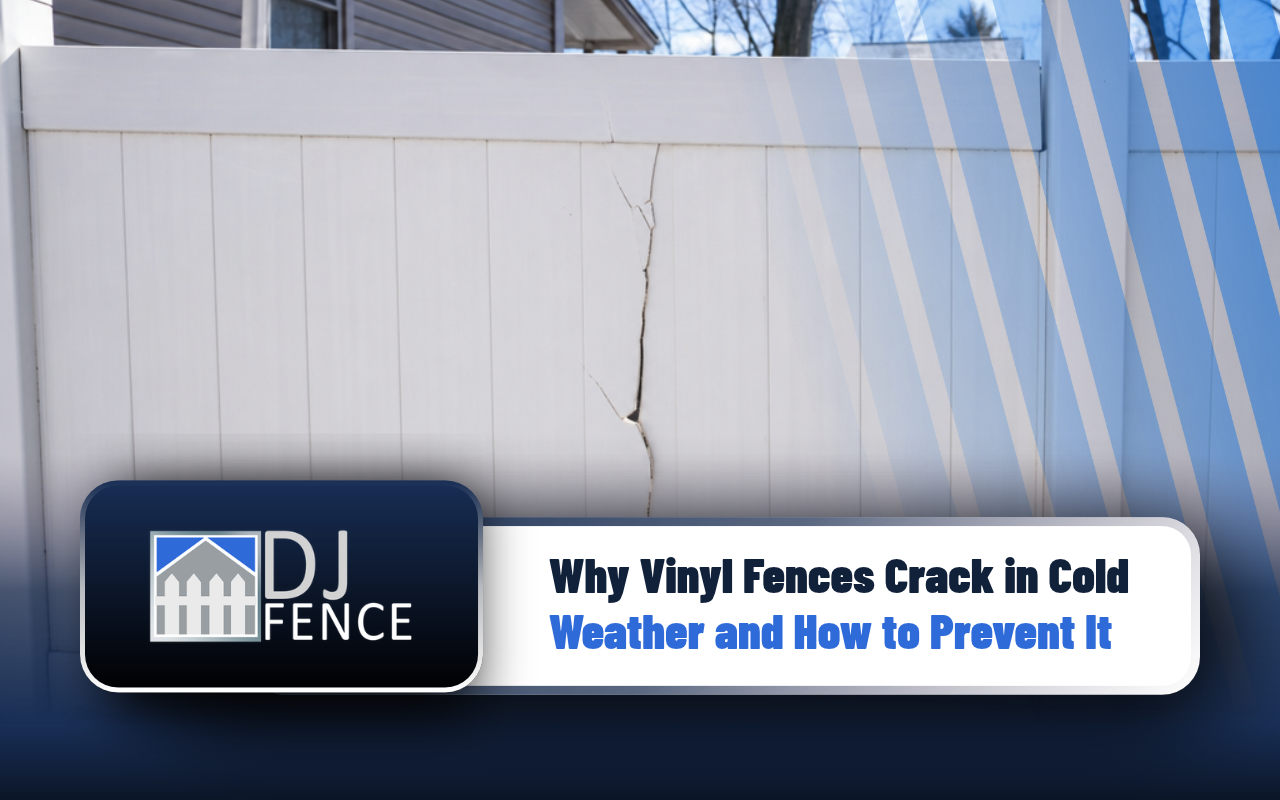
Vinyl fences are popular across Northern Virginia, but panels can crack in winter. The cause is usually a combination of cold temperatures and a sudden impact. Understanding vinyl fence cracking in cold weather helps you protect your fence. You can request a repair estimate from our team.
Cold Temperatures Make Vinyl Less Flexible
Vinyl fencing is made from PVC, a durable plastic that flexes slightly in warm weather. As temperatures drop, the material becomes stiffer and less able to absorb a hit.
A bump that would leave no mark in summer can crack a panel in winter. That is why most cracks show up during cold snaps, not during mild weather.
Vinyl also expands and contracts with daily temperature changes, which adds stress at joints, rails, and post connections over time.
Common Causes of Winter Vinyl Fence Cracks
- Ice chunks or rocks thrown by snowblowers and plows.
- Shovels, sleds, ladders, or tools hitting the fence.
- Falling branches weighed down by heavy ice and snow.
- Heavy, wet snow piled against panels for days.
- Balls, toys, and other impacts during outdoor play.
- Older or thinner vinyl that has become brittle with age.
Most of these causes can be reduced with a little care during the winter months.
Vinyl Fences Can Crack More Often in Winter Months
Yes, cold weather does raise the risk. But cracks almost always need a trigger, such as an impact or heavy load.
A well-made, properly installed vinyl fence can go through many winters with no problems. If yours has already cracked, you can schedule a vinyl inspection with our crew.
Fences installed too tightly, without room for expansion and contraction, are also more likely to crack at stressed points like rail ends and brackets.
How to Repair a Cracked Vinyl Fence Panel
Small hairline cracks may be sealed temporarily with a product made specifically for vinyl, but this is usually a short-term fix. Larger cracks or broken pickets are best handled by replacing the damaged piece.
Many vinyl fence systems are built from separate pickets, rails, and panels, so individual parts can often be swapped out without replacing the whole section. Matching the style and color is the main challenge with older or discontinued fences.
Our vinyl fence repair services page explains how damaged sections are handled.
Best Vinyl Fence for Cold Climates
- Choose vinyl with thicker walls and reinforced bottom rails.
- Look for products designed with cold-weather impact resistance in mind.
- Ask about warranties that cover cracking, fading, and weathering.
- Make sure posts are set deep enough to stay stable through frost and thaw.
- Allow proper spacing for natural expansion and contraction during installation.
Not all vinyl fencing is the same. Thin, low-cost products may look similar at first, but they often crack more easily and fade sooner in harsh weather.
Our article on benefits of vinyl fencing explains why quality materials matter.
Preventing Cracks Through the Winter With Simple Habits
Keep snowblowers and plows aimed away from the fence, and avoid piling heavy snow against panels. Trim tree branches that hang over the fence before winter storms arrive.
Remind kids to keep sleds and balls away from the fence on very cold days, and check the fence after storms for new damage. Clearing ice gently by hand is safer than chipping at it with tools.
Signs of Winter Damage on a Vinyl Fence
Walk along your fence after cold snaps and winter storms. Look for hairline cracks, split pickets, rails pulling out of posts, and panels that rattle or shift when touched.
Catching small problems early keeps them from spreading. In most cases, vinyl fence cracking in cold weather starts at a single impact point and grows from there.
Gates deserve extra attention, since they move every day and take the most stress from wind and use.
Black and Colored Vinyl in Winter
Darker vinyl colors, such as black or bronze, absorb more heat from the winter sun, which can cause more expansion and contraction than lighter colors. Quality products from trusted makers are designed to handle these changes without warping or cracking.
Our guide on black vinyl fence durability explains what to expect from darker finishes.
Vinyl Fence Repair in Sterling and Northern Virginia
At DJ Fences, we bring over 20 years of experience to residential fence and deck services. Our licensed and insured local specialists offer free estimates and repair vinyl fences damaged by winter weather, snow equipment, and storms.
Our crew at DJ Fences can replace cracked pickets, rails, and panels so your fence looks clean and stays secure. We also check posts and rails nearby for hidden stress.
Frequently Asked Questions
Can a cracked vinyl fence be fixed?
Yes, usually by replacing the damaged picket, rail, or panel. You can ask about vinyl repairs anytime.
Does vinyl get brittle in cold weather?
It becomes stiffer and less flexible, which makes cracks from impacts more likely during cold snaps.
Can I use glue to fix a vinyl crack?
Sealants made for vinyl may help briefly, but replacement is usually the lasting fix. Our fence repair specialists page explains more.
Will snow damage my vinyl fence?
Heavy, wet snow piled against panels can add stress to rails and posts. Keep snow away from the fence when you can.
Is vinyl a good choice for Northern Virginia?
Yes, with quality materials, deep posts, and proper installation. See our vinyl fence advantages guide.
Keep Your Vinyl Fence Strong All Winter
Understanding vinyl fence cracking in cold weather helps you prevent damage and fix problems quickly. When you need help, you can repair your vinyl fence with DJ Fences.