
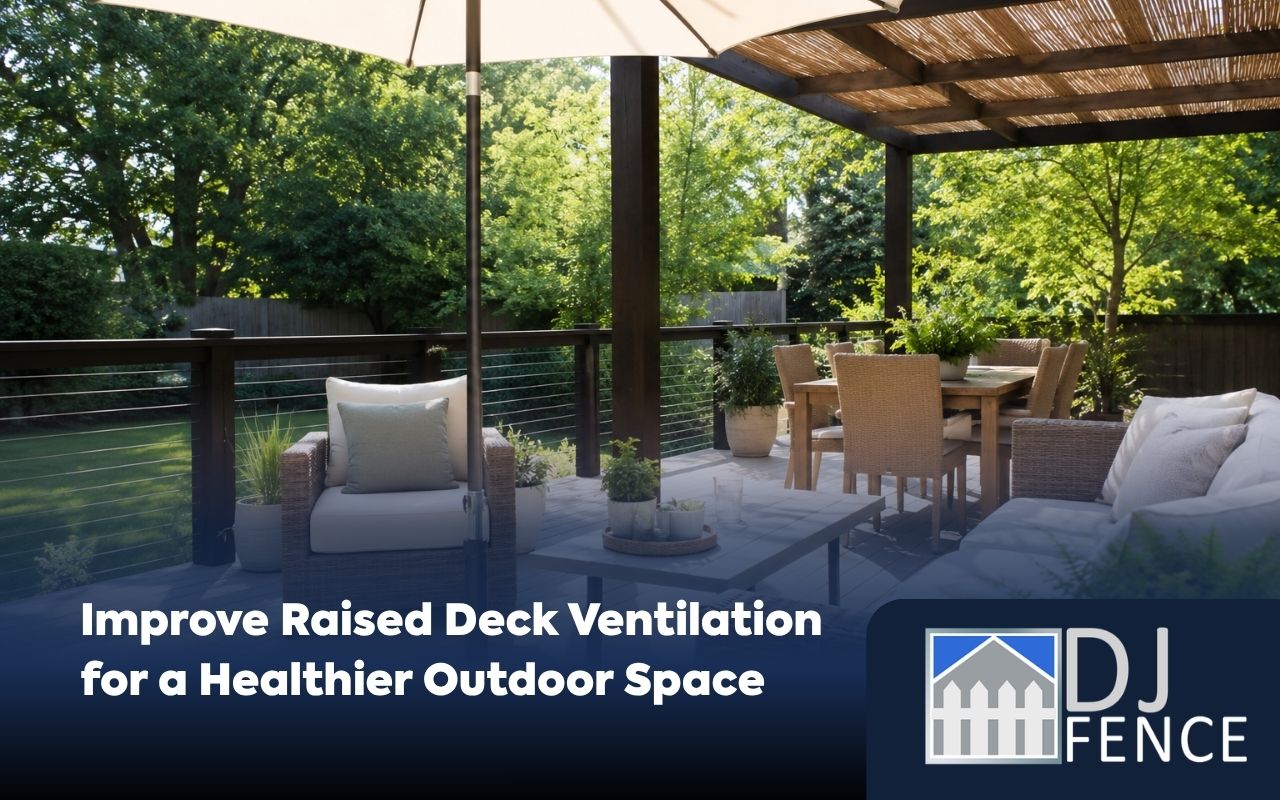
Protect your outdoor living area by paying close attention to what happens beneath it. Raised deck ventilation helps your deck dry faster, stay cleaner, and remain safer for daily use. At DJ Fence, we look at the full deck structure, from surface boards to hidden support areas.
A strong deck starts with smart planning and steady care. If you are thinking about a new outdoor space, our deck builder services can help you create a design that supports airflow, drainage, and long-term comfort.
Why Ventilation Matters Below Your Deck
Moisture can stay trapped under boards after rain, watering, or humid weather. When air cannot move, damp areas may affect wood, fasteners, and the support frame. Good airflow under decks gives wet surfaces a better chance to dry before damage starts.
Raised deck ventilation is especially important in shaded yards or areas with heavy plants. Even when the top boards look dry, the underside may still hold moisture. This hidden dampness can lead to musty smells, soft spots, stains, and early wear.
How Air Movement Protects Deck Structure
Moving air helps carry dampness away from joists, beams, posts, and hardware. This supports moisture control under decks and helps reduce the conditions that lead to rot. A deck with open sides and clear space below can dry more evenly after wet weather.
Air movement also helps protect metal parts from staying wet for too long. Screws, brackets, and joist hangers can wear faster when moisture sits around them. A cleaner, drier base supports better comfort and a stronger outdoor space.
Common Problems That Block Deck Airflow
Poor ventilation often starts with simple issues that are easy to miss. Stored items, thick plants, or solid skirting can stop air from moving through the space below the deck.
- Plastic bins, tools, or firewood stored under the deck.
- Leaves, dirt, and debris packed near joists or corners.
- Solid skirting with no vents or open gaps.
- Low ground clearance that traps humid air.
- Drainage problems that leave soil wet for days.
Clearing these barriers can improve airflow under decks and make inspection easier. When the space below stays open, your deck has a better chance to dry naturally.
Smart Design Choices For A Drier Deck
Good design makes deck care easier from the start. Small gaps between boards, open sides, and planned drainage can all support raised deck ventilation. With DJ Fence, you can discuss details that fit your yard, deck height, and outdoor use.
- Use proper board spacing so water can drain.
- Keep enough open space beneath the deck.
- Choose vented skirting instead of solid panels.
- Guide water away from the home and deck posts.
- Trim nearby plants so air can pass through.
These design choices support deck rot prevention without taking away from the look of your outdoor space. A useful deck should feel inviting above and stay protected below.
Is Your Deck Getting Enough Air?
Your deck may need better airflow if the area below stays damp long after rain. A musty smell near the boards can also be a warning sign. These issues often appear before major damage becomes visible.
- Soft or spongy areas in the boards.
- Green or black marks under the deck.
- Rust on screws, brackets, or hangers.
- Moss or plant growth below shaded sections.
- Standing water or muddy soil under the frame.
Early action can make deck rot prevention easier. If you see these signs, a closer inspection can help you understand whether cleaning, drainage changes, or deck repairs may be needed.
Moisture Control After Rain And Humidity
Rainwater can fall between boards, splash from nearby surfaces, or collect in low spots. Moisture control under decks works best when water can leave quickly and air can dry what remains.
After heavy rain, remove leaves and dirt from corners, gaps, and shaded areas. Make sure downspouts do not send water under the structure. For help reviewing your deck concerns, you can use our contact page to reach our team.
Frequently Asked Questions
What causes poor airflow under a raised deck?
Clutter, solid skirting, low ground clearance, thick plants, and wet soil can all reduce airflow. Our team at DJ Fence can review these issues when planning or improving a deck layout.
Can vented skirting help with moisture control?
Yes. Vented skirting can give the deck a finished look while still letting air pass through. Openings should appear on more than one side so air can move instead of staying trapped.
How often should I check under my deck?
Check below the deck a few times each year, especially after wet seasons. You can also contact us through our deck support form if you notice soft wood, odors, or stains.
Does a new deck need ventilation planning?
Yes. Ventilation should be part of the design from the beginning. When you choose DJ Fence, we can help plan clear space, drainage, and board spacing for better long-term performance.
Where can I learn more about deck building options?
You can explore our professional deck builder services to see how thoughtful planning supports comfort, structure, and better moisture control under decks.
Plan A Stronger And Drier Outdoor Space
A healthy deck depends on more than the surface you see. It also needs a dry, open, and easy-to-check base. Simple steps like clearing debris, improving drainage, and keeping plants trimmed can make daily care easier.
At DJ Fence, we help homeowners think through practical deck details that support comfort and long-term use. To talk about your outdoor space and deck needs, visit our contact page and start the conversation.