
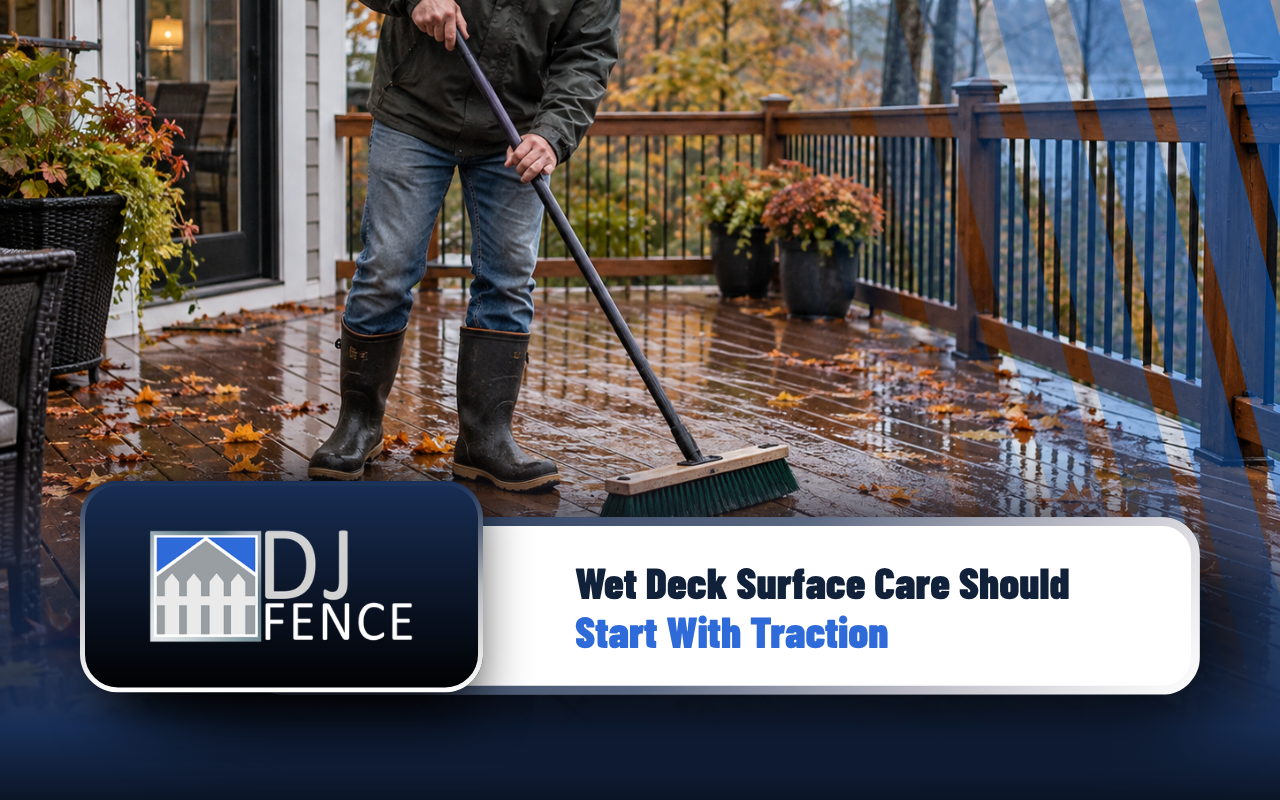
Fall rain, shaded areas, leaves, and organic buildup can make decks feel slick even when the boards are structurally sound. Smart wet deck surface care focuses first on traction, drainage, cleaning method, and material condition. request your free estimate when a slippery deck needs more than routine sweeping or rinsing.
Wet Deck Traction Changes With Different Surface Materials
Wood, composite, and coated deck surfaces do not respond to moisture in exactly the same way. Texture, finish, age, algae, and debris all influence how slippery the walking surface becomes.
At DJ Fences, we use over 20 years of experience to separate surface buildup from deeper deck wear before recommending the next step.
Autumn Deck Cleaning Should Remove Organic Film Carefully
Leaves, pollen, dirt, and mildew can create a thin film that becomes slick when wet. Cleaning should match the deck material and avoid excessive pressure that scars wood or damages protective finishes.
For deck service information, visit our explore professional deck services page.
Fall Deck Surface Maintenance Should Include Drainage Checks
schedule your deck inspection when puddles repeatedly form in the same areas. Poor drainage can keep boards damp longer and may reveal low spots, debris buildup, or changes in deck alignment.
Free estimates can help homeowners compare simple maintenance with repairs when wet areas reveal loose or deteriorated components.
Use This Cleaning Sequence For Safer Wet Decks
- Sweep loose leaves first
- Clear drainage gaps carefully
- Use material-safe cleaner
- Rinse without excessive pressure
- Let the surface dry fully
These Conditions Often Make Deck Surfaces More Slippery
- Wet leaves left in place
- Algae or mildew film
- Shaded areas drying slowly
- Worn or glossy coatings
Surface Appearance Does Not Always Show Structural Condition
A deck can look clean while hidden connections, joists, or fasteners are aging below. Seasonal cleaning is a useful time to notice movement, soft boards, loose railings, or fastener corrosion.
Residential Deck Service Should Reflect Daily Traffic Patterns
Entry steps, grill areas, and paths from doors often receive more repeated moisture and foot traffic than outer deck sections. Our residential fence and deck services help us consider those high-use zones when evaluating maintenance priorities.
Portfolio Examples Can Help Compare Deck Surface Options
Homeowners considering repairs or upgrades can review our review recent deck projects page for layout and finish inspiration.
Licensed And Insured Service Supports More Complex Repairs
When slippery surfaces are tied to loose boards, damaged stairs, or railing movement, licensed and insured service provides a safer path than treating the issue as cleaning alone.
Local Specialists Can Evaluate Drainage And Surface Wear
Our local fence and deck specialists can help distinguish normal seasonal slickness from conditions that suggest maintenance or repair is overdue.
For a broader overview, visit our explore all outdoor services page.
Deck Board Gaps Should Stay Clear For Drainage
Leaves, seed pods, and dirt can pack into the gaps between boards and slow surface drainage. Clearing those spaces carefully can help water move away instead of remaining trapped along board edges. This is especially useful in shaded areas where surfaces already take longer to dry after rain.
Autumn Inspections Should Include Steps And Rail Connections
Slippery conditions often draw attention to the walking surface, but fall is also a good time to check stair treads, handrails, and connections. Repeated moisture can expose loose fasteners or movement that was less noticeable during dry summer weather. Addressing both traction and stability creates a more complete seasonal maintenance plan.
Surface Treatments Should Match The Existing Deck Material
Before applying cleaners, sealers, or traction products, confirm they are appropriate for the deck material and existing finish. A product that works well on unfinished wood may not be suitable for composite decking or previously coated boards. Our team at DJ Fences can help homeowners separate cleaning needs from repair or resurfacing concerns.
Drying Time Matters Before Applying Protective Deck Products
Applying stain or sealant while the surface still holds moisture can reduce adhesion and lead to uneven results. After cleaning, allow the deck to dry fully according to product and weather conditions before applying a new finish. This simple timing step can improve both appearance and durability.
Seasonal Deck Notes Can Reveal Recurring Wet Areas
Taking a few photos after rain can help identify where water sits longest and whether the same boards stay slick each time. This simple record can make wet deck surface care more precise because homeowners can compare conditions instead of relying on memory. Repeated wet zones may point to shade, blocked drainage, surface wear, or nearby landscaping that slows drying. Comparing these areas after several rain events can also show whether the issue is temporary weather exposure or a consistent maintenance pattern that deserves more focused correction before colder weather makes drying even slower during repeated fall storms.
Frequently Ask Questions
Why does my deck feel slippery when wet?
Moisture, organic film, algae, smooth finishes, and slow-drying shaded areas can all reduce traction.
Can pressure washing damage decking?
Yes. Excessive pressure can damage some wood, composite surfaces, and coatings.
Should wet leaves stay on the deck?
No. Removing them reduces staining, trapped moisture, and slick walking conditions.
Do puddles mean the deck is failing?
Not necessarily, but recurring standing water deserves closer review of drainage and surface alignment.
When should a professional inspect the deck?
When slickness appears with loose boards, soft areas, railing movement, or repeated drainage problems.
Improve Wet Deck Safety With Better Seasonal Care
Consistent seasonal deck maintenance should address traction, cleaning, drainage, and structural warning signs instead of relying on one quick wash. book your free estimate with DJ Fences when fall deck conditions need a more complete evaluation.