
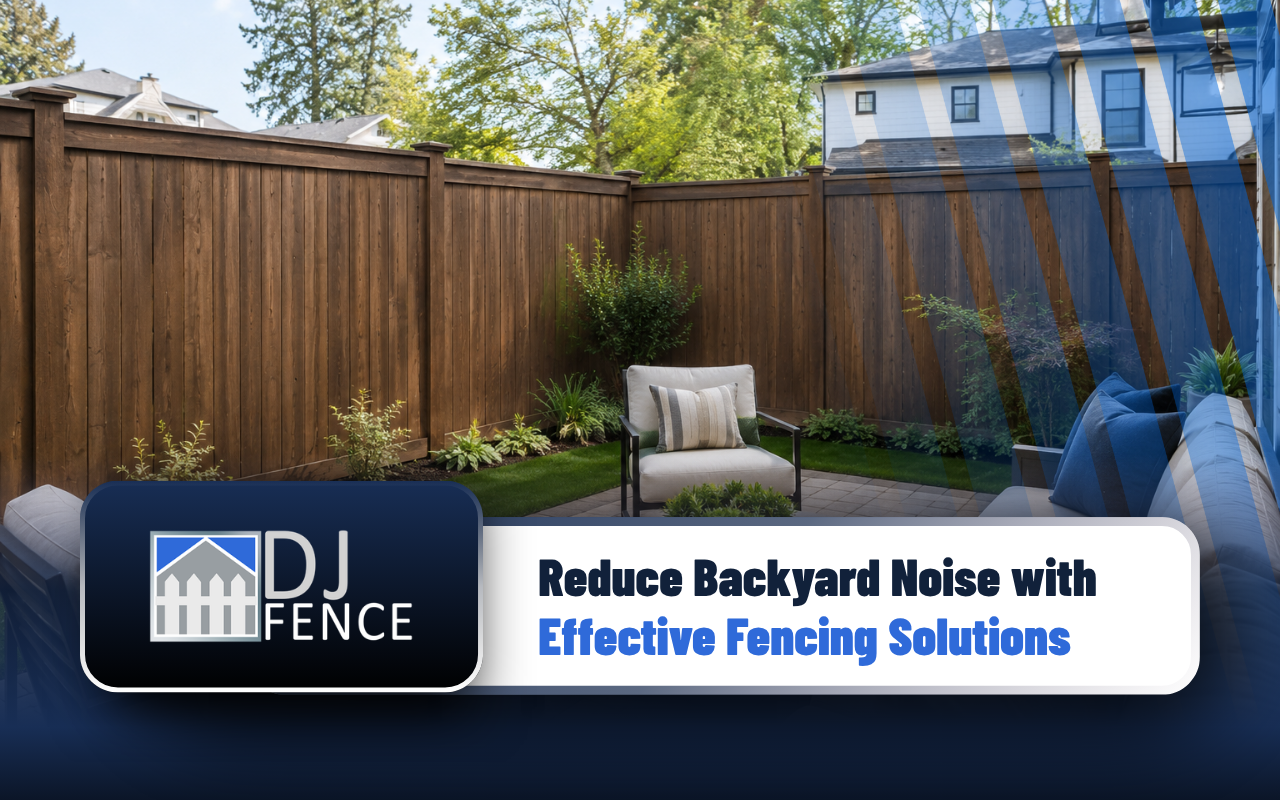
Traffic, nearby conversations, and construction sounds can make an outdoor space feel less relaxing. Well-planned backyard noise reduction fencing in Sterling can limit distractions and create a more comfortable place for meals, play, and rest.
At DJ Fence, we help homeowners compare fence materials, layouts, and practical design details. The right solution depends on the source of the noise, the shape of the property, and the amount of privacy the homeowner wants.
How Dense Fencing Changes Backyard Sound
Sound travels through open spaces and small gaps. A solid fence interrupts that path, reflects part of the sound, and reduces how clearly it reaches the yard. Dense panels usually perform better than open pickets because they create a continuous barrier between the noise source and the listener.
Effective backyard noise reduction fencing should be solid, stable, and positioned close to the source or receiving area when possible. No residential fence can remove every sound, but a well-built barrier can make traffic, voices, and daily neighborhood activity feel less noticeable.
Best Fence Materials for Noise Reduction
Material weight, panel construction, maintenance needs, and appearance all affect the final choice. Our team at DJ Fence can explain how each option may fit the home, landscape, and level of sound exposure.
- Solid wood panels add useful mass and create a warm, natural appearance. Boards should fit closely together to limit sound leaks.
- Vinyl panels resist moisture and require little routine care. Thicker, tightly connected panels generally block more sound than lightweight designs.
- Composite fencing combines a dense structure with strong resistance to rot, insects, and fading.
- Metal fencing works best when paired with solid wood, composite, or other infill panels that close open spaces.
- Special acoustic systems may suit properties near highways, busy roads, or other strong noise sources.
Homeowners can review our fencing and property services when comparing materials and project options.
How Tall Should a Noise Barrier Be?
A barrier works best when it blocks the direct line between the sound source and the area where people spend time. In many yards, a taller fence can reduce more noise than a shorter fence. Local rules, property conditions, and sightlines still need to guide the final height.
For backyard noise reduction fencing, height is only one part of the design. A tall fence with large gaps may perform worse than a slightly shorter fence with solid panels, secure posts, and close contact near the ground.
Design Details That Improve Sound Blocking
Small construction details can have a major effect on sound performance. Gaps under panels, spaces between boards, and weak gates allow noise to pass through. A useful sound barrier fencing design should create the most continuous surface possible without affecting drainage or safe operation.
When you choose DJ Fence, we consider panel alignment, post support, gate placement, and transitions along sloped ground. These details help the fence remain stable while supporting both privacy and noise control.
Placing the barrier closer to the street or another noise source can also improve results. However, property lines, access needs, utilities, and local requirements may limit where the fence can be installed.
Quiet Backyard Ideas Beyond the Fence
A solid fence can serve as the main barrier, while landscaping and thoughtful yard planning make the space feel calmer. These quiet backyard ideas can also soften the appearance of large fence panels.
- Plant dense shrubs near the fence to reduce visual distractions and soften reflected sound.
- Add climbing plants where the fence material and maintenance plan allow them.
- Place seating areas farther from roads, mechanical equipment, or active neighboring spaces.
- Use a shed, garden wall, or other approved structure to interrupt sound paths in problem areas.
- Add a water feature to create a steady background sound that makes sudden noises less noticeable.
Greenery works best as support rather than a replacement for a solid barrier. Leaves and branches can soften some higher sounds, but dense fence panels provide more dependable privacy fence noise control.
Professional Installation and DIY Considerations
Some homeowners can improve an existing fence by closing minor gaps or replacing damaged boards. A complete sound-control project often needs accurate post spacing, secure foundations, and careful panel alignment.
- Identify whether the main noise comes from traffic, neighbors, equipment, or several directions.
- Check the existing fence for gaps, movement, damage, and weak gate connections.
- Confirm property boundaries and local fence requirements before choosing a height or location.
- Select a dense material that matches the desired maintenance level and home style.
- Plan drainage, access, and landscaping before installation begins.
Professional fence installation in Sterling can reduce common problems such as uneven panels, unstable posts, and gaps along changing ground levels.
Frequently Asked Questions
Can a privacy fence completely block backyard noise?
No fence can remove every outdoor sound. A solid, tall, and gap-free fence can reduce how clearly noise reaches the yard. Homeowners can discuss their noise concerns with our team before selecting a design.
Which fence material blocks traffic noise best?
Dense materials usually perform better than open or lightweight fencing. Solid wood, composite panels, and specialized barriers are common choices. The best option depends on the road location, yard shape, maintenance preferences, and local requirements.
Does vinyl fencing help reduce neighbor noise?
Solid vinyl panels can reduce some voices and everyday neighborhood sounds, especially when the sections connect tightly. Explore our available fence services to compare vinyl with wood, composite, and other options.
Can an existing fence be improved for sound control?
Some fences can be improved by sealing gaps, replacing loose boards, or adding compatible solid panels. The structure must be strong enough for any added weight. Our Sterling fence installation options can help homeowners evaluate replacement needs.
Where should backyard noise reduction fencing be placed?
The fence often works best when it stands near the noise source or blocks the direct path to a patio, deck, or seating area. At DJ Fence, we also consider property lines, gates, slopes, and access when discussing placement.
Plan a Quieter Backyard in Sterling
A thoughtful fence design can add privacy, improve the appearance of the property, and make outdoor activity more comfortable. The strongest results usually come from dense materials, limited gaps, stable installation, and a layout based on the main noise source.
With DJ Fence, you can compare practical backyard noise reduction fencing options for your property. Contact our fencing team to discuss the yard, the sounds you want to reduce, and the type of outdoor setting you hope to create.