
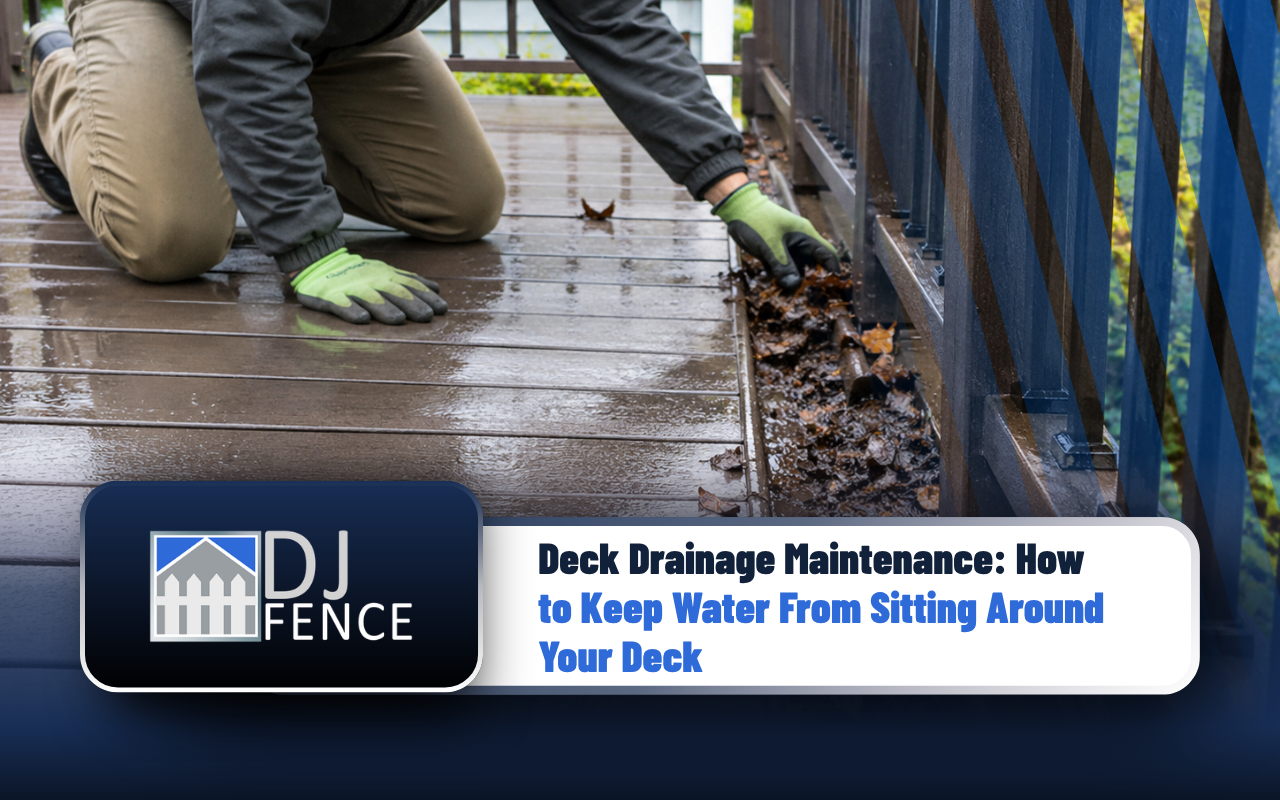
Deck drainage maintenance helps reduce standing water, clogged drain paths, trapped debris, and repeated moisture around framing and support areas. A simple seasonal routine can protect both the deck surface and the space below.
Schedule your deck evaluation with a licensed and insured local team offering free estimates.
Watch Where Rainwater Actually Goes
Inspect the deck during or shortly after rain. Look for puddles, slow-draining corners, clogged channels, overflowing gutters, or water trapped near posts and stairs.
Water paths are often easier to understand when the system is actively draining. Note where runoff exits and whether it returns toward the house or support posts.
Clear Leaves Before They Block Drainage Paths
Leaves, seeds, pine needles, and dirt can collect between boards, around drains, and under deck edges. Remove buildup before it becomes a wet mat that holds moisture for days.
Use gentle tools that do not damage decking or force debris deeper into drainage openings.
Address Repeated Moisture Before Damage Spreads
Request your deck inspection if one area stays wet long after the rest of the deck dries. Persistent moisture may come from drainage, grading, plumbing, gutters, or hidden framing conditions.
Review our explore professional deck building page for full deck construction and repair options.
Create a Seasonal Drainage Routine
- Remove surface leaves and loose debris.
- Clean between board gaps where accessible.
- Check nearby gutters and downspouts.
- Inspect drainage channels below the deck.
- Look for water staining on joists and beams.
- Confirm soil slopes away from posts when practical.
Under-Deck Systems Need Their Own Maintenance
Drainage panels, troughs, and collection systems under elevated decks can clog just like gutters. Inspect seams, outlets, and discharge points periodically.
A blocked outlet can redirect water toward framing or the house, especially during heavy rain.
Moisture Control Protects Fasteners and Framing
Repeated moisture exposure can contribute to wood deterioration and hardware corrosion. Drying time matters just as much as keeping the deck surface clean.
Maintenance Tip: Do not store wet planters, rugs, or containers in the same spot for long periods. They can trap moisture against the deck surface.
Compare Drainage With the Finished Deck Design
Deck layout, stairs, railings, and surrounding hardscape can all influence where water moves. Changes to landscaping or paving can also alter runoff years after the deck was built.
Browse our view completed deck projects to see different deck configurations.
Include Drainage in Your Maintenance Schedule
| Task | When to Check | Why It Matters |
|---|---|---|
| Clear debris | Seasonally | Prevents blockage |
| Inspect outlets | After storms | Confirms flow |
| Check framing stains | Periodically | Finds hidden moisture |
| Review grade | After erosion | Protects supports |
Coordinate Drainage With Other Outdoor Work
Deck, fence, and landscape projects can change runoff patterns. Review drainage whenever nearby grading or hardscape changes, especially if water starts collecting in a new location.
See our review complete outdoor services page for related residential work.
Keep Water Moving Away From the Structure
Consistent deck drainage maintenance helps reduce trapped moisture and gives homeowners a better chance to catch drainage problems early. A clear path for water is easier to maintain than repairing damage after years of repeated exposure.
Our team at DJ Fence can inspect deck conditions and recommend practical next steps for maintenance or repair.
Check Drainage After Cleaning
After debris is removed, run a small amount of water through accessible drainage paths and confirm that it exits freely. This simple check can reveal hidden blockages before the next heavy rain.
Downspouts and Patio Runoff Can Overload Deck Areas
Not every drainage problem starts on the deck. Roof downspouts, sloped patios, and nearby landscaping can send extra water toward posts or under-deck spaces during storms.
Walk the property during rainfall and trace where runoff comes from before changing the deck itself. Redirecting an outside water source may solve the problem more effectively than adding surface drains.
Watch for slow drying zones
Areas shaded by furniture, planters, or dense landscaping may stay damp much longer than open boards. Repeated slow drying can increase staining and maintenance needs even when no standing water is visible.
Deck Water Management FAQs
Why does water sit on my deck?
Possible causes include blocked gaps, low spots, clogged drainage systems, poor runoff, or surface movement.
Should I clean between deck boards?
Yes, when debris blocks drainage gaps. Use methods that do not damage the boards.
Can wet rugs damage a deck?
They can trap moisture and slow drying, especially when left in one location for long periods.
How often should deck drains be checked?
Seasonal checks and inspections after heavy storms are practical for many systems.
Can drainage problems affect framing?
Yes. Repeated moisture can contribute to wood deterioration and hardware corrosion.
Book your deck maintenance with DJ Fence for a free estimate and local deck service backed by more than 20 years of experience.