
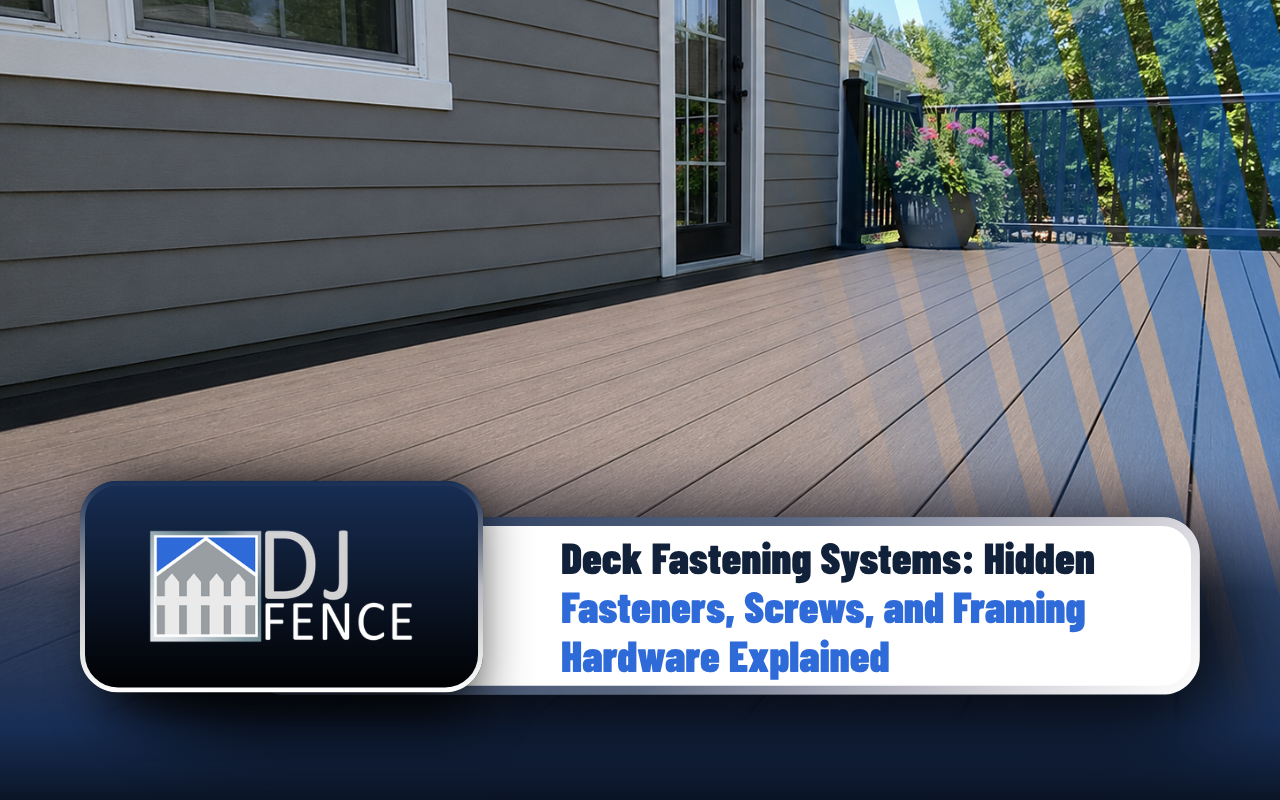
Deck fastening systems affect more than how deck boards look. The right screws, hidden fasteners, connectors, and framing hardware help control movement, support structural connections, and create a cleaner finished surface.
Plan your deck project with a licensed and insured local team offering free estimates and more than 20 years of experience.
At DJ Fence, we help homeowners match fasteners and hardware to decking materials, framing conditions, and the finished appearance they want.
Hidden Fasteners Create a Cleaner Deck Surface
Hidden systems secure boards from the sides or grooves instead of through the face. They can create a smoother walking surface with fewer visible screw heads and a more uniform appearance across large deck areas.
These systems must be compatible with the selected board profile and manufacturer instructions. Some products require specific clips, spacing, or installation tools.
Face Screws Still Have an Important Role
High-quality deck screws are common around picture-frame borders, stairs, fascia, and boards that cannot use hidden clips. Proper screw length, corrosion resistance, and placement matter because hardware is exposed to moisture and seasonal movement.
Overdriving screws can damage the board surface, while shallow screws may leave weak connections or raised heads.
Match Hardware to the Full Deck System
Request your deck estimate before buying fasteners separately from the deck material. Framing, decking, joist spacing, exposure, and hardware should work together as one system.
Review our explore professional deck building page for complete deck planning and installation services.
Where Each Fastener Type Fits Best
| Fastener Type | Common Use | Main Advantage |
|---|---|---|
| Hidden clips | Grooved deck boards | Clean surface |
| Face screws | Borders and stairs | Direct fastening |
| Structural screws | Framing connections | High strength |
| Joist hangers | Joist connections | Framing support |
| Post connectors | Posts and beams | Controlled load transfer |
Corrosion Resistance Matters Outdoors
Deck hardware is exposed to moisture, treated lumber chemicals, and temperature changes. Fasteners should be rated for the environment and compatible with the lumber or composite material used.
Mixing incompatible metals can accelerate corrosion in some conditions. Exterior-grade hardware helps reduce the risk of premature rust and staining.
Framing Hardware Matters More Than Visible Screws
The deck surface gets attention, but structural connectors below the boards carry important loads. Joist hangers, ledger fasteners, post bases, and beam connections should be installed correctly and remain accessible enough for future inspection.
Builder Tip: Ask which fastening system is being used before installation starts. It is easier to confirm appearance and compatibility before boards are attached.
Compare Finished Deck Details Before Choosing
Different fastening methods can change board spacing, visible hardware, border details, and overall appearance. Hidden systems may emphasize clean lines, while face-fastened designs can simplify board replacement.
Browse our view completed deck projects to compare finished styles.
Fasteners Should Support Future Maintenance
Some hidden systems make it easier to replace individual boards than others. If future access matters, ask how damaged boards can be removed later without disturbing a large section.
Also consider how rail posts, stairs, fascia, and skirting connect to the framing. These details can affect how easily the deck is serviced in the future.
Deck Hardware Should Fit the Service Scope
Deck construction may also involve railings, stairs, skirting, lighting, and nearby fence work. Coordinating these details can produce a cleaner overall result and avoid conflicts between fasteners and finish materials.
See our review complete outdoor services page for related options.
Choose Fasteners as Part of the Design
The best deck fastening systems combine structural reliability, material compatibility, and the finished look you want. They should also fit the deck’s exposure, maintenance expectations, and long-term use.
Our team at DJ Fence can explain visible and hidden fastening options before construction begins.
Confirm Hardware Before Ordering Materials
Fastener compatibility should be confirmed before decking arrives. This reduces last-minute substitutions and helps avoid hardware that does not match board grooves, framing dimensions, or exposure requirements.
Fastener Choice Can Change Installation Speed
Some systems require pre-grooved boards, special clips, or precise spacing, while others rely on face screws and standard drivers. Labor time can change depending on the product, border design, stairs, and the number of custom cuts.
Ask how the fastening method affects replacement boards, future access, and the finished appearance before approving the material order. A faster installation is not automatically a better one if it limits serviceability later.
Where homeowners often overlook hardware
Stair stringers, rail posts, ledger areas, and beam-to-post connections deserve the same attention as visible deck boards. These hidden connections often have a greater effect on long-term stability than the screws seen from above.
Deck Hardware and Fastener FAQs
Are hidden deck fasteners stronger than screws?
Strength depends on the system and application. Hidden clips and face screws serve different purposes.
Can hidden fasteners be used on every deck board?
No. Compatibility depends on board profile, manufacturer requirements, and deck layout.
Why do deck screws rust?
Corrosion can result from moisture, incompatible materials, or fasteners not rated for exterior exposure.
What hardware supports deck joists?
Joist hangers and approved structural fasteners are commonly used to support framing connections.
Should fasteners match treated lumber?
Yes. Hardware and fasteners should be compatible with the lumber treatment and exposure conditions.
Schedule your deck consultation with DJ Fence for a free estimate and residential deck service backed by more than 20 years of local experience.