
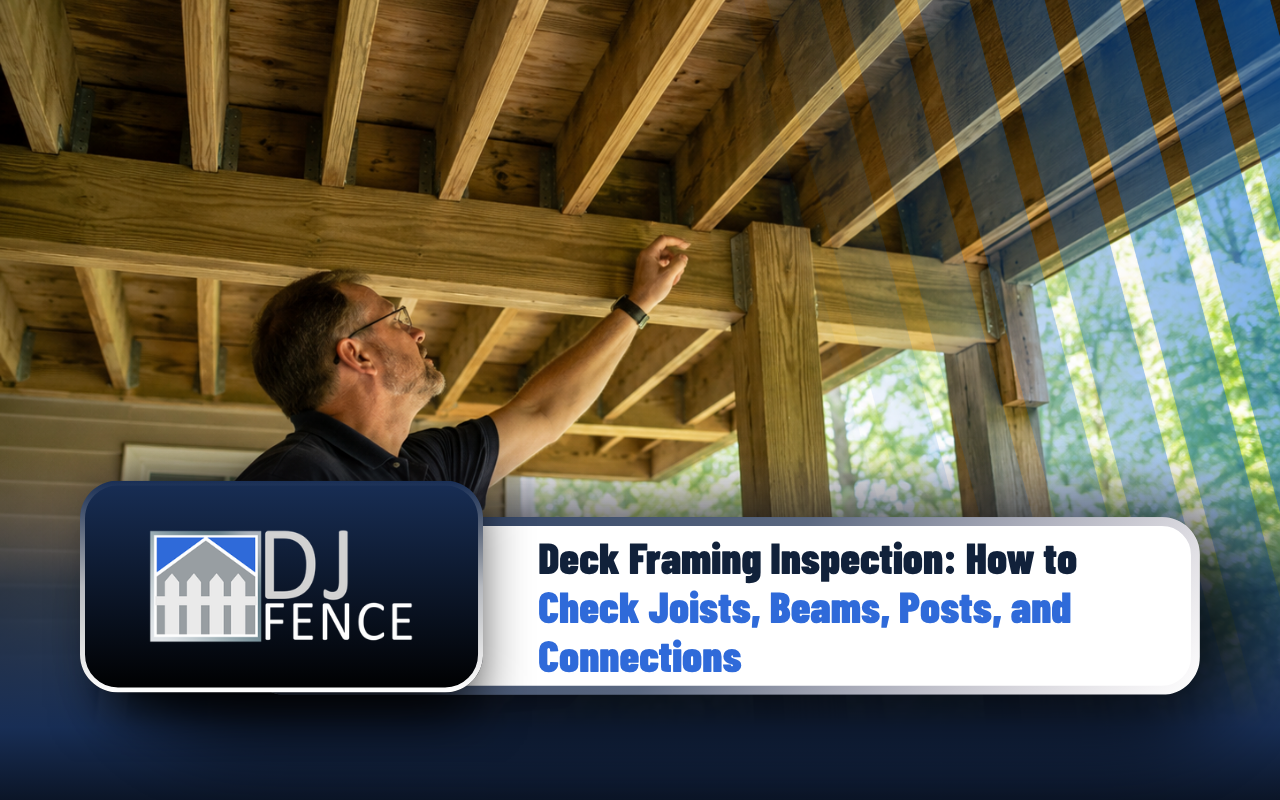
A deck framing inspection focuses on the structure beneath the boards: joists, beams, posts, ledger connections, hardware, and areas where moisture can collect. Surface boards may look fine even when hidden framing needs attention.
Schedule your deck inspection with a licensed and insured local team offering free estimates and more than 20 years of experience.
At DJ Fence, we help homeowners evaluate both the visible deck surface and the structural framing that supports everyday use.
Start Under the Deck, Not on Top
If access is safe, look below the deck first. This view can reveal split joists, rusted hardware, moisture stains, loose connectors, and beam conditions that are hidden from above.
Use a flashlight and avoid disturbing areas that appear unstable. If the deck is too low to access safely, inspect visible edges and call for professional evaluation.
Follow the Load Path From Boards to Footings
A deck transfers weight from boards to joists, beams, posts, and footings. Weakness at any point can affect the system.
- Joists with splits or decay
- Beams with sagging or damage
- Posts that lean or rot
- Loose or rusted connectors
- Ledger areas with water staining
- Footings with movement or erosion
Inspect Structural Movement Before Cosmetic Repairs
Request your deck evaluation if the surface feels bouncy, railings move, stairs shift, or the deck appears to sag. These symptoms can involve framing or connections rather than only surface boards.
Explore our review professional deck building page for complete deck construction and repair planning.
Joists Often Reveal Moisture Problems First
Look for dark staining, soft areas, or decay where joists meet beams or where water remains trapped. Fastener penetrations and blocked drainage can create localized moisture concerns.
Repeated wetting near a single area can suggest a drainage issue above or beside the deck rather than normal weather exposure.
Ledger Connections Deserve Extra Attention
Where a deck attaches to a house, the ledger area is a major structural connection. Water intrusion or incorrect fastening can create serious problems.
Safety Tip: Do not remove ledger fasteners or structural connectors during a DIY inspection. If something looks loose or deteriorated, have it evaluated.
Use a Framing Condition Table
| Component | Warning Sign | Next Step |
|---|---|---|
| Joist | Split or sag | Evaluate repair |
| Beam | Crack or deflection | Structural review |
| Post | Lean or rot | Stabilize or replace |
| Connector | Rust or looseness | Replace approved hardware |
| Footing | Movement | Check soil and support |
Compare Current Conditions With Older Photos
Photos from previous seasons can reveal slow changes in sagging, post position, or railing alignment. This is especially useful when movement develops gradually.
Browse our view completed deck projects to see examples of finished deck construction.
Coordinate Framing Repairs With Other Deck Work
If boards, railings, stairs, or nearby fencing also need work, completing structural corrections first can reduce repeated labor. Cosmetic upgrades should not cover framing that still needs repair.
See our review complete outdoor services page for related residential options.
Use Structure, Not Appearance, to Judge Safety
A good-looking surface does not guarantee strong framing. A deck framing inspection helps identify hidden concerns before cosmetic upgrades begin and can help prioritize the most important work first.
Our team at DJ Fence can review framing conditions and explain practical repair or rebuilding options.
Check Stairs and Rail Posts With the Frame
Stairs and rail posts rely on framing connections too. Movement at these points can reveal weak blocking, loose hardware, or moisture-related deterioration that should be evaluated with the rest of the structure.
Surface Problems Can Point to Hidden Framing Stress
Popped fasteners, widening board gaps, or a railing that suddenly feels loose can be surface clues to movement below. These signs do not automatically mean the frame is failing, but they are good reasons to inspect joists, beams, and connection points more closely.
Pay special attention where stairs meet the main deck and where rail posts are attached. Concentrated movement in those locations can indicate connection or blocking issues.
Keep an inspection record
Photograph questionable areas and note the date. Comparing the same joist, beam, post, or connection later can show whether a condition is stable or actively changing.
Frequently Ask Questions
What parts of a deck frame should be checked?
Inspect joists, beams, posts, ledger connections, hardware, footings, stairs, and areas where moisture collects.
Why does my deck feel bouncy?
Bounce can relate to joist span, loose connections, damaged framing, or other structural conditions.
Is surface rot always a framing problem?
No, but surface rot can indicate moisture conditions that may also affect framing below.
How often should deck framing be inspected?
Periodic checks and additional inspections after major storms or noticeable movement are practical.
Can old deck framing be reused?
Sometimes, but only if the framing condition, layout, connections, and code requirements support reuse.
Book your deck inspection with DJ Fence for a free estimate and local deck expertise backed by more than 20 years of experience.