
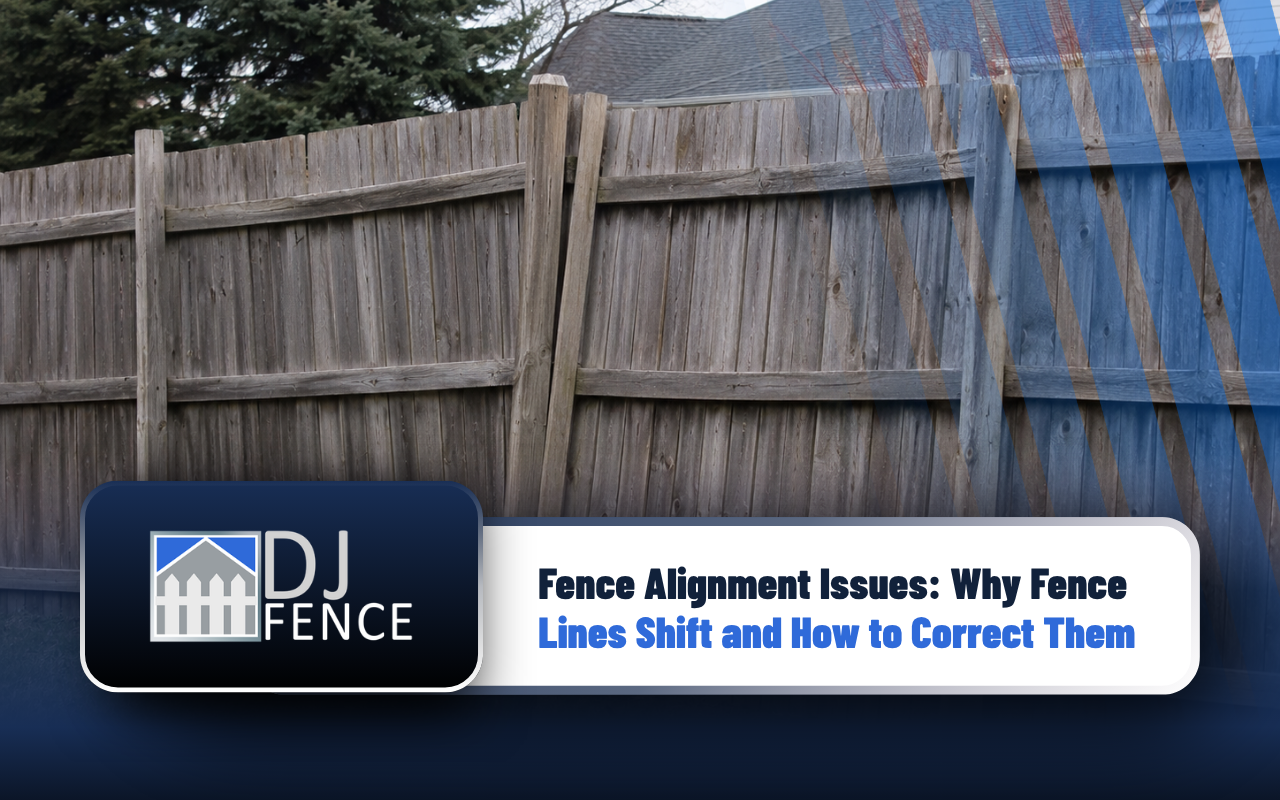
Fence alignment issues can show up as leaning posts, uneven top lines, gates that rub, or panels that no longer meet cleanly. These changes often point to soil movement, weakened posts, impact damage, or connection problems.
Schedule your fence evaluation with a licensed and insured local team offering free estimates.
At DJ Fence, we help homeowners determine whether an uneven fence can be leveled and repaired or whether deeper structural correction is needed.
Use the Gate as an Early Warning Sign
Gates often reveal movement before the rest of the fence looks obviously crooked. Watch for dragging, latch misalignment, or a gap that changes from top to bottom.
These symptoms can point to shifting gate posts, loose hinges, or movement in nearby fence sections.
Check Whether Posts Are Leaning or Sinking
Stand several feet away and compare post tops. A single low or tilted post may indicate soil settlement, footing failure, or impact damage.
Multiple posts moving in the same direction can suggest a broader drainage or grade issue rather than an isolated hardware problem.
Correct the Cause Before Re-Leveling Panels
Request your fence repair before adjusting rails or panels if the posts themselves are moving. Re-leveling only the visible section can hide the real problem temporarily.
Our review professional fence repairs page explains common repair approaches for leaning or damaged fencing.
Common Alignment Problems and Causes
| Symptom | Possible Cause | Typical Fix |
|---|---|---|
| Leaning post | Loose footing | Reset or replace |
| Wavy top line | Multiple post heights | Correct post positions |
| Gate rubbing | Post shift | Stabilize and adjust |
| Panel gap | Rail or post movement | Re-secure connections |
Drainage Can Slowly Move a Fence Line
Water collecting around posts can soften soil and reduce support. Slopes, downspouts, and hardscape runoff should direct water away from footings where possible.
Expert Tip: Take a photo from the same angle every few months. Slow movement is easier to recognize when you can compare images.
Some Fences Need More Than Leveling
Widespread movement, rotted posts, or repeated repairs may mean replacement is more practical than continuing to reset sections. The age of the fence and condition of rails and panels should be considered with post stability.
Explore our explore Sterling fence installation page if the existing system has extensive structural problems.
Uneven Ground Is Not Always a Defect
Fence tops can follow grade, step down in sections, or remain visually level depending on design. The important distinction is whether the fence was intentionally installed that way or has moved over time.
Changes in a once-straight line deserve more attention than a fence that was originally designed to follow a slope.
Check Neighboring Structures Before Repairs
Retaining walls, tree roots, driveways, and drainage changes can all affect nearby soil conditions. A fence repair should consider these influences instead of treating the fence as isolated.
Also check whether nearby construction, vehicle impact, or landscape changes happened around the time the alignment changed.
Use the Right Service for the Problem
Fence repair, replacement, and other outdoor work may overlap on the same property. If several sections are affected, the most cost-effective solution may involve more than one isolated repair.
Visit our review complete outdoor services page for broader project options.
Restore Alignment Before Movement Spreads
Addressing fence alignment issues early can help prevent gate problems, loose panels, and more extensive post movement. The goal is not just a straighter appearance but a more stable structure.
Our team at DJ Fence can evaluate the structure and explain whether leveling, repair, or replacement makes the most sense.
Measure Before Making Alignment Corrections
Before resetting posts, measure the fence line, panel heights, and gate openings. Clear reference points help prevent a repair from fixing one section while creating a new mismatch farther down the run.
Use a Simple Alignment Test Before Calling for Repair
Stretching a visual line along the top of several posts can help show whether one section has moved or the entire run has shifted. You can also measure gate openings at the top and bottom to see whether posts remain parallel.
Do not force a leaning panel back into place if the post feels loose. That can stress rails, split boards, or distort the gate without correcting the footing problem.
When movement points to a larger site issue
If several posts shift after rain, inspect nearby drainage patterns, retaining walls, and newly installed hardscape. Fence movement sometimes reflects changes in soil support beyond the fence itself.
Frequently Ask Questions
Why is my fence suddenly leaning?
Possible causes include soil movement, failed footings, wind, impact damage, or deteriorated posts.
Can a leaning fence be straightened?
Often, yes, if the posts and connections can be stabilized or replaced properly.
Why does my fence gate no longer latch?
Gate posts may have shifted, hinges may be loose, or the gate frame may have sagged.
Does drainage affect fence alignment?
Yes. Repeated water around posts can soften soil and contribute to movement.
When is replacement better than repair?
Replacement may be more practical when many posts are failing or the fence has widespread structural deterioration.
Book your fence evaluation with DJ Fence for a free estimate and local residential fence expertise backed by more than 20 years of experience.