
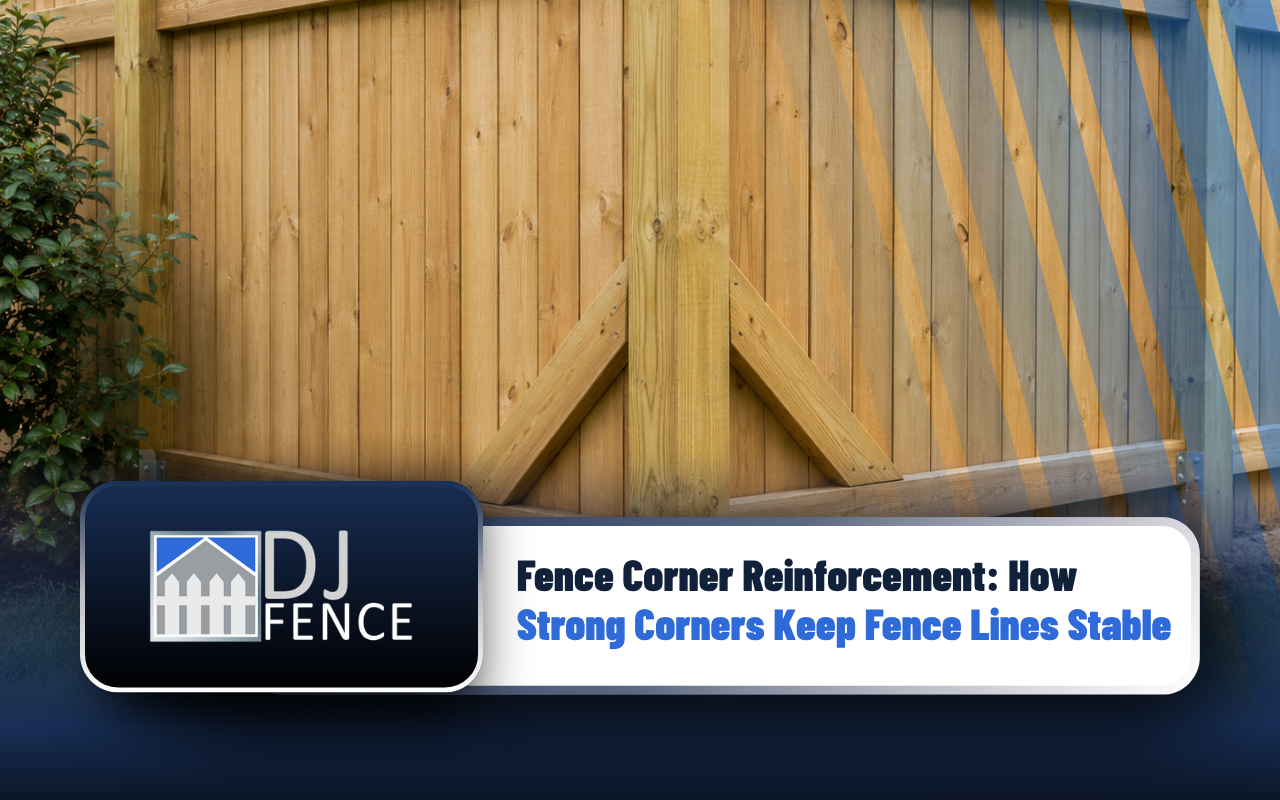
Fence corner reinforcement matters because corners change the direction of the fence and often carry more lateral stress than straight runs. Weak corner posts can allow rails, panels, or gates to pull out of alignment over time.
Request your fence estimate from a licensed and insured local team offering free estimates and more than 20 years of experience.
At DJ Fence, we help homeowners strengthen corner areas with the right post placement, bracing, hardware, and repair strategy for the fence type.
Why Corner Posts Work Harder Than Line Posts
Line posts mainly support sections in one direction. Corner posts resist forces coming from two fence runs, and they may also be affected by wind, gates, or sloped ground.
That makes post stability and footing condition especially important at corners, where small movement can affect two fence lines at once.
Look for Early Signs of Corner Movement
- Corner post leaning inward or outward
- Rails pulling away from the post
- Panels no longer meeting evenly
- Fasteners loosening repeatedly
- Cracks around the footing area
- Nearby gate alignment changing
Reinforce the Corner Before Panels Shift
Schedule your fence repair if a corner post moves by hand or the adjoining fence runs are beginning to separate. Stabilizing the structural point first is usually more effective than repeatedly tightening loose boards.
Our review professional fence repairs page covers common structural repair needs.
Corner Support Depends on Fence Type
| Fence Type | Corner Concern | Typical Focus |
|---|---|---|
| Wood privacy | Wind pressure | Post and rail strength |
| Chain link | Tension forces | Terminal post bracing |
| Vinyl | Panel movement | Post stability |
| Decorative metal | Alignment | Post and connection control |
Bracing Can Help During Repair
Temporary bracing may hold a post in position while footing or structural repairs are completed. Permanent bracing methods depend on the fence design and should not interfere with gates or drainage.
Improvised braces that extend into walkways or neighboring property can create new problems.
Soil and Drainage Affect Corner Stability
Water pooling at a corner can soften soil and reduce post support. Grade changes, downspouts, and hard surfaces can all influence drainage around the footing.
Expert Tip: Check corners after heavy rain. If the soil feels soft or post movement increases when the ground is wet, drainage may be part of the problem.
New Installation Can Solve Repeated Corner Failure
If a corner has been repaired several times or surrounding panels are deteriorated, replacing the affected run may provide a more durable result. Repeated repairs can also leave mismatched materials and inconsistent alignment.
Explore our explore Reston fence installation page for replacement options.
Corner Repairs Should Preserve Fence Alignment
Before resetting a post, establish the intended fence line and height. Fixing the post without checking both adjoining runs can leave the corner stable but visually uneven.
A string line or careful measurement can help confirm the original layout before repairs begin.
Coordinate Reinforcement With the Whole Property
Fence repairs may connect with gate work, deck improvements, or other outdoor projects. Planning access before work begins can reduce unnecessary removal of nearby sections.
Visit our review complete outdoor services page to compare related options.
Strengthen the Point Where Two Runs Meet
Proper fence corner reinforcement supports alignment, resists movement, and helps adjoining sections perform as one system. The goal is to correct the structural cause rather than repeatedly tightening visible components.
Our team at DJ Fence can evaluate corner posts and recommend repair or replacement based on the actual structure.
Inspect Both Fence Runs After Repair
Once the corner is stabilized, check both adjoining runs for rail stress, panel gaps, and gate changes. A successful repair should restore alignment without transferring movement to the next post.
Gate Corners Need Extra Structural Attention
A corner near a gate can carry fence loads plus repeated opening and closing forces. If the gate begins to drag soon after adjustment, the supporting post may be moving instead of the hinges being the only problem.
Check both the gate post and the adjacent corner connection before adding new hardware. Tightening hinges on an unstable post may improve alignment only briefly.
Reinforcement should match the existing material
Wood, vinyl, chain link, and ornamental metal fences use different connection methods. Repairs should preserve the intended system rather than mixing incompatible braces or fasteners that create new weak points.
Frequently Ask Question
Why do fence corners lean first?
Corners can carry forces from two directions and may be more sensitive to weak footings, soil movement, or wind pressure.
Can a leaning corner post be repaired?
Often, yes. Repair depends on post condition, footing stability, fence type, and surrounding alignment.
Does bracing permanently fix a weak corner?
Not always. Bracing may help, but failed footings or damaged posts may still need repair or replacement.
Can drainage cause corner posts to move?
Yes. Repeated water around the footing can soften soil and reduce support.
Should the whole fence be replaced?
Only when damage is widespread or repeated repairs no longer provide good value.
Book your corner repair with DJ Fence for a free estimate and local fence service backed by more than 20 years of experience.