
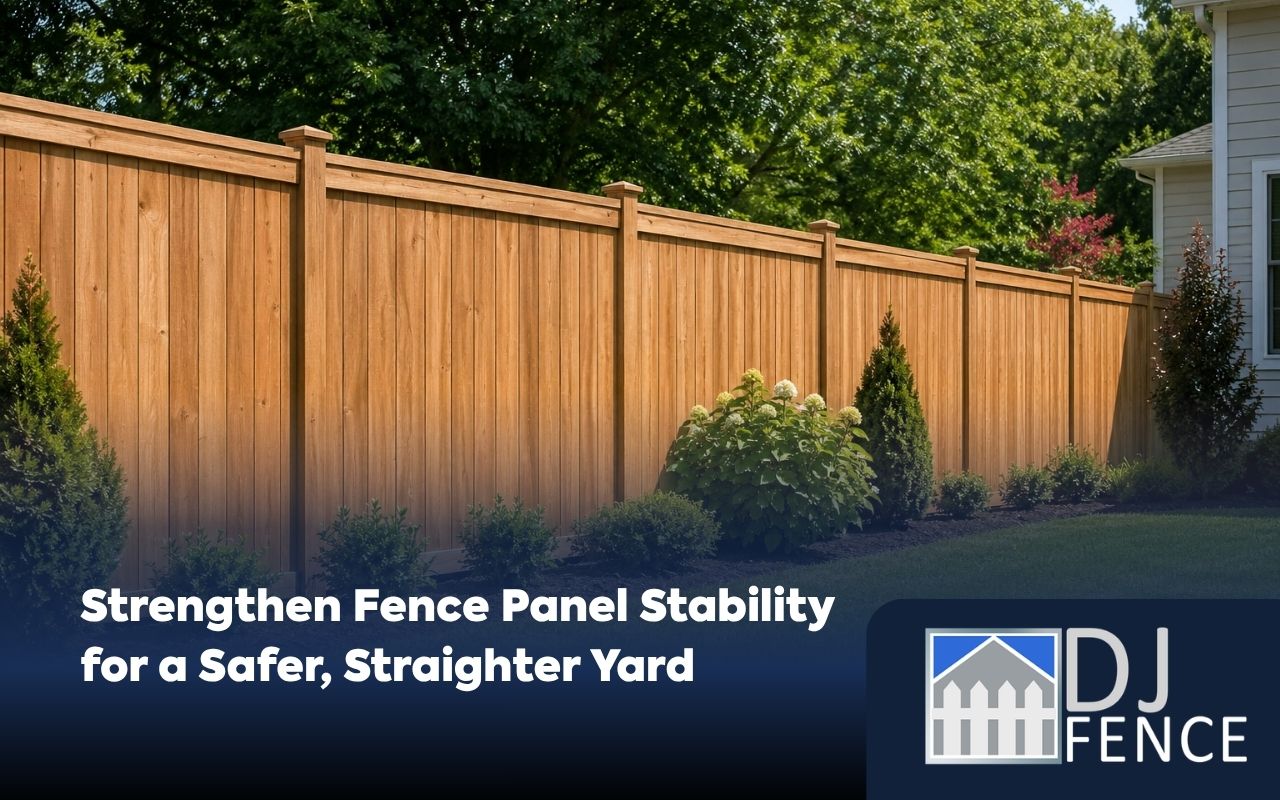
Strong fences start with steady support. At DJ Fence, we know fence panel stability helps your yard stay straight, private, and safer through changing weather. When panels begin to move, our fence repair support can help restore the fence before damage spreads.
Loose fence panels often begin with small signs, such as rattling, uneven gaps, or soft soil near posts. By checking these problems early, you can protect the full fence line and keep your outdoor space looking clean and cared for.
Why fence panel stability protects your yard
Fence panel stability matters because each panel depends on the posts, rails, and fasteners around it. When one part weakens, nearby sections carry extra pressure. This can lead to leaning panels, gaps, and more movement during windy days.
A stable fence helps protect privacy, supports curb appeal, and reduces the chance of larger repairs after storms. It also keeps your boundary neat from every angle, which helps your yard feel safer and more finished.
What causes loose fence panels over time?
Loose fence panels can form when posts shift, fasteners rust, or soil becomes too soft after rain. Dry weather can also shrink soil and leave posts less secure. These small changes allow panels to shake, lean, or pull away from the frame.
Heavy plants, leaning objects, pets, and strong wind can add more stress. With DJ Fence, you can address the source of the movement, not just the visible panel. A lasting repair starts by checking the post, rail, and ground support together.
Early signs your fence panels need care
Small warning signs are easy to miss, but they often show that support is fading. Walk along the fence line and look for movement, gaps, and parts that no longer sit evenly.
- Panels that shake, rattle, or move during light wind
- Uneven spaces between panels and posts
- Rails pulling away from posts or brackets
- Rusted screws, loose nails, or cracked hardware areas
- Soil gaps around the base of fence posts
When you notice these signs, explore professional fence repair options before the issue spreads across nearby sections.
Better fence wind resistance starts with support
Fence wind resistance depends on how well the fence handles pressure. Solid panels catch more wind than open styles, so they need strong posts, firm rails, and secure fasteners. A weak panel can move more with every gust.
Good support starts at the base. Posts should stay firm, rails should hold tight, and panels should not carry extra weight from branches or heavy items. With DJ Fence, you get guidance focused on a safer and straighter fence line.
Panel alignment tips for a straighter fence
Simple panel alignment tips can help you spot trouble before it becomes serious. Start at one end of the fence and look along the top edge. The line should look smooth without sudden dips, rises, or leaning sections.
- Check that each panel sits level from side to side
- Look for even gaps between panels and posts
- Confirm that rails are not pulling away
- Realign panels before tightening loose screws
- Support weak soil before adjusting a leaning panel
Tightening a crooked panel can lock it into the wrong position. A straight panel spreads pressure better and helps the full fence stay balanced.
Safe ways to strengthen loose panels
Strengthening loose fence panels safely starts with a careful check. If the post is steady, the panel may only need better fasteners or brackets. If the post moves, the ground support may need attention first.
- Replace damaged screws with outdoor-rated fasteners
- Repair cracked rails before securing panels again
- Remove weight from leaning objects or heavy plants
- Fill weak soil areas around posts when suitable
- Avoid forcing warped panels into place
Safe strengthening means fixing the true weak point. When the rail, post, and panel work together, the fence can stay firmer through daily use and weather changes.
Frequently Asked Questions
How can I tell if a fence panel is unstable?
You may notice rattling, leaning, uneven gaps, or rails pulling away from posts. These signs can mean the panel needs fence repair before the damage grows.
Can wind make loose fence panels worse?
Yes. Wind can push a loose panel back and forth until screws, rails, or post connections weaken more. Improving fence wind resistance helps reduce movement and protects nearby sections.
Should I tighten screws on a crooked fence panel?
It is better to align the panel first. Tightening screws while the panel is crooked can hold it in the wrong position and create more stress on the rails.
When should I ask for professional help?
Ask for help when several panels lean, gaps keep returning, or posts move in the ground. Our team at DJ Fence can review the structure through the contact page.
What helps a fence stay stable longer?
Regular checks, clean hardware, trimmed plants, and fast repairs all help. You can also schedule support through our fence repair service when movement becomes hard to control.
Keep your fence straight with trusted support
Long-term fence panel stability comes from steady posts, secure rails, proper drainage, and straight panel alignment. Weather will always test outdoor structures, but regular care helps prevent small problems from turning into larger repairs.
When you choose DJ Fence, we focus on the details that help your fence stay firm, neat, and dependable. For help with loose panels, wind damage, or alignment concerns, use our contact page to request support for your yard.