
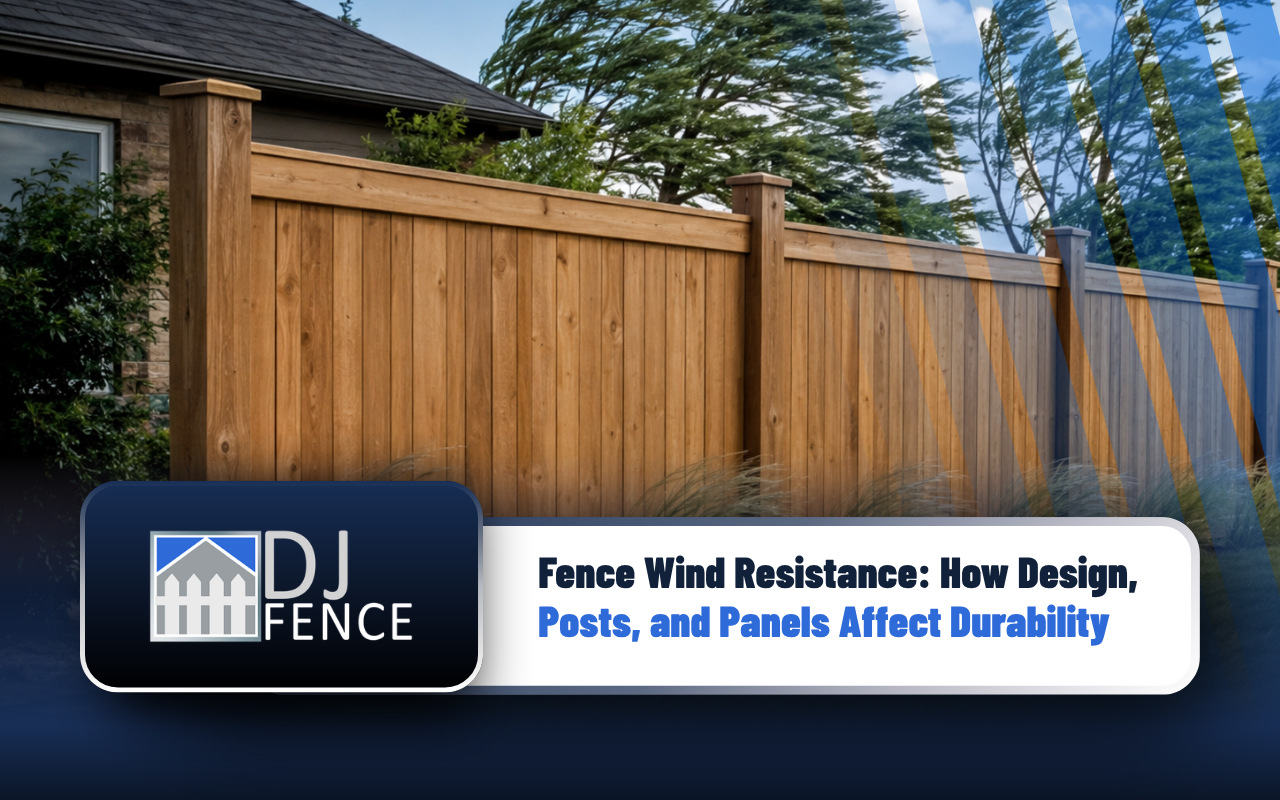
Fence wind resistance depends on more than panel thickness. Post spacing, footing depth, panel openness, hardware, fence height, soil conditions, and overall design all influence how a fence responds to strong gusts. Request your fence estimate from a licensed and insured local team offering free estimates.
At DJ Fence, we help homeowners choose fence systems and repair strategies that balance privacy, appearance, and structural performance.
Solid Privacy Panels Catch More Wind
A solid fence blocks airflow and can experience greater pressure than an open picket, ornamental, or chain-link design.
That does not make solid fencing a bad choice, but posts and connections must support the design and site exposure.
Post Stability Matters More Than Panel Strength
Even a strong panel will lean if the posts move. Soil type, footing size, post condition, and drainage all affect support.
Watch for posts that loosen after storms or move when the ground is saturated.
Reinforce Weak Areas Before Storm Season
Schedule your fence evaluation if panels flex excessively, posts lean, or fasteners keep loosening. Early reinforcement can reduce the chance of a larger failure during the next wind event.
Our review professional fence repairs page explains common structural repair options.
Fence Design and Wind Exposure
| Fence Style | Airflow | Wind Consideration |
|---|---|---|
| Solid privacy | Low | Higher pressure on posts |
| Shadowbox | Moderate | Some airflow relief |
| Picket | Higher | Reduced panel pressure |
| Chain link | High | Lower wind blockage |
Fasteners and Rails Need to Work Together
Loose fasteners can allow panels to rattle and place repeated stress on rails and posts. Inspect connections after major wind events and replace missing or corroded hardware.
Hardware should match the fence material and exposure rather than being selected only by size.
Drainage Can Reduce Post Stability
Soil that stays wet around posts can lose firmness. Directing runoff away from footings can help reduce movement and make the post system more predictable during storms.
Storm Tip: After strong winds, inspect the fence before pushing sections back into place. A hidden crack or loose footing can make the section unstable.
Local Installation Should Match the Property
Open lots, corner properties, and exposed elevations may experience stronger wind than sheltered yards. Fence height, spacing, and surrounding buildings can change local exposure.
Explore our explore Potomac Falls fencing page for local installation options.
Panel Reinforcement Is Not Always the Best Fix
If the post system is failing, adding more screws or bracing to the panel will not solve the root cause. Repair should start with the structural support and then address panels and rails.
Over-reinforcing one section can also shift stress to another weak area.
Fence Durability Includes More Than Wind
Moisture, soil movement, hardware corrosion, impact, and age also affect long-term performance. A fence that resists one storm may still need repair if the posts have slowly deteriorated.
Visit our review complete outdoor services page for related residential work.
Plan for Wind Before the Fence Starts Moving
Good fence wind resistance comes from the full system: posts, rails, panels, hardware, footing conditions, and design. The strongest approach starts with stable support instead of adding hardware after failure begins.
Our team at DJ Fence can evaluate existing movement or help plan a new fence suited to the property.
Inspect the Fence From Both Sides
Wind damage may be easier to see from the protected side of a fence. Check rails, fasteners, post movement, and panel separation from both directions after a major storm.
Wind Damage Often Starts at Existing Weak Points
A storm does not always create the original problem. Loose posts, aging rails, corroded fasteners, or previous impact damage can make one section fail sooner than the rest of the fence.
Before reinforcing panels, identify the weakest structural point. Strengthening only the visible panel may transfer more stress to a compromised post or rail.
Openings can reduce pressure but change privacy
Designs that allow more airflow may reduce wind pressure, but they also change privacy and appearance. The right choice depends on exposure, property goals, and how the fence is expected to function.
Frequently Ask Questions
Which fence style handles wind best?
Open designs generally allow more airflow, but proper post and footing design still matters.
Why do fence posts loosen after storms?
Wind pressure, saturated soil, weak footings, or aging posts can contribute to movement.
Can extra screws make a fence stronger?
Only if the posts and rails are already stable. Fasteners cannot correct failing structural supports.
Should I inspect my fence after high winds?
Yes. Check posts, rails, panels, gates, and hardware for movement or damage.
Can drainage improve fence durability?
Good drainage can help reduce soil softening and movement around fence posts.
Book your fence assessment with DJ Fence for a free estimate and local fence expertise backed by more than 20 years of experience.