
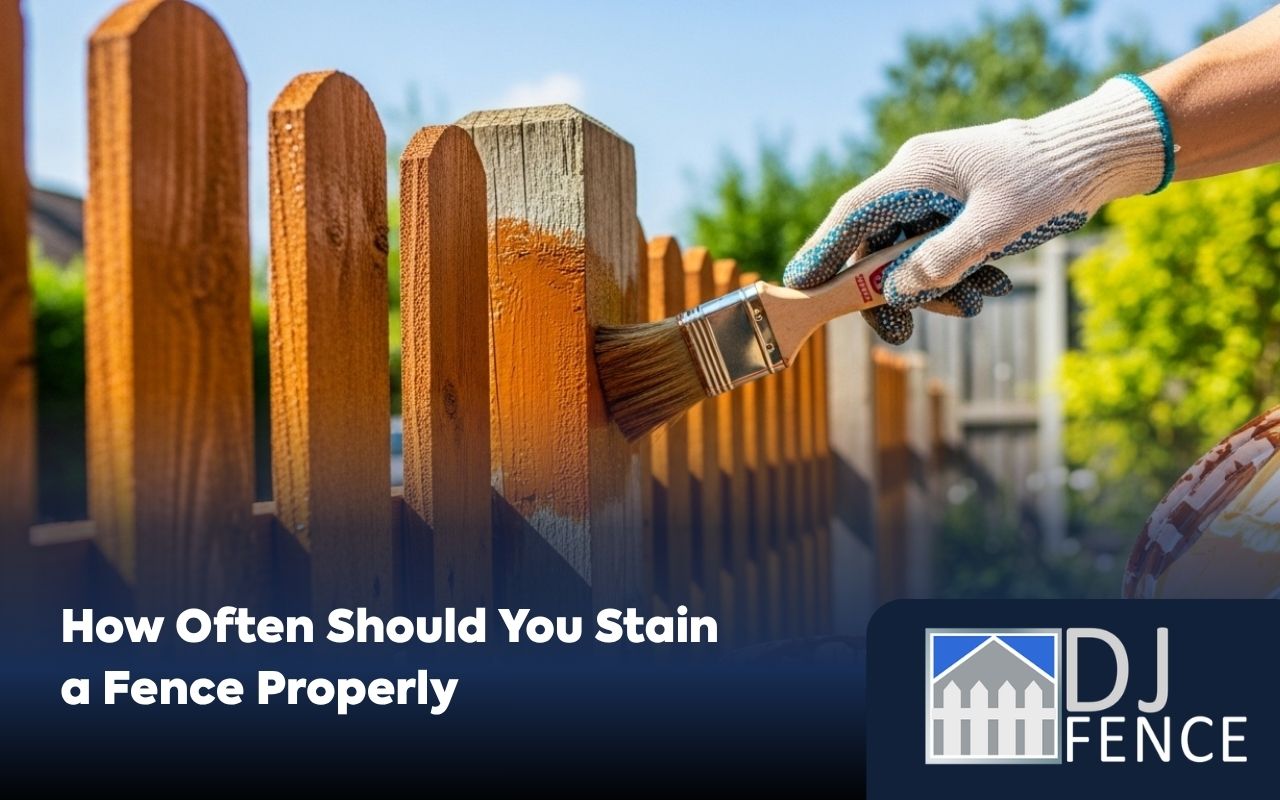
Keeping a fence in good shape takes more than a quick wash. Therefore, knowing how often should you stain a fence helps protect wood, improve curb appeal, and avoid early damage.
At DJ Fence, we know small care steps make a big difference. Moreover, the right timing keeps your fence strong, clean, and ready for every season.
Fence Stain Matters for Long Term Protection
A quality stain helps block water, sun, and surface damage. As a result, wood stays stronger and keeps its color longer.
Without that layer, boards may crack, fade, or bend over time. For that reason, learning how often should you stain a fence helps prevent bigger repair needs later.
Weather and Sun Change Staining Timeframes Greatly
Climate plays a big role in stain life. For example, heavy rain, strong sun, and high humidity can wear down the finish much faster.
Fences facing direct sunlight often dry out sooner. Meanwhile, shaded sections may stay damp longer, which can lead to mold and surface marks.
Wood Types Need Different Care and Timing
Not every fence ages the same way. In general, softer wood absorbs stain faster, while harder wood may hold protection for a longer time.
Cedar and treated pine often last longer than basic softwood. Even so, a smart fence staining schedule still depends on local weather and past care.
- Softwood may need more regular care.
- Cedar often handles moisture better.
- Treated wood may hold stain longer.
Clear Signs Your Fence Needs Fresh Stain
Several signs show when stain protection is fading. For instance, wood may look gray, dull, dry, or uneven across the surface.
You may also notice water soaking in instead of beading up. In that case, how often should you stain a fence becomes a real concern, not just a guess.
- Color looks faded or patchy.
- Water no longer beads on boards.
- Mold, cracks, or rough spots appear.
Best Seasons and Days for Staining Work
Mild weather usually gives the best results. Ideally, choose a dry day with light sun, low humidity, and no rain in the forecast.
Spring and early fall often work well for many homes. Also, cooler parts of the day help stain settle more evenly and dry at a steady pace.
Simple Preparation Leads to Better Stain Results
Good prep helps stain last longer and look more even. First, clean away dirt, old loose finish, and any green buildup on the boards.
Next, let the wood dry fully before staining. You can also visit our practical fence care guide for simple upkeep ideas.
- Wash the fence well first.
- Replace weak or broken boards.
- Let the wood dry completely.
Choosing Products That Match Your Fence Needs
Some stains soak deeper, while others dry faster and clean up easily. Because of that, the right product depends on your wood, weather, and upkeep goals.
A clear or light finish may need more frequent care. By comparison, a fuller finish can last longer, which affects your wood fence sealing frequency over time.
Frequently Asked Questions
How often should you stain a fence in most climates?
Most wood fences need stain every two to three years. However, strong sun, heavy rain, or poor prep can shorten that timeline.
Can I wait until the fence looks faded?
It is better not to wait too long. Instead, stain when water stops beading and the color begins to look dry or uneven.
Does every wood fence need the same schedule?
No, the timing can change by wood type and exposure. So, a full fence maintenance routine should include regular checks each year.
What if only one area looks worn?
You can touch up small spots early. That way, you may delay a full staining job and keep the fence looking even.
Where can I learn more about wood fence care?
You can review our wood fence upkeep page for more ways to protect your investment.
Smart Upkeep Helps Your Fence Look Great
A simple plan makes fence care easier to manage. At DJ Fence, we suggest checking your fence twice a year for wear, color loss, and moisture issues.
When you understand how often should you stain a fence, you avoid guesswork and protect your investment. Therefore, DJ Fence recommends steady care, a realistic fence maintenance routine, and a clear view of your wood fence sealing frequency.
If your fence is showing age, DJ Fence is ready to help contact page. In the meantime, knowing how often should you stain a fence keeps your property looking clean, warm, and well cared for.