
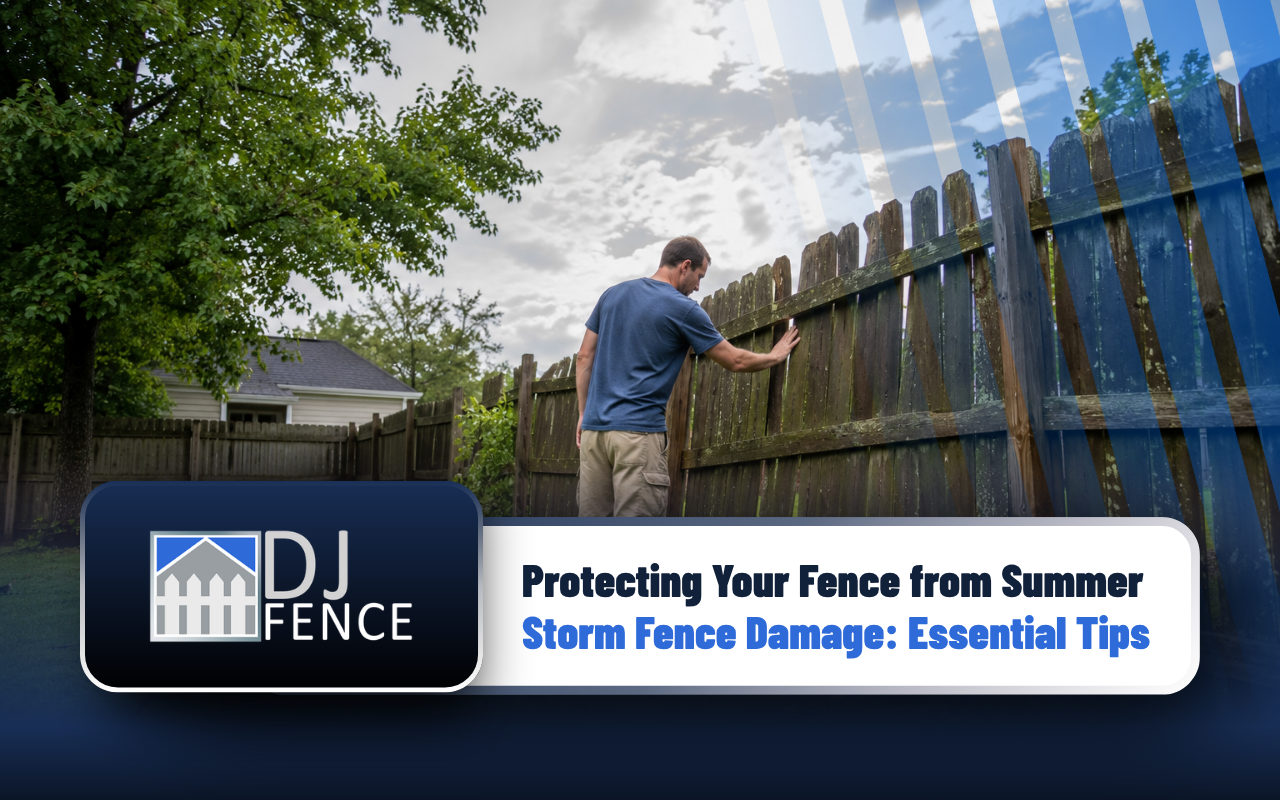
Summer storms can bring strong winds, heavy rain, and sudden pressure that test your fence. Summer storm fence damage may start with one loose board or weak post, then spread during severe weather.
Early care can help protect your privacy, security, and outdoor space. At DJ Fence, we know that small repairs can prevent larger problems. Checking your fence, improving drainage, and securing weak areas can make a real difference.
Our fence repair services can also address damage that requires more than basic maintenance.
Understand Why Summer Storms Put Fences at Risk
Strong wind pushes against solid fence panels. That pressure can loosen fasteners, bend posts, or pull sections out of alignment.
Older fences may face greater risk because moisture, sun, and normal wear can weaken materials over time. This makes storm damage more likely when intense weather arrives.
Heavy rain creates a different problem. Water can collect around posts, soften the soil, and reduce the support holding the fence upright. Repeated moisture may also cause wood to swell, rot, or split.
Choose Materials Built for Wind and Rain
The right materials can improve fence strength and reduce future maintenance. Each option reacts differently to moisture, impact, and wind pressure.
Homeowners should consider local conditions, privacy needs, and the amount of care they can provide.
Fence Material Options to Review
- Pressure-treated wood can resist insects and decay when sealed and maintained correctly.
- Galvanized steel posts create strong support and resist rust better than untreated metal.
- Vinyl does not rot, but panels must be installed securely to reduce movement during strong gusts.
- Composite boards combine wood fibers and plastic for improved moisture resistance.
- Metal post anchors can keep wooden posts away from wet soil and standing water.
Material quality matters, but proper installation is just as important. Posts must be set at a suitable depth, hardware should match the fence material, and panels need enough support.
Key Takeaway
Storm-ready fencing depends on both material choice and installation quality. Strong posts, secure hardware, and supported panels help the fence handle wind and rain.
Inspect Weak Areas Before Storms Arrive
A storm fence inspection can reveal problems before wind and rain make them worse. Walk along both sides of the fence and look closely at posts, panels, gates, and hardware.
Our team at DJ Fence recommends checking the fence before storm season and after any major weather event.
Storm Fence Inspection Checklist
- Push each post gently to check for movement in the soil.
- Look for boards that are cracked, warped, loose, or missing.
- Check screws, nails, brackets, hinges, and latches for rust or movement.
- Inspect the bottom of wooden posts for softness, dark stains, or decay.
- Watch for soil erosion, standing water, or exposed concrete around post bases.
Wind-damaged fences often show early signs near gates, corners, and long panel sections. These areas carry extra weight or receive more wind pressure.
When you notice leaning sections or loose posts, arranging a professional fence repair can prevent the damage from spreading.
Compare Storm Risks With the Right Next Step
Different types of storm damage need different responses. Some issues need simple maintenance, while others require professional storm damage repair.
| Storm Concern | Warning Sign | Best Next Step |
|---|---|---|
| Strong wind pressure | Loose panels, leaning sections, or moving gates | Check posts, rails, hinges, and panel connections. |
| Rain damage on fence posts | Soft wood, dark stains, rot, or post movement | Improve drainage and inspect the post base. |
| Soil erosion | Exposed concrete or gaps around post footings | Stabilize the area before the next storm. |
| Gate movement | Sagging, loose latches, or dragging edges | Review hinges, latches, and diagonal bracing. |
| Fallen branch impact | Cracked boards or bent hardware | Remove debris safely and schedule repair if needed. |
Key Takeaway
Fence inspections work best when they connect visible damage with a clear next step. Loose posts, standing water, and gate movement should be handled early.
Strengthen Posts and Improve Fence Drainage
Fence posts support the full structure, so they need a stable base. Concrete footings can help hold posts in place when soil becomes wet.
A gravel layer beneath the footing may also allow water to move away instead of collecting directly around the post.
Rain damage on fence posts often develops when water remains near the base. The ground should slope away from the fence whenever possible. Soil, leaves, and grass clippings should not build up against wooden surfaces.
Low areas may need a drainage channel or another method that redirects rainwater. Wooden posts can also benefit from protective sealant and proper treatment around exposed ends.
For help evaluating unstable posts, you can request a fence assessment.
Reduce Wind Pressure With Smarter Fence Design
A fence that allows some airflow may handle strong gusts better than a fully solid barrier. The best design depends on your privacy needs, property layout, and existing fence style.
Strategic changes can reduce pressure without removing the protection your fence provides.
Wind-Resistance Design Tips
- Use spaced pickets or slats that allow controlled airflow.
- Add lattice sections where extra ventilation fits the design.
- Install diagonal fence bracing on gates to reduce sagging and movement.
- Use heavy-duty hinges and secure latches on wide or heavy gates.
- Trim nearby branches that could strike panels during a storm.
Wind-damaged fences may fail when one weak area transfers pressure to nearby sections. Strong connections between posts, rails, and panels help distribute that force. Gates should also remain closed and properly latched when severe weather is expected.
Key Takeaway
Better airflow, stronger gate hardware, and stable posts can reduce storm stress. A fence does not need to be overbuilt to be better prepared.
Make Safe Repairs After Severe Weather
After a storm, check the area for fallen branches, exposed nails, sharp metal, and unstable panels. Do not push or pull a leaning fence until you know whether the posts are secure.
A damaged section may shift suddenly and create a safety risk. Temporary braces can support a loose panel until permanent work is completed.
Small cracks may be sealed after the wood dries, while missing boards can sometimes be replaced individually. Summer storm fence damage involving broken posts, large leaning sections, or damaged gates usually needs professional attention.
With DJ Fence, you can receive help identifying which parts may be repaired and which may need replacement. Addressing structural issues quickly can protect nearby fence sections and restore a secure boundary around your property.
Frequently Asked Questions
How often should I schedule a storm fence inspection?
Inspect your fence before the main storm season, after severe weather, and whenever you notice leaning or movement. A professional storm damage inspection and repair visit may be useful when posts or panels appear unstable.
What are the signs of wind-damaged fences?
Common signs include leaning posts, separated rails, loose panels, damaged gate hinges, and cracked boards. You may also hear panels moving during normal wind. When you choose DJ Fence, we can examine the affected areas and explain practical repair options.
Can rain damage on fence posts be repaired?
Minor surface damage may improve with drying, cleaning, and sealing. Posts with deep rot, major cracks, or movement may need replacement. You can contact our fence team to discuss the condition of your posts.
Should I repair a leaning fence immediately?
A leaning fence should be checked promptly because the problem may worsen during another storm. Temporary bracing can reduce movement, but it does not replace a secure post or footing. Our leaning fence repair service can address the underlying cause.
Does fence sealant prevent all storm damage?
Sealant helps reduce moisture absorption, fading, and surface wear, but it cannot prevent every type of damage. Strong posts, secure hardware, suitable drainage, and regular inspections are also necessary for long-term fence protection.
Keep Your Fence Ready All Summer
Regular inspections, stable posts, proper drainage, and secure hardware can reduce the risk of summer storm fence damage. These steps also make it easier to find small concerns before they affect larger fence sections.
At DJ Fence, we can help restore loose panels, leaning posts, and other storm-related problems. To protect your property before the next round of severe weather, contact our team about your fence.