
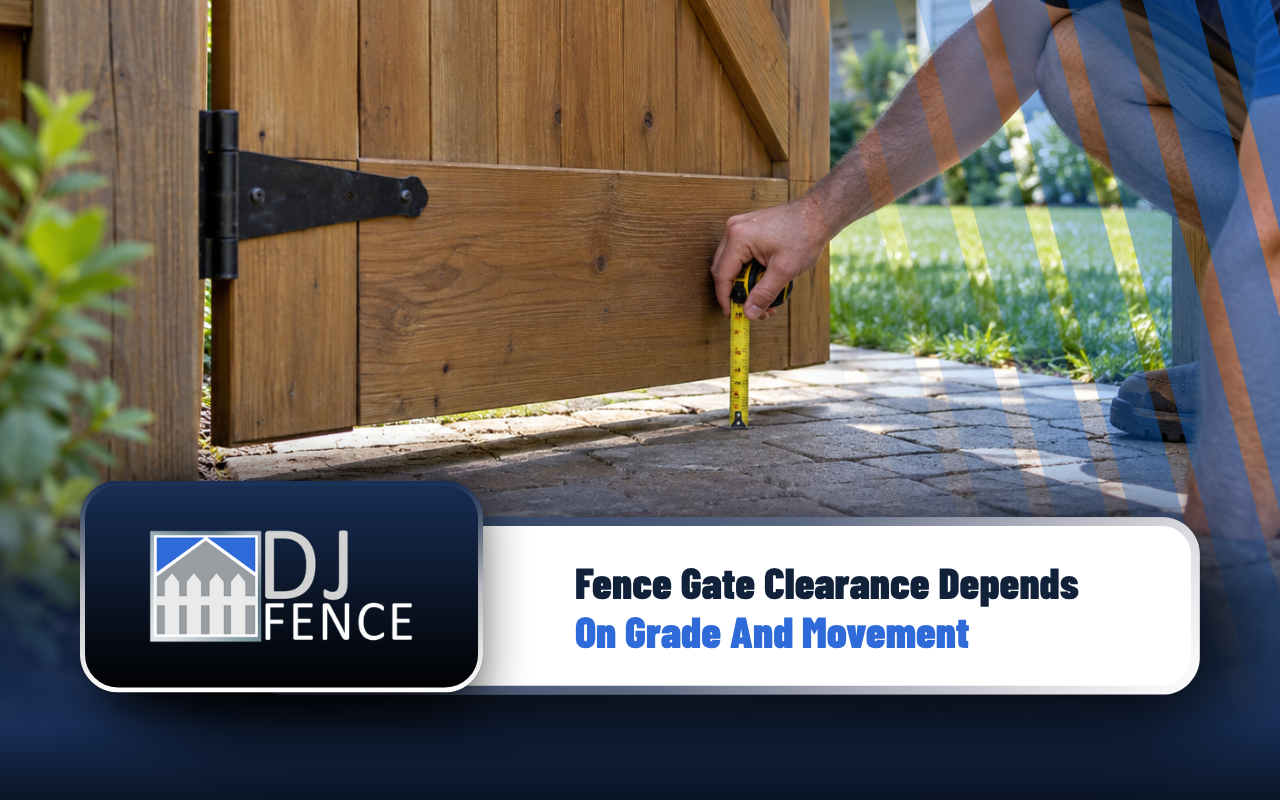
A gate that worked well in summer can begin dragging after rain, soil movement, leaf buildup, or seasonal swelling. Proper fence gate clearance should account for ground slope, gate weight, post stability, and how the yard changes through the year. request your free estimate when a gate scrapes, sticks, or stops latching cleanly.
Gate Ground Clearance Should Match The Yard Surface
Grass, gravel, mulch, pavers, and sloped soil all require different clearance planning. A gap that looks correct over bare soil may become too tight once grass grows or mulch is added.
At DJ Fences, we bring over 20 years of experience to residential gates where small grade changes can create daily access problems.
Seasonal Gate Movement Often Starts At The Posts
Posts can shift with soil moisture, freeze-thaw movement, repeated gate loads, or erosion. When the hinge post moves even slightly, the latch gap and ground clearance may change across the entire gate.
For repair help, visit our explore professional fence repair page.
Yard Grade Around Gates Should Drain Without Obstruction
schedule your gate inspection when water collects beneath or beside the opening. Saturated soil can contribute to post movement, while mud and debris can reduce clearance directly.
Our licensed and insured service supports more involved correction when dragging is tied to posts, framing, or hardware instead of simple ground debris.
Use This Gate Clearance Diagnostic Before Adjusting Hardware
- Measure the latch-side gap
- Check hinge post plumb
- Inspect ground elevation changes
- Look for gate frame sag
- Test movement through full swing
Scenario One Rainy Week Changes A Gate Quickly
Imagine a gate that clears the lawn in dry weather but begins scraping after several days of heavy rain. The issue may come from swollen wood, soft soil, a shifted post, or all three.
Adjusting only the latch may improve closing temporarily without restoring correct swing clearance.
These Signs Point To More Than Simple Gate Drag
- Latch gap changes noticeably
- Hinge post leans outward
- Gate frame looks diagonal
- Ground clearance varies sharply
Reston Gate Layouts Should Consider Seasonal Yard Changes
Landscaping, mulch depth, and lawn growth can all change the effective clearance under a gate. For local fence installation information, visit our explore Reston fence installation page.
Gate Hardware Should Match Weight And Daily Usage
Heavy gates used frequently put more stress on hinges, fasteners, and posts. Hardware selected only by appearance may not hold alignment well over time.
Free Estimates Help Separate Adjustment From Structural Repair
A free estimate can help determine whether the gate needs a simple hardware adjustment, frame correction, post work, or a larger repair.
Fairfax Fence Planning Should Include Gate Approach Space
Clearance is not only underneath the gate. The opening should also provide comfortable approach space for people, pets, lawn equipment, or carts.
For local project information, visit our explore Fairfax fence installation page.
Local Specialists Can Diagnose Gate Movement More Accurately
Our local fence and deck specialists look at grade, posts, frame geometry, and hardware together so the correction addresses the source instead of one visible symptom.
For related services, visit our explore all fence services page.
Gate Frame Squareness Can Reveal Hinge Or Post Problems
A gate may appear to sag when the real change begins at the hinge post or frame corners. Compare the top and bottom gaps, look for diagonal distortion, and check whether the latch side remains parallel to the post. Uneven geometry helps identify where adjustment should begin.
Ground Changes Near Gates Should Be Tracked Seasonally
Soil can rise, settle, erode, or become covered with new mulch and landscaping over time. Taking a few seasonal photos can help homeowners see whether the ground is moving closer to the gate or the gate itself is dropping. That distinction can prevent unnecessary trimming of the gate bottom.
Gate Width Can Influence Long-Term Alignment And Hardware Wear
Wider gates create more leverage on hinges and posts, especially when used frequently. Hardware, frame design, and post support should match the size and weight of the gate. Our team at DJ Fences can help evaluate whether repeated alignment issues come from hardware, framing, or post movement.
Small Clearance Changes Can Affect Latches And Daily Access
A gate does not need to scrape heavily before it becomes inconvenient. Even minor movement can shift latch alignment, make closing harder, or require extra force. Early adjustment can prevent repeated stress from spreading to hinges, fasteners, and posts.
Measuring Gate Gaps Can Make Seasonal Changes Easier
A quick measurement at the hinge side, latch side, and lowest ground point can create a useful baseline for fence gate clearance. If the gate begins dragging later, those numbers help show whether the ground rose, the gate sagged, or a post shifted. Small measurements can make troubleshooting more focused and prevent unnecessary cutting or hardware changes.
Frequently Ask Questions
How much clearance should a gate have?
Clearance depends on gate size, ground surface, slope, material, and how the yard changes seasonally.
Why does my gate drag after rain?
Wet soil, swollen materials, debris, or post movement can all reduce clearance.
Can hinge adjustment fix a dragging gate?
Sometimes, but not when the main cause is post movement, frame sag, or changed grade.
Should mulch be kept away from gates?
Yes when buildup interferes with swing clearance or keeps moisture around posts.
Why does the latch stop lining up?
Post movement, frame sag, hinge wear, or seasonal material changes can alter alignment.
Fix The Cause Before Increasing Gate Ground Clearance
Reliable gate clearance depends on grade, post stability, frame alignment, and hardware working together throughout the year. book your free estimate with DJ Fences when seasonal movement turns a gate into a daily frustration.